

EQ Leadership Development

The Appleton Greene Corporate Training Program (CTP) for EQ Leadership Development is provided by Mr. Faronbi Certified Learning Provider (CLP). Program Specifications: Monthly cost USD$2,500.00; Monthly Workshops 6 hours; Monthly Support 4 hours; Program Duration 15 months; Program orders subject to ongoing availability.

Personal Profile
Mr. Faronbi, a Certified Learning Provider (CLP) at Appleton Greene, is a business leader, leadership coach and consultant with global experience in the technology, chemical, food and beverage, engineering services, and manufacturing sectors. He is also an author and a seasoned speaker who has influenced thousands of leaders around the globe.
As a leadership strategist for multiple corporations, he has consulted with and delivered workshops for engineering and leadership teams in organizations such as Amazon, Collins Aerospace, and John Deere. Through a partnership with Project Management Institute’s PMI Training (formerly SeminarsWorld®), he curated and has delivered leadership the “Emotional Intelligence for Portfolio, Program, Project and PMO Leadership” course for project management practitioners and executives around the globe since 2018.
With a career spanning more than three decades across four continents, Mr. Faronbi is using the skills he developed while leading teams to enable, motivate, and empower organizations by coaching teams and leaders to develop the skills necessary for leadership positions. As a conference speaker and coach, he speaks frequently about how to tap into the power of your emotions to enable them work for you instead of allowing them to work against you.
With an engineering and project management background, Mr. Faronbi began to learn what it takes to be a leader when he started leading teams of engineers and other professionals on projects across international boundaries. As a leader of teams, he recognized that he needed to improve his communication and leadership skills. His growth journey led him to find strong connections between emotional intelligence skills and leadership behaviors. As he learned and refined these skills, Mr. Faronbi saw positive changes in his professional relationships and outcomes. He became the go-to leader who was counted upon to turn around failing projects and initiatives. Due to his personal growth and leadership success, peers and other leaders began to ask him about the secrets behind his success. As he shared his approach with them, he consequently developed the passion to coach, mentor, teach, write, and speak about how emotions affect how we lead and build influence.
Mr. Faronbi’s formal education includes earning a Master of Engineering Management degree from Washington University in St. Louis and a Bachelor of Science degree in Electrical Engineering from the University of Ibadan. He has been a Project Management Professional (PMP) credential holder since June 2006 and a certified Emotional Intelligence coach since 2013. He also holds leadership coaching credentials from Humanergy and Maxwell Leadership.
An avid traveler who delights in learning about how different cultures influence leadership approaches, Mr. Faronbi brings unique perspectives to leadership that he has gleaned from real-world experiences. Audiences and readers alike love the practical applications he brings from his insights. He is known as an engaging speaker and instructor and has received excellent reviews from his audiences.
To request further information about Mr. Faronbi through Appleton Greene, please Click Here.

(CLP) Programs

Appleton Greene corporate training programs are all process-driven. They are used as vehicles to implement tangible business processes within clients’ organizations, together with training, support and facilitation during the use of these processes. Corporate training programs are therefore implemented over a sustainable period of time, that is to say, between 1 year (incorporating 12 monthly workshops), and 4 years (incorporating 48 monthly workshops). Your program information guide will specify how long each program takes to complete. Each monthly workshop takes 6 hours to implement and can be undertaken either on the client’s premises, an Appleton Greene serviced office, or online via the internet. This enables clients to implement each part of their business process, before moving onto the next stage of the program and enables employees to plan their study time around their current work commitments. The result is far greater program benefit, over a more sustainable period of time and a significantly improved return on investment.

Appleton Greene uses standard and bespoke corporate training programs as vessels to transfer business process improvement knowledge into the heart of our clients’ organizations. Each individual program focuses upon the implementation of a specific business process, which enables clients to easily quantify their return on investment. There are hundreds of established Appleton Greene corporate training products now available to clients within customer services, e-business, finance, globalization, human resources, information technology, legal, management, marketing and production. It does not matter whether a client’s employees are located within one office, or an unlimited number of international offices, we can still bring them together to learn and implement specific business processes collectively. Our approach to global localization enables us to provide clients with a truly international service with that all important personal touch. Appleton Greene corporate training programs can be provided virtually or locally and they are all unique in that they individually focus upon a specific business function. All (CLP) programs are implemented over a sustainable period of time, usually between 1-4 years, incorporating 12-48 monthly workshops and professional support is consistently provided during this time by qualified learning providers and where appropriate, by Accredited Consultants.
Executive summary

EQ Leadership Development
Since Edward Thorndike introduced the concept of “social intelligence” in 1920, defining it as the ability to understand and manage people and to act wisely in human relations, other notable psychologists (such as Abraham Maslow) and researchers over the past century have continued to emphasize the importance of emotional strength and well-being to ensure the success of any human being that is engaged in any kind of endeavor. Afterall, no person exists in isolation. We rely and depend on one another for many of our daily needs. When it comes to leadership, this dependency on others is magnified to the greatest extent possible. Leaders rely on their teams for the successful execution of their vision for the teams and the organization.
Several decades ago, the approach to leadership was often top-down, with a focus on positional authority, hierarchy, and chain of command. The expectation then was that leaders must be decisive, commanding, and patriarchal. They were seen as imposing figures who gave directives that subordinates were expected to carry out without questioning. There was little to no emphasis on collaboration. It was a lot about command and control. You didn’t have to buy into the leader’s vision, but you’re expected to fall in line and execute the vision to perfection. This approach worked during that era because people valued stability and structure. Most people wanted to maintain order and not rock the boat.

Over the past few decades, however, several factors have driven the need for change in leadership approaches. As economies expanded and became interconnected globally, businesses faced more threats and complexity. Such industrialization and globalization began to force a shift away from rigid, hierarchical leadership. In addition, innovations such as the telephone, computers, the internet, and later, social media have transformed communication and information sharing. These innovations brought about the knowledge economy, with information and data becoming key resources. There were also cultural shifts and generational expectations from new entrants into the workforce. To effectively compete in the new economy and to efficiently leverage available resources, leaders must keep pace with these rapid changes. All these factors have necessitated the need for seismic shifts in leadership approaches. These changes involve using collaborative decision-making, valuing creativity and expertise, embracing empathy, emphasizing transparency, employee empowerment, purpose, and work-life balance. Collectively, these are transforming leadership to the extent that tapping into the power of emotional intelligence (EI) is the singular most-effective way to become the leader that is nimble enough to be successful in a changing world economy.
Unfortunately, most organizations’ approach to developing leaders has not evolved with the changing climate. Most try to find leaders by promoting them from within their ranks based on their current success. Promoting people who are performing well in their current jobs do make a lot of sense as it provides rewards for good performance. In most cases, however, the skills and abilities needed to be successful at that next level may not necessarily be the same as the ones used to perform well in the previous position.

But in the quest to develop new leaders faster, many organizations do a very shoddy job and end up with the Peter Principle – people being promoted to their level of incompetence. A highly skilled and exceptional engineer may be promoted (because of her excellent technical skills) to an engineering manager position, where leadership skills such as coaching, empathy, communication, and delegation are needed to succeed. If she lacks one or more of these skills, she has become incompetent in the new role. If nothing is done to help her quickly develop these skills, she’s unlikely to be promoted further. She then gets stuck in a role in which she’s not good. The result is frustration for her and decreased productivity and morale for the teams she leads. An unhappy and frustrated leader will infect her team with the same malady and drive down their productivity through demotivation. When this scenario plays out in various parts of the organization, the result is an overall inefficiency and a lack of effective leadership and management. The organization suffers as a result.
As a result, organizations continue to deal with challenges and self-inflicted pain points. You may recognize some of these symptoms within your teams:
• Poor Management: Leaders struggling with how to motivate team members, poor communication, and timely decision making.
• Workplace Conflicts: Team productivity suffers because of misunderstandings and interpersonal tensions amongst team members.
• Low Employee Engagement and Morale: The latest Gallup report on the State of the Global Workplace shows that employee engagement remains low, with 79% of the global workforce disengaged. Organizations lose billions of dollars annually as a result.
• High Turnover: Great employees continue to leave because they feel undervalued, taking with them vital business intelligence. The loss of such institutional knowledge combined with the costs associated with hiring replacements translates to millions of dollars taken from the bottom line each year. According to various studies, the cost of replacing an employee can range from 50% to 200% of their annual salary, depending on the role and industry.
• Stress and Burnout: Chronic stress among employees, leading to absenteeism and reduced performance.
• Poor Team Collaboration: Ineffective cooperation and communication within and between teams, leading to inefficiencies and misunderstandings.
• Resistance to Change: Opposition within an organization often leads to the failure of essential change initiatives. Leaders and teams who resist change are not able to keep their organization competitive within a global marketplace.
• Lack of Innovation: With no psychological safety in teams, risk-taking, new ideas and innovations die, risking the future of the organization.
• Customer Service Challenges: Poor service leads to dissatisfied customers, weakening customer loyalty and reducing revenue.
• Unfair Treatment: Inequity and lack of fairness creating a toxic workplace that erodes employees’ motivation.
For middle management through C-Suite leadership, EI has shown its transformative leadership potential in many organizations. From its initial introduction as social intelligence more than a century ago, emotional intelligence has gone through different iterations within the last 50 years, starting with Howard Gardner’s theory of multiple intelligences, which included “intrapersonal intelligence” (understanding oneself) and “interpersonal intelligence” (understanding others). In 1985, Dr. Reuven Bar-On proposed a quantitative measure of emotional intelligence in a copy of his doctoral dissertation. He introduced the concept of “emotional quotient (EQ),” as a measure of emotional and social competence. His work has been the basis for the development of the EQ-i2.0 model of emotional intelligence, which is currently the world’s most used and most-validated emotional intelligence assessment.

This program uses the EQ-i2.0 model of emotional intelligence – with its fifteen distinct skills and the multiple interactions among them – to address the root of each of the symptoms listed above. The EQ-i2.0 model, after being backed by more than three decades of research and practice, has proven to be essential in the enhancement of individual and team leadership performance. This model defines emotional intelligence as the set of emotional and social skills that we use to navigate life and handle its challenges. The challenges of the modern workplace are better handled with teams and leaders who continually work on developing and improving their emotional intelligence.
This program’s approach to the development of emotional intelligence skills within the leadership ranks of an organization will ensure that leaders foster trust, engagement, and productivity within teams – which in turn mitigates many other issues. Also, these skills help employees and leaders navigate disagreements with emotional awareness and effective communication. In addition, EI-powered leadership creates a workplace where employees feel valued and motivated; and it helps leaders build positive relationships that encourage employees to stay. Furthermore, strong emotional intelligence skills enable employees to manage stress effectively and build resilience. What’s more – emotionally intelligent employees provide better service, improving customer satisfaction and loyalty. They are also encouraged to innovate and come up with new ideas. Overall, employees and leaders with strong EI skills bring an unparalleled wholeness to their work, their teams, and their organizations. They promote fairness and bring ethical decision-making processes that give their organization a unique competitive advantage.
Equipping future, emergent, and current leaders with emotional intelligence competencies brings together, in a holistic manner, the various leadership skills they need to succeed at every level. Studies have shown that EI often predicts workplace and leadership success more accurately than IQ. The best part is, unlike IQ, EI can be developed and improved. Leaders who incorporate an EI-centered approach into their everyday work and life tend to become effective and exceptional. They are able to propel their teams to greater heights of achievement. Such forward-thinking leaders are not worried about other people’s opinion about them. They’re more concerned about the collective success of their teams while not neglecting the well-being of each individual team member. They’re driven by the future and the opportunities it presents, not by the past, ego, or concerns about looking good.
In 2008, an engineering, construction management, design, and environmental professional services firm with over 100 office locations in the United States, Canada, and Australia launched a program called the Leadership Collaborative. The program offered comprehensive coaching based on results gleaned from using personal development tools and assessments. Among the assessments used during the initiative, the EQ-i2.0 was leveraged to measure and help develop the emotional intelligence of the organization’s senior leadership. When a regional manager at the firm, known for his practical and critical problem-solving abilities, underwent the EQ-i2.0 assessment, the results were revelatory for him. The assessment revealed an imbalance in his EI skills. He scored high on Independence and Problem Solving but low on Interpersonal Relationships and Empathy. Someone with this imbalance may be seen as a good problem solver but are most likely to leave others out of the problem-solving process or fail to think of the impact of their decisions on others. In this scenario, the regional manager faced several challenges in his leadership role due to the imbalance in his EI strengths and areas for improvement.
With a low score on Interpersonal Relationships, this manager was able to understand the reasons he struggled to connect with his team on a personal level, the result of which was a lack of trust and cohesion within the team. He also discovered that his low Empathy score indicated his difficulty in understanding and responding to the emotions and needs of his team members. This can result in team members feeling undervalued or misunderstood.
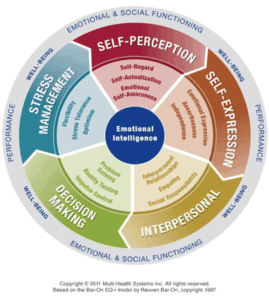
Furthermore, the interplay between his high Independence and lower Interpersonal Relationship scores was likely responsible for his self-reliant approach, potentially causing him to overlook the importance of collaborative communication. He saw how this could hinder open dialogues and the sharing of ideas within the team. Such a lack of collaboration in the workplace hurts organizations in three big areas: productivity, quality, and profitability. Also, without strong interpersonal skills and empathy, resolving conflicts effectively has proven to be challenging, especially when emotions are involved. It has been difficult for him to mediate disputes or address grievances in ways that satisfies all parties involved. These have also made it hard for him to tap into understanding what drives and motivates his team, which could explain the low team morale and productivity.
With this feedback, along with an understanding of the steps to take in addressing the issues raised, a shift in his leaderships approach led to his team being empowered to make decisions, increased efficiency, and better resource allocation. This led him to cut down on unnecessary meetings, which according to a study, can save businesses US$25,000 per employee each year. Also, by empowering his team to use their own skills to solve problems, this manager put his trust in their abilities. His team became more self-reliant and confident in their decision-making, fostering a more accountable and proactive work environment. His team members started feeling more valued, thus reducing their disposition to wanting to leave the organization.
This regional manager’s story is a testament to the success of a program such as this, demonstrating how targeted EI development can lead to significant returns on investment by enhancing leadership capabilities. Just as the leadership landscape has changed over the last 100 years, we expect that there most likely will be changes over the next few decades. Change is an ever-present reality when it comes to leadership. The unfortunate reality is that even though most leaders know that change is inevitable, little is usually done to better understand or plan for that inevitability. Since we don’t all respond to the same change in similar fashion, research is continuing, to understand how change strategies can be matched to individual change preferences. Implementing this effectively requires mature emotional intelligence skills in leadership.

There also seems to be something going on in leadership approach to different generations. The advent of Millennials and Gen Z’ers in the workplace has triggered different approaches to leadership. Studies show that there seem to be some larger than expected gaps in a few of the EQ skills with Gen Z when compared to other generations. But it also shows that they are very fast learners and welcome varied learning opportunities. Within the next decade, the injection of Generation Alpha into the workplace is likely to bring another wave of change to how they lead and are led. The leaders of tomorrow must be prepared and ready. Developing emotional competencies helps facilitate this readiness.
The truth is that the future of leadership that is based on EQ is bright, exciting, and alarming all at the same time. It will require leaders who can identify the winds of change from afar and adapt quickly. We must see and recognize it before we feel it in our immediate environment. We simply cannot afford to be caught unawares by the tides of current transformation and the one that is coming. If we do, all that would be left could be the ruins from the devastating aftermath of not paying attention. Neither our leadership nor our organizations will survive it. That’s why we cannot leave this to chance. We must be ready. We must learn to be agile and adapt quickly. And that learning needs to begin now.
Curriculum
EQ Leadership Development – Part 1 – Year 1
- Part 1 Month 1 EQ Foundations
- Part 1 Month 2 Perception Shift
- Part 1 Month 3 Constructive Expressions
- Part 1 Month 4 Interpersonal Connections
- Part 1 Month 5 Emotional Decision Mastery
- Part 1 Month 6 Becoming Emotionally Resilient
- Part 1 Month 7 Balancing Identity Lenses
- Part 1 Month 8 Achieving Expressive Harmony
- Part 1 Month 9 Stabilizing Harmonious Relationships
- Part 1 Month 10 Balancing Decision Making
- Part 1 Month 11 Moderating Stressful Situations
- Part 1 Month 12 EQ Challenge Coaching 1
EQ Leadership Development – Part 2 – Year 2
- Part 2 Month 1 EQ Challenge Coaching 2
- Part 2 Month 2 EQ Challenge Coaching 3
- Part 2 Month 3 Unlocking Your Emotional Potential
Program Objectives
The following list represents the Key Program Objectives (KPO) for the Appleton Greene EQ Leadership Development corporate training program.
EQ Leadership Development – Part 1 – Year 1
- Part 1 Month 1 EQ Foundations – In this foundational workshop, we lay the groundworks upon which EQ skills are built. We discuss the importance of emotional intelligence in personal and professional endeavors and establish the connection between emotions, thoughts, and beliefs. We will also unpack the details of how each participant can use their personalized emotional intelligence (EQ-i2.0) report. In order to take back control of our thoughts, words, and actions, we will introduce the powerful tool of Conscious Directional Thinking (CDT) as the first line of both offense and defense towards developing emotional agility. By the end of this workshop, participants would be able to articulate the primary goals of emotional intelligence; understand the importance of EQ to their leadership; differentiate EQ from IQ and personality; understand the physiology of positive and negative emotions; start challenging irrational beliefs; and begin practicing Conscious Directional Thinking.
- Part 1 Month 2 Perception Shift – This workshop goes in-depth about how you see yourself first as a person and as a leader. As humans, our view of ourselves is very important in the development of EQ skills. A warped self-perception leads to poor emotional intelligence skills. For this workshop, we will discuss the EQ skills of Self-Regard, Self-Actualization, and Emotional Self-Awareness. Participants will develop a personal mission statement By the time this workshop is over, participants will have a better appreciation of their worth as individuals and leaders; begin to develop inner confidence; appreciate the importance of pursuing meaning and self-improvement; get a better appreciation for their own emotions and the emotions of the team members they lead; understand and start implementing as effective direction of pursuing change; appreciate how individual personality can affect the way EQ is developed.
- Part 1 Month 3 Constructive Expressions – How we see ourselves typically determines how we express ourselves to those we encounter every day. This workshop explores the development of skills that equip participants to express their emotions in ways that are socially acceptable, non-offensive, and non-destructive. It enables the expression of feelings, beliefs, and thoughts openly in non-threatening and receptive manners within their teams. We also discuss approaches towards being self-directed, self-controlled, and free from emotional dependency on others.
- Part 1 Month 4 Interpersonal Connections – The way we express ourselves to others usually determines the types of relationships we develop with them. This workshop focuses on equipping the participant to develop the skill of establishing, developing, and maintaining mutually satisfying relationships with people on their teams. It also presents approaches to acting responsibly and showing greater concern for those that are being led. The steps towards the practice of the powerful skill of empathy are also explored.
- Part 1 Month 5 Emotional Decision Mastery – The relationships we develop are instrumental in how we make decisions – whether we make them alone or leverage our connections with others. This workshop allows participants to make reasonable predictions about how their emotions can impact their decision-making. We also explore the very important skill of Reality Testing, allowing the recognition of when emotions or personal bias can cause participants to be less objective. Finally, the EQ skill of Impulse Control – being able to resist or delay an impulse or temptation to act – is explored, helping with avoiding rash behaviors that may derail personal and professional success.
- Part 1 Month 6 Becoming Emotionally Resilient – The decisions we make can often be sources of stress. How we manage that stress, and the resulting changes go a long way in the quality of our leadership. This workshop equips participants to adapt their emotions, thoughts and behaviors to unfamiliar and unpredictable situations and circumstances. It provides guidance on how to cope with stressful or difficult team situations in a positive manner and allows participants to remain positive when dealing with setbacks.
- Part 1 Month 7 Balancing Identity Lenses – We now begin the exploration of how these skills affect and complement one another. With this workshop, we look at the interplay between Self-Regard and its three related skills, allowing the evaluation of one’s self-worth by using objective parameters. We also look at approaches towards the generation and the pursuit of activities in alignment with the participant’s life and work goals.
- Part 1 Month 8 Achieving Expressive Harmony – People tend to be most cooperative when they are aware of your underlying motives and concerns. This workshop explores how to ensure that there is transparency and a better understanding of the reasons behind what the leader is expressing. It also highlights how the leader can leverage their relationships in the expression of their thoughts and feelings constructively. It equips the participant to use emotional information to guide their assertiveness and to also collaborate effectively without succumbing to group think.
- Part 1 Month 9 Stabilizing Harmonious Relationships – When the leader does not appropriately engage others while making decisions or finding solutions, the buy-in of their teams are not ensured, and results obtained are prone to lacking luster. This workshop taps into the power of the participant’s relationships to solve problems. It also equips them with the skills to remain objective and unbiased while embracing the emotional tone of delicate situations. It allows them to add value to others without neglecting their own personal commitments.
- Part 1 Month 10 Balancing Decision Making – While making decisions, there are those solutions that may seem effective objectively, but do not feel right on an emotional level. This workshop explores the roles different emotions play in the decision-making process and how to benefit from them. We will discuss approaches to synthesizing people factors along with practical logistics while making decisions. This helps to temper assertiveness with impulse control in order to avoid making rash decisions when under stress.
- Part 1 Month 11 Moderating Stressful Situations – Many leaders make the most mistakes during times of change and when the pressure to perform quickly is great. Using the right blend of EQ skills helps to strike the right balance between acting independently and utilizing social support for assistance during times of stress. This workshop explores how to be open and responsive to changing conditions and the approach to balancing the use of objective information and facts to strategize and inspire visions of the future.
- Part 1 Month 12 EQ Challenge Coaching 1 – Leadership challenges that require emotional intelligence skills for solutions often surface when you least expect them. This necessitates responding with the right leadership actions intuitively. Coaching sessions help leaders turn newly acquired knowledge into effective behaviors and ultimately, habits that they can instinctively rely upon. This session is devoted to one-on-one coaching sessions with each leader to help them solve the most difficult leadership problem they’re currently facing. The session is meant to help them get enough practice with newly acquired behaviors in order to turn them into habits.
EQ Leadership Development – Part 2 – Year 2
- Part 2 Month 1 EQ Challenge Coaching 2 – Just like the last session, this session is also devoted to one-on-one coaching sessions with each leader to help them solve their next most pressing leadership problem.
- Part 2 Month 2 EQ Challenge Coaching 3 – This final coaching session is also devoted to one-on-one coaching sessions with each leader to help them solve a third leadership problem.
- Part 2 Month 3 Unlocking Your Emotional Potential – In this final workshop, we explore the approaches leaders can take to inculcate margins and integrity into their leadership. We also discuss practical examples for getting the most out of Conscious Directional Thinking (CDT) time. Finally, we engage in group exercises using brain writing and utilizing many of the EQ skills we have developed to help each participant solve their current most intractable problem.
Methodology

EQ Leadership Development
Developing emotional intelligence for everyday leadership is a journey. It’s a journey that is undertaken not just for a few weeks or months; it’s a lifetime journey. This is because you will continue to encounter different situations that will challenge you both in your personal and professional leadership. As a result, our methodology for this program ensures that participants can translate new knowledge into new behaviors and habits.
This program presents an evident-based process for the development of emotional intelligence skills that translates to transformational leadership skills. By design, this is a process-driven program, and it can be implemented across multiple functions and departments within an organization. Its systematic procedure enables the decentralization of an engineering process which allows for the integration of emotional intelligence into the organization’s leadership strategy. The methodical process it delivers will ensure that this becomes a part of the organization’s corporate structure and culture.
There are several action items that will be recommended for ongoing practice between workshops, with participants being accountable to one another throughout the process.

About one week before the start of the program, each participant will take the EQ-i2.0 assessment, with their personalized report being available during the first workshop. The assessment helps establish a baseline for starting the EQ journey toward boosting their emotional intelligence. This assessment is provided through a third party for a nominal fee (currently at US$145 per person). Each participant’s personalized report will be an important resource to help them navigate the rest of the journey.
The first workshop lays a foundation for the rest of the program. It is devoted to ensuring a thorough understanding of where emotions come from and the concrete steps to take in dealing with negative emotions. An extensive exploration of the EQ-i2.0 assessment report is also done to ensure that it will be used applicably.
Sessions 2 through 6 are devoted to learning about and working through the development of the 15 distinct emotional intelligence skills. These skills are the building blocks of emotionally intelligent competencies and will provide a very solid base for the implementation phase.
In sessions 7 through 11, we begin to explore the interplay of the relationships among these 15 skills as they interact with one another. Achieving the appropriate balance with these skills is an on-going, intricate dance which allows the leader to further hone each skill.
Sessions 12, 13, and 14 are designed to be one-on-one coaching sessions that will help each participant to solve their three most intricate leadership challenges. Using all the information from the previous sessions, each coaching session will focus on solving one problem or issue identified by the participant. These sessions are designed to help each leader make the leap from knowledge to behavior and eventually turn these behaviors into leadership habits that will endure.
The last workshop will feature a unique brain writing exercise that will help each leader discover potential solutions to a complex and difficult situation they’re currently facing. This exercise will leverage the collective wisdom of all workshop participants into solving each challenge from every other leader. It will employ each leader’s unique life experiences to provide insightful solutions to a quagmire being faced by another leader in the program. This approach will provide anonymity and yet allow for transparency, forthrightness, and candor. Each leader will also make a presentation to the class about how they will continue the work of developing their EQ-based leadership.
Industries
This service is primarily available to the following industry sectors:

Electronics
Transforming from a niche field into a global powerhouse that drives innovation and economic growth, the electronics industry has undergone a remarkable evolution over the last century. The foundation for electronics can be traced back to the late 19th century when the telegraph and the telephone were invented. In the early 20th century, we saw the rise of radio broadcasting, followed by the development of vacuum tubes and the first televisions in the 1930s.
The end of World War II was a turning point as electronics became integral to military and civilian applications. The invention of the transistor in 1947 transformed the industry, signaling the advent of smaller and more efficient devices. The subsequent arrival of semiconductors and integrated circuits in the 1950s and 60s paved the way for personal electronics, including calculators, watches, and eventually computers.
The 1970s and 80s ushered in the era of consumer electronics. The proliferation of personal computers, gaming consoles, and home entertainment systems made companies like IBM, Apple, and Sony into household names. The 1990s saw the emergence of mobile communications with cell phones and the internet, further fueling industry growth.
Corporate giants like Samsung, Microsoft, Intel, TSMC, NVDIA, Cisco, and many others are helping the sector thrive on a global scale. This relentless innovation and resilience of the industry have solidified its role as a cornerstone of modern life and commerce.
Most of the modern technological breakthroughs we see in our world today could not have happened without the notable advances in the electronics industry. It continues to be a dynamic and rapidly evolving sector, driven by advancements in technology and shifting market demands. Advancements in digital technology have dominated the 21st century, including smartphones, wearable devices, and the Internet of Things (IoT). The rise of renewable energy, electric vehicles, and artificial intelligence continues to shape modern life. The global consumer electronics market is projected to reach $1.07 trillion by 2025, reflecting steady growth.
Semiconductors remain the backbone of the industry, with innovations in AI-driven applications, 5G infrastructure, and sustainable energy solutions fueling demand. With key growth areas such as computing, electric vehicles, mobile devices, wearable devices, and smart home devices leveraging cutting-edge electronic technology to enhance functionality and efficiency, the semiconductor market is expected to grow by double digits year over year.
Despite its promising trajectory however, the industry faces challenges such as supply chain disruptions, geopolitical instability, and critical mineral shortages. We saw the effects of these during the COVID-19 pandemic when a few of these disruptions dealt blows to the automotive industry and a few others. Companies must continue to focus on strategic resilience and diversification to mitigate these risks. Sustainability is also becoming a priority, with many organizations investing in efforts to reduce environmental impact and promote renewable energy technologies.
With an employee base approaching 5 million in the industry, it continues to attract significant investments. As technology advances and consumer needs evolve, the electronics sector remains a cornerstone of global economic growth and innovation.
The industry’s future is poised for transformative growth. As consumer demands and emerging technologies evolve, we will continue to see advancements in AI, connectivity (6G technology is expected to launch by 2030), and IoT. These are expected to redefine industries and revolutionize lifestyles. AI chips, for instance, are projected to dominate the semiconductor market, with sales growing by about 35% annually, and potentially exceeding $500 billion by 2033.
Sustainability will play a crucial role in shaping this trajectory. Companies will continue to focus on eco-friendly practices, such as energy-efficient designs and recycling initiatives, to meet global environmental standards. Electric vehicles and renewable energy technologies are also anticipated to drive significant demand for electronic components.
The electronics sector will also benefit from innovations in healthcare, with wearable medical devices and telemedicine solutions becoming more sophisticated and easily accessible. Additionally, the integration of electronics into smart cities and homes will create new opportunities for growth. As noted earlier, challenges such as supply chain disruptions and geopolitical tensions may impact progress. To navigate these hurdles, companies must continue to invest in resilience strategies and diversify their operations.
Supported by substantial investments in research and development, global electronic hubs like Shenzhen, Hsinchu, Bangalore, and Silicon Valley will continue to lead the innovation. This should allow the electronics industry to maintain its position as a cornerstone of economic growth, as it continues to focus on creating smarter, more sustainable technologies that cater to the needs of a rapidly changing world.

Food & Beverage
The roots of the food and beverage industry can be traced back to ancient markets where local farmers and traders exchanged goods through bartering. But the advent of the Industrial Revolution reshaped the industry through mass production and distribution. Since then, this industry has been a cornerstone of global commerce, and it has continued to evolve alongside economic trends, technological advancements, and consumer preferences.
The late 19th and early 20th centuries saw the emergence of brands like Coca-Cola, Heinz, and Nestlé emerged. These iconic brands used innovative packaging, branding, and advertising to dominate markets. With the introduction of canned goods, refrigeration, and pasteurization, food preservation became revolutionized as these processes enabled long-distance distribution and transformed diets around the globe.
Then, we saw the rise of supermarkets, convenience foods, and fast-food chains such as McDonald’s in the mid-20th century. Capitalizing on efficiency and consistency, the industry’s expansion was propelled by globalization, leading to multinational corporations sourcing ingredients and selling products across continents.
At the turn of the 21st century, consumer preferences began to shift toward health-conscious and ethically sourced products. Organic foods, sustainability initiatives, and alternative proteins became key drivers. Digital transformation brought e-commerce, delivery services, and data-driven marketing, redefining consumer access to food.
Today, the food and beverage industry is undergoing rapid transformation that are being driven by evolving consumer preferences, technological advancements, and sustainability initiatives. While the sector has seen a slight decline in growth, it remains resilient through innovation. Health-conscious consumption continues to shape the market, with increasing demand for low/no-sugar and organic products. Functional beverages, such as energy drinks, have witnessed a rise in sales in recent years, reflecting shifting consumer priorities. Also, the industry employs over 27 million individuals, adding 1.4 million new jobs in 2024, demonstrating its economic significance.
Technological advancements, including AI-driven food production and blockchain for supply chain transparency, are revolutionizing efficiency and quality control. The industry is also experiencing a surge in mergers and acquisitions, as larger corporations seek to integrate innovative brands catering to health-conscious and sustainable consumer demands.
Sustainability is also a key focus, with companies investing in eco-friendly packaging and plant-based alternatives to align with consumer expectations. Regulatory compliance is also reshaping operations, as businesses adapt to new food safety standards and traceability requirements.
Despite these challenges, the food and beverage sector remain a very dynamic and competitive industry as it continues to adapt to market trends and consumer needs. With ongoing investment in innovation and sustainability, it is poised for significant transformation in the coming years.
This transformation will be driven by technological advancements, shifting consumer preferences, and regulatory changes. Experts continue to predict an ongoing slate of mergers and acquisitions, as larger companies seek to acquire innovative brands aligned with health-conscious and sustainable consumer demands.
Regulatory compliance will play a crucial role as well. Some of these are pushing businesses to invest in transparency and traceability technologies. Automation, driven by AI is expected to bring optimization to supply chains, thus improving efficiency and reducing costs.
Consumer demand for functional foods and personalized nutrition will most likely continue to rise, especially in the areas of gut health, mental clarity, and immune support. The market for plant-based and regenerative food products is also expanding due to growing environmental concerns.
Sustainability is also expected to remain a key priority. Companies will continue to invest in eco-friendly packaging and ethical sourcing to meet consumer expectations and demands. As digital transformation gathers steam, businesses that adapt to these trends will thrive in an increasingly competitive landscape.

Healthcare
The earliest beginnings of the healthcare industry can be traced back to ancient civilizations, when healing practices were intertwined with religion, philosophy, and community life. From shamans or tribal elders who used herbal remedies in prehistoric times to Hippocrates, who revolutionized healthcare around 5th century, the industry has evolved dramatically, driven by medical advancements, regulatory changes, and commercial expansion.
Healthcare in the 19th century was largely decentralized, with small clinics and home remedies dominating treatment. But the late 1800s saw the rise of pharmaceutical companies like Bayer and Merck, which marked the beginning of industrialized medicine. The early 20th century introduced mass production of vaccines and antibiotics, fueling commercial growth and expanding public health initiatives.
After the end of the Second World War, hospitals organically transformed into large institutions and were supported by emerging health insurance programs. The establishment of Medicare and Medicaid in the United States in the 1960s marked a significant commercial shift, solidifying healthcare as a structured business model. That era also saw pharmaceutical giants developing blockbuster drugs, increasing profits and reshaping the industry’s financial landscape.
The late 20th and early 21st centuries brought managed care and privatization to different parts of the globe. The digital revolution further changed the sector as electronic health records, telemedicine, and AI-driven diagnostics streamlined operations. Corporations also started expanding into biotechnology and specialized treatments. The commercial history of healthcare reflects a dynamic blend of scientific discovery, economic shifts, and evolving patient needs. All of these continue to reshape how care is delivered and monetized.
Today, the industry is a massive global market, with technological innovations driving personalized healthcare, gene therapies, and AI-powered solutions. Increased mergers and acquisitions have also consolidated the sector, making healthcare one of the world’s most profitable industries, while continuing to navigate challenges like regulatory scrutiny and ethical concerns.
In the United States, healthcare leaders are optimistic about growth, with the majority expressing a favorable industry outlook over the next decade. Revenue and profitability are expected to rise, signaling a potential turnaround after years of financial pressure. The key trends shaping the sector include the expansion of digital health solutions, increased investment in artificial intelligence for diagnostics and treatment, and a shift toward non-acute care delivery. Healthcare software, data analytics, and specialty pharmacy services are gaining prominence, reflecting a broader industry move toward efficiency and personalized care.
Despite these positive developments, there are challenges. Even in countries that have adopted socialized medicine systems, inflationary pressures, labor shortages, and constrained reimbursement growth continue to impact providers. Additionally, regulatory uncertainty, influenced by political changes, may affect healthcare strategies in the coming years. The industry is also grappling with the need for improved patient affordability while maintaining profitability.
Global healthcare markets continue to focus on efficiency and productivity, with leaders prioritizing digital transformation and AI-driven solutions. As the sector adapts to these shifts, companies are investing in resilience strategies to navigate economic and policy uncertainties.
Overall, the health industry is positioned for growth, with innovation and strategic planning playing crucial roles in shaping its future. The continued integration of technology and data-driven solutions will likely define the next phase of healthcare evolution.
The future of the health sector is poised for major transformation. Artificial intelligence and machine learning are set to revolutionize diagnostics, treatment personalization, and predictive analytics. These have the potential to improve patient outcomes while streamlining costs. Telemedicine, which surged during the pandemic, will continue expanding. It will allow healthcare providers to offer remote consultations and digital-first care models that reduce strain on traditional facilities.
In addition, biotechnology and pharmaceuticals are headed toward precision medicine, with gene therapies and personalized drug treatments becoming more accessible. As regulatory approvals accelerate, companies investing in genetic engineering and advanced biologics will gain a competitive edge.
The rise of wearable health technology and continuous monitoring devices will redefine preventive care. From smartwatches tracking heart health to AI-powered glucose monitors for diabetics, consumers will have more control over their well-being, pushing businesses toward direct-to-consumer healthcare solutions.
As healthcare shifts toward value-based care, insurers and providers will prioritize efficiency, incentivizing healthier lifestyles rather than reactive treatments. Retail giants and tech firms will also further integrate healthcare into their ecosystems, leading to unconventional partnerships between traditional providers and technology-driven disruptors.
Despite this progress, challenges like cybersecurity risks, regulatory hurdles, and data privacy concerns will most likely shape the industry’s growth trajectory. As healthcare becomes more commercialized and digitized, companies will have to strike a balance between innovation and ethical responsibility.

Telecommunications
Alexander Graham Bell’s invention of the telephone in the late 19th century revolutionized the telecommunications industry and led to the establishment of companies like The Bell Telephone Company (later AT&T). The industry expanded rapidly after this, with monopolies dominating national markets. In the middle of the 20th century, regulatory interventions drove competition within the sector, particularly in long-distance calling. The latter half of that century saw the rise of mobile telecommunications, with the first cellular networks appearing in the 1980s.
The advent of digital technologies enabled more efficient and widespread communication. By the 1990s, the rise of the internet and mobile phones radically reshaped the industry, creating opportunities for new players and challenging incumbent giants. The early 2000s saw a boom in wireless data transmission, driven by 3G and 4G networks. The rise of broadband internet further expanded telecommunication services, paving the way for streaming, social media, and cloud-based communication. Mergers and acquisitions became frequent as companies fought for dominance in the rapidly evolving digital landscape.
Today, the industry is shaped by 5G technology, fiber-optic infrastructure, and satellite communications. Major players include traditional telecom giants, tech companies expanding into communications, and startups driving innovation. The sector continues to evolve with artificial intelligence (AI), Internet of Things (IoT), and quantum computing poised to influence its future.
The current state of the telecommunications industry is one that is being influenced by financial pressures, evolving consumer demands, and navigating a complex landscape of technological advancements. Global telecom revenues are expected to approach $2 trillion, with much of the growth being concentrated in Africa, Asia-Pacific and Europe, while the Americas experience a more modest expansion. The sector continues to grapple with how to transition from a stable, dividend-yielding industry to one that drives higher revenue growth.
One key trend shaping the industry is the ongoing rollout of 5G. This is unlocking new business models, particularly in enterprise connectivity and private networks. Also, generative AI is emerging as a transformative force, with telecommunication companies exploring ways to integrate AI-driven automation and customer service enhancements. However, talent shortages in AI expertise continue to pose a challenge.
The industry is also navigating post-peak 5G investment, vendor consolidation, and increasing competition in broadband. Telecom operators are looking for ways to monetize their past investments while keeping capital expenditure under control. Additionally, Low Earth Orbit (LEO) satellite networks are expanding, bridging the digital divide. These constellations of satellites orbiting the Earth at relatively low altitudes (typically between 500 to 2,000 kilometers) provide communication and connectivity services in remote areas. These LEO networks offer advantages like reduced latency and faster data transmission compared to geostationary satellites, which makes them suitable for applications requiring real-time data and global coverage.
The telecommunications industry is poised for significant transformation in the coming years. Most of these will be driven by emerging technologies and shifting market dynamics. As 5G adoption matures, telecom companies will focus on monetizing their investments, with private 5G networks gaining traction among enterprises seeking secure and high-speed connectivity. Meanwhile, 6G development is already underway, with industry leaders aiming to shape its profitability and use cases.
Generative AI is expected to play a crucial role in network optimization, customer service automation, and predictive maintenance, helping telecom operators enhance efficiency and reduce costs. Additionally, cloud migration and edge computing will enable faster data processing and improved service delivery, particularly for IoT applications.
The industry will also face environmental challenges, including vendor consolidation, regulatory pressures, and the need for sustainable infrastructure investments. As telecom companies seek new revenue streams, mergers and acquisitions will likely become a strategic tool for growth. Furthermore, LEO satellite networks are set to expand, bridging the digital divide and providing connectivity in remote areas.
Looking ahead, companies within the telecommunication industry must balance innovation with financial sustainability by ensuring that investments in AI, 5G, and cloud technologies translate into long-term profitability. The expected arrival of 6G may also pose a challenge as the current 5G infrastructure could require significant upgrades. The sector’s future will most likely be shaped by its ability to adapt to evolving consumer demands, regulatory landscapes, and technological advancements, making it a dynamic and competitive industry.
Locations
This service is primarily available within the following locations:

Chicago, IL
Renowned for its strategic location, diverse economy, and cultural vibrancy, Chicago has long been a cornerstone of American commerce. The city’s commercial history began in the early 19th century, when its location along Lake Michigan and the Illinois & Michigan Canal made it a vital trading post. Chicago’s growth accelerated with the advent of railroads, transforming it into a transportation and logistics hub. By the late 19th century, it had become a center for manufacturing, agriculture, and meatpacking, earning the nickname “The Hog Butcher for the World.”
The Great Chicago Fire of 1871 was a turning point. Destroying more than 17,000 structures and causing an estimated $200 million in damage, the fire destroyed more than 3.3 square miles of the city and left 100,000 residents homeless. As the city rebuilt itself with modern infrastructure and architecture, the rise of skyscrapers and the establishment of the Chicago Board of Trade solidified its status as a financial powerhouse. Throughout the 20th century, Chicago diversified its economy, embracing industries such as publishing, retail, and entertainment.
Today, Chicago is a global city with a diverse economy spanning finance, technology, healthcare, and manufacturing. It is home to major corporations like Boeing, United Airlines, and McDonald’s, as well as a thriving startup ecosystem. The city’s financial district, anchored by the Chicago Mercantile Exchange, remains a leader in global markets for managing risk and capturing opportunities.
Chicago’s cultural and educational institutions, including the Art Institute of Chicago and the University of Chicago, contribute to its intellectual and creative capital. The city also boasts world-class infrastructure, with O’Hare International Airport serving as a major transportation hub.
However, Chicago faces challenges such as population decline and economic disparities. Efforts to address these issues include investments in affordable housing, education, and community development.
Chicago’s future will be shaped by its commitment to sustainability, innovation, and inclusivity. The city’s long-term planning initiatives, such as “We Will Chicago” (a 10-year framework for citywide growth and vibrancy), aim to address pressing issues like climate change, economic inequality, and infrastructure modernization.
Emerging industries, including green energy and biotechnology, offer opportunities for growth and job creation. Chicago’s strategic location and robust transportation network positions it as a key player in global trade and logistics.
However, challenges such as population loss and fiscal pressures require proactive solutions. By fostering collaboration between public and private sectors, the city can build a resilient and equitable economy. Chicago’s commercial history is a testament to its adaptability and innovation. Its current position reflects both strengths and challenges, while its future outlook depends on strategic investments and visionary leadership. As the “City of Big Shoulders,” Chicago, as America’s third largest city, will continue to shape the economic and cultural landscape of the United States.

London, UK
London’s commercial roots date back to the times of the Roman Empire when it was established as a trading post. By the medieval period, the city had become a bustling marketplace, with merchants and craftsmen driving economic activity. The expansion of the British Empire in the 17th and 18th centuries transformed London into a global trade hub, with the Port of London serving as a gateway for goods from around the world.
The Industrial Revolution further solidified London’s economic dominance, with advancements in manufacturing, finance, and transportation fueling growth. The establishment of the London Stock Exchange in 1801 marked a significant milestone, positioning the city as a financial powerhouse. Throughout the 20th century, London continued to evolve, embracing industries such as banking, insurance, and technology.
Today, London remains one of the world’s leading financial centers, home to major banks, investment firms, and multinational corporations. The city’s economy is diverse, spanning finance, technology, healthcare, and creative industries. The London Stock Exchange, the Bank of England, and Canary Wharf are key pillars of its financial sector.
Despite its strengths, London faces economic challenges, including rising costs of living, housing affordability concerns, and the impact of global events such as Brexit and the COVID-19 pandemic. However, the city’s adaptability and innovation continue to drive growth, with investments in infrastructure and sustainability shaping its economic landscape.
London’s future will be shaped by its commitment to innovation, sustainability, and inclusivity. Economic forecasts suggest that the city will remain a strong financial hub, though strategic planning is needed to address challenges such as economic inequality and urban development.
Current initiatives such as “London Recharged” emphasize collaboration, technological advancement, and sustainable infrastructure to ensure long-term prosperity. Emerging industries, including green energy and digital finance, also offer opportunities for growth and job creation. Additionally, efforts to enhance transportation and housing accessibility will play a crucial role in maintaining London’s economic vitality.
London’s commercial history is one of evolution and resilience. Its current position reflects both strengths and challenges, and its future outlook depends on strategic planning and adaptability. As one of the world’s most influential cities, London remains a key player in shaping global commerce and economic trends. While London’s economy has proven resilient, its future success depends on proactive policies and investments. By fostering innovation, supporting businesses, and addressing social challenges, London will continue to thrive as a global commercial powerhouse.

New York City, NY
With a history dating back to the early 1600s when Dutch settlers established New Amsterdam as a key trading hub, New York City has long been a global center for commerce, finance, and innovation. The city’s strategic location along the Hudson River made it an ideal center for commerce, attracting merchants from Europe and beyond. By the 19th century, New York had transformed into a bustling port city, with the opening of the Erie Canal in 1825 further solidifying its role in global trade.
The Industrial Revolution brought rapid economic growth, with advancements in manufacturing, finance, and transportation fueling the city’s expansion. The establishment of Wall Street and the New York Stock Exchange positioned New York as the financial capital of the world, while industries such as textiles, publishing, and entertainment flourished. Throughout the 20th century, the city continued to evolve, embracing sectors such as banking, real estate, and technology.
Today, New York City remains one of the world’s leading financial centers, home to major banks, investment firms, and multinational corporations. The city’s economy is diverse, spanning finance, technology, healthcare, and creative industries. Wall Street continues to be a global hub for financial markets, while Silicon Alley has emerged as a growing tech sector.
Despite its strengths, New York City faces economic challenges, including rising living costs, housing affordability concerns, and the impact of global events. The city’s population has fluctuated in recent years, with efforts underway to address economic disparities and support business growth. However, New York’s resilience and adaptability continue to drive innovation and investment.
New York City’s future will be shaped by its commitment to sustainability, technological advancement, and economic inclusivity. Long-term planning initiatives, such as “OneNYC 2050” (the city’s long-term strategy to secure its future), aim to address pressing issues like climate change, infrastructure modernization, and economic inequality.
Emerging industries, including artificial intelligence, biotechnology, and green energy, offer opportunities for growth and job creation. The city’s strategic location and robust transportation network position it as a key player in global trade and logistics. However, challenges such as fiscal pressures and affordability will require proactive solutions to ensure sustainable development.
New York City’s commercial history is a testament to its adaptability and innovation. From its early days as a Dutch trading post to its current role as a financial powerhouse, the city has continuously evolved to meet the demands of changing industries. Its current position reflects both strengths and challenges, while its future outlook depends on strategic investments and visionary leadership. As one of the world’s most influential cities, New York will continue to shape global commerce and economic trends.

Seattle, WA
Evolving from a modest settlement into a thriving metropolis, Seattle, Washington has long been a hub of commerce and innovation. The city’s roots date back to the mid-19th century when it was founded as a logging and fishing community. The Klondike Gold Rush of the late 1890s brought an economic surge, as Seattle quickly became a key supply center for prospectors heading to Alaska. The early 20th century saw the rise of shipbuilding, particularly during World War I, followed by the emergence of Boeing, which solidified Seattle’s reputation as an aerospace powerhouse.
The late 20th century ushered in a technology-driven economy. With Microsoft and Amazon leading the charge, the city became a global center for software development, e-commerce, and cloud computing, attracting talent and investment from around the world. Even though Seattle’s commercial history is marked by cycles of boom and bust, its current position reflects a dynamic economy, and its future presents both challenges and opportunities.
Today, Seattle boasts a diverse economy anchored by technology, aerospace, healthcare, and retail. Amazon and Microsoft continue to drive innovation, while Boeing remains a key player in the aerospace industry. The city is also home to major healthcare institutions and a thriving startup ecosystem.
Seattle’s economy, however, faces challenges. Rising costs of living and housing affordability concerns have led to discussions about economic sustainability. Additionally, recent revenue forecasts indicate a decline in business activity, with payroll and business taxes falling short of expectations.
The city’s future presents both promise and uncertainty. While Seattle remains a hub for innovation, economic forecasts suggest a cautious approach. Revenue projections for 2025 and 2026 have been revised downward, reflecting concerns about declining business activity and tax revenues.
Despite these challenges, Seattle’s commitment to sustainability, infrastructure development, and technological advancement positions it for continued growth. Investments in green energy, transportation, and urban planning could help mitigate economic fluctuations and ensure long-term prosperity.
Seattle’s ability to adapt to changing economic conditions will determine its trajectory. If the city can balance affordability, business incentives, and innovation, it will remain a leading force in commerce and technology.
Seattle’s commercial history is one of resilience, its current position reflects both strength and challenges, and its future outlook will depend on strategic planning and adaptability. The Emerald City’s legacy of innovation suggests that it will continue to evolve, shaping the economic landscape for years to come.

Saint Louis, MO
Shaped by its strategic location along the Mississippi River, St. Louis, Missouri has long been a vital economic hub in the United States. Founded in 1764 as a fur trading post, St. Louis quickly became a key commercial center due to its access to major waterways. The arrival of steamboats in the early 1800s further boosted commerce, making St. Louis one of the busiest river ports in the country. By the end of the 19th century, the city had established itself as a transportation hub, facilitating trade between the eastern and western United States.
During the late 19th and early 20th centuries, St. Louis expanded its industrial base, becoming a leader in manufacturing, brewing, and agriculture. The city became home to major companies such as Anheuser-Busch and Emerson Electric, which contributed to its economic growth. The rise of railroads further strengthened St. Louis’s position as a commercial powerhouse, connecting it to markets across the country.
Today, St. Louis maintains a diverse economy, with key industries including healthcare, biotechnology, aerospace, and financial services. The city is home to major corporations such as Boeing, Centene Corporation, and Edward Jones, which provide employment opportunities and drive economic activity. Additionally, St. Louis has a strong presence in higher education, with institutions like Washington University and Saint Louis University contributing to research and innovation.
Despite its economic strengths however, St. Louis faces challenges such as population decline and concerns about business growth. The city has struggled with retaining young professionals, and some businesses have relocated to other regions in search of better economic conditions. However, efforts to revitalize the downtown area and invest in infrastructure improvements aim to address these concerns and attract new businesses.
Looking ahead, St. Louis has the potential to strengthen its economy through strategic investments and policy initiatives. The city’s housing market is expected to remain competitive, with rising property values and increased demand for real estate. Additionally, St. Louis has been identified as one of the top emerging markets for housing growth, which could attract new residents and businesses. The continued expansion of the St. Louis metro area into its western section provides huge opportunities for housing.
Economic development initiatives focused on technology and innovation may further enhance St. Louis’s position as a business hub. Investments in biotech and healthcare research could drive job creation and attract talent to the region. However, the city must also address concerns related to affordability and infrastructure to ensure sustainable growth.
Overall, St. Louis has a rich commercial history, a diverse economic landscape, and promising opportunities for future growth. By leveraging its strengths and addressing key challenges, the city can continue to thrive as a center for commerce and innovation.
Program Benefits
Management
- Team Loyalty
- Team Coaching
- Predictive Insights
- Emotional Resilience
- Change Management
- Situational Awareness
- Team Synergy/Cohesion
- Employee Empowerment
- Performance Management
- Transformational Influence
Human Resources
- Morale Recovery
- Emotional Agility
- Mental Efficiency
- Supportive Culture
- Cultural Resilience
- Improved Retention
- Organizational Health
- Conflict Management
- Employee Satisfaction
- Improved Engagement
Information Technology
- Team Synergy
- Boosted Morale
- Trust Cultivation
- Stress Management
- Enhanced Efficiency
- Improved Leadership
- Process Improvement
- Better Problem-Solving
- Improved Collaboration
- Continuous Improvement
Testimonials

Senior Program Manager at ASRC Federal
“I would like to offer my HIGHEST recommendation for this training course on Emotional Intelligence. I was fortunate to be able to attend this training in Las Vegas starting Dec 7, 2022. In my 25 years of being a manager, it was one of, if not THE BEST, professional training courses I ever attended. Mr. Faronbi’s course far exceeded my expectations; the material is excellent, the information is truly relevant and very valuable, learning new tools and skills that can be applied immediately in everyday life, to improve professionally and in my personal life too!
I am excited about the next chapter of my life, becoming a better leader at work and a better human being to my family and friends. Mr. Faronbi was even better than the material! As a presenter, he made the course very engaging and fun, with plenty of humor! I wish I knew about this course 5-10 years ago. It should be mandatory for all managers – really for any leader in any industry. Thank you so much, Mr. Faronbi! I look forward to sharing my new experiences down the road with you about how I have improved as a manager, and as a husband and father too!”

Senior Director at Collins Aerospace
“Attending Mr. Faronbi’s emotional intelligence course was truly transformative for myself and my team. Together, we gained a deeper understanding of our emotions and learned practical strategies for managing them effectively. Completing the course as a team created a vulnerable environment that allowed us to strengthen bonds, understand one another better, and foster a more empathetic and collaborative environment.
The course has helped me and the team to enhance our communication skills, strengthen our relationships, and become more empathetic in both personal and professional settings. Through engaging discussions and interactive exercises, we discovered how to navigate challenging situations with greater self-awareness and resilience. The team feels more confident in handling stress, resolving conflicts, and leading with emotional intelligence. I highly recommend this course to anyone looking to grow personally and professionally. It’s an invaluable investment in self-improvement!”

Senior Project Manager at Berkley One
“It’s hard to find a workshop that provides a significant learning opportunity for Project Managers like me who have more than 20 years of experience. This program did! The pre-course assessment honed in on some areas for growth that I hadn’t recognized before, and the course provided methods and tools that will help me improve on those areas.
In addition, Mr. Faronbi is outstanding! His positive approach, deep expertise, and workshop design made this a great investment of my time!”
More detailed achievements, references and testimonials are confidentially available to clients upon request.
Client Telephone Conference (CTC)
If you have any questions or if you would like to arrange a Client Telephone Conference (CTC) to discuss this particular Unique Consulting Service Proposition (UCSP) in more detail, please CLICK HERE.