
Collaborative Leadership

The Appleton Greene Corporate Training Program (CTP) for Collaborative Leadership is provided by Ms. Palmer MBA BA Certified Learning Provider (CLP). Program Specifications: Monthly cost USD$2,500.00; Monthly Workshops 6 hours; Monthly Support 4 hours; Program Duration 12 months; Program orders subject to ongoing availability.


Personal Profile
Ms. Palmer is a seasoned product and business leader with more than 25 years of experience transforming ideas into market-leading products that fuel business growth. She has led high-performing, cross-functional teams across North America, South America, Europe, and Asia, and consistently delivered results by combining technical expertise with strategic vision. Throughout her career, she has developed and mentored top professionals and executives in the consumer electronics and automotive industries, earning a reputation as a trusted consultant, advisor, and mentor to global leaders. Her hands-on leadership experience enables her to help organizations optimize operations, cultivate future leaders, and break down cultural barriers that often stand in the way of productivity. By leveraging her expertise in building effective global teams, Ms. Palmer provides both immediate, practical solutions and long-term strategic guidance for sustainable leadership development. She served as an operating presenter on multiple committees for a global automotive OEM. In this capacity, she defined product strategies, set investment priorities, and developed long-range roadmaps for autonomy, infotainment, and connectivity in global markets. Ms. Palmer’s ability to translate complex, technical concepts into clear, compelling narratives for diverse stakeholders has been a key factor in her success. Today, she applies this skill in her advisory practice, helping executives master persuasive communication, achieve organizational alignment, and lead with confidence across cultural and functional boundaries. Currently, through her company, she is helping global leaders by delivering hands-on executive coaching, leadership development, and strategic advisory services designed to turn innovation into a lasting competitive edge.
To request further information about Ms. Palmer through Appleton Greene, please Click Here.

(CLP) Programs

Appleton Greene corporate training programs are all process-driven. They are used as vehicles to implement tangible business processes within clients’ organizations, together with training, support and facilitation during the use of these processes. Corporate training programs are therefore implemented over a sustainable period of time, that is to say, between 1 year (incorporating 12 monthly workshops), and 4 years (incorporating 48 monthly workshops). Your program information guide will specify how long each program takes to complete. Each monthly workshop takes 6 hours to implement and can be undertaken either on the client’s premises, an Appleton Greene serviced office, or online via the internet. This enables clients to implement each part of their business process, before moving onto the next stage of the program and enables employees to plan their study time around their current work commitments. The result is far greater program benefit, over a more sustainable period of time and a significantly improved return on investment.

Appleton Greene uses standard and bespoke corporate training programs as vessels to transfer business process improvement knowledge into the heart of our clients’ organizations. Each individual program focuses upon the implementation of a specific business process, which enables clients to easily quantify their return on investment. There are hundreds of established Appleton Greene corporate training products now available to clients within customer services, e-business, finance, globalization, human resources, information technology, legal, management, marketing and production. It does not matter whether a client’s employees are located within one office, or an unlimited number of international offices, we can still bring them together to learn and implement specific business processes collectively. Our approach to global localization enables us to provide clients with a truly international service with that all important personal touch. Appleton Greene corporate training programs can be provided virtually or locally and they are all unique in that they individually focus upon a specific business function. All (CLP) programs are implemented over a sustainable period of time, usually between 1-4 years, incorporating 12-48 monthly workshops and professional support is consistently provided during this time by qualified learning providers and where appropriate, by Accredited Consultants.
Executive summary

Collaborative Leadership
A collaborative leadership program provides a practical process for global leaders to improve productivity and increase employee engagement, enabling them to navigate the complexity of multicultural and multipipeline organizations with enhanced collaboration. In today’s dynamic business environment, misaligned work styles and unspoken norms can quickly turn into wasted time and energy for high-performing teams. Miscommunication across cultures is persistent in most organizations, but the good news is that with educated awareness and clarity about how to address our differences, we can implement changes immediately and increase workplace engagement and satisfaction with meaningful teamwork that lasts.
The Collaborative Leadership program provides you with a practical set of tools and processes for organizational leaders to improve productivity by strengthening collaboration across multidisciplinary teams and different cultures. It is designed for leaders who work in highly complex environments and are directly responsible for the performance of one or two specific functional groups, yet often their influence extends to multiple teams and departments.
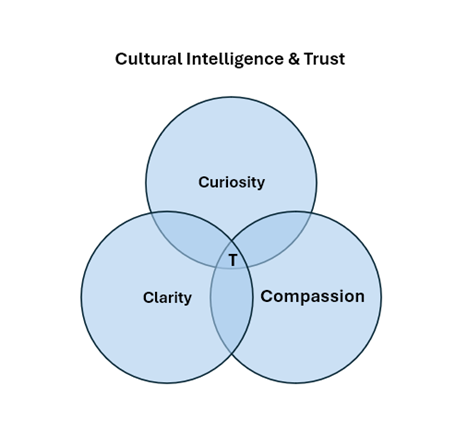
Lack of trust between global teams and cross-functional teams is very common but completely invisible and insidious in most organizations. Especially when you work in a complex environment with many functional groups having their success measures (“Key performance indicators”) different from other disciplines, the distributed teams often struggle to build trust, leading to silos and limited collaboration. Unfortunately, this lack of trust has immediate and long-term side effects such as delayed decision-making across functional groups, wasted time navigating cultures without adding value to the business objectives, and even employee dissatisfaction and high turnover. The “3C Trust-Building Framework”—Curiosity, Clarity, and Compassion offers a practical way forward: Curiosity encourages leaders to approach differences with openness, seeking to understand before reacting. It first starts with pausing for a moment to truly listen and be curious about understanding a bit deeper. Clarity seems obvious but most often overlooked; it is critical to ensure alignment by setting transparent goals, roles, and expectations across diverse teams. With AI-based translation tools, it is also important to double-check the nuances and context. Tonality can be subtle but important. Compassion reinforces human connection, creating the feeling of safety and mutual respect in environments where misunderstandings are common.
When applied consistently, the 3C framework transforms trust from an intangible aspiration into a measurable, strategic advantage—helping leaders foster stronger collaboration, accelerate decision-making, and build engaged, resilient teams across cultures and functions.
As a result of implementing this program, you will experience increased leadership effectiveness in managing employees with diverse backgrounds and improved collaboration amongst teams.
High-performing teams can spend up to 20% of the time navigating cultural differences that do not contribute to the productivity of their work. Leaders who are facing these challenges often feel isolated and frustrated, unsure of how to address challenges without sacrificing who they are authentically (having to “put on a face” to deal with today’s challenges). This is not a sustainable or authentic way of being a leader, as business leaders – we get modelled after. This program is born from this intersection of daily challenges in complex and high-pressure business settings and human connections that are essential to build trust and understand each other.
It is imperative to remember that collaborative Leadership is not a soft skill. It’s a strategic advantage. Once you master the skills and learn how to use the tools, you will be able to evaluate new challenges in a much more systematic and empathetic way, resulting in more effective communication and enhanced teamwork that is inspired, not forced.
The more prevalent AI tools we use as part of our tools and methods, the more critical it is that we have authentic human connections where we can collectively cultivate communication skills, mindset, and leadership behaviors required to lead in our increasingly interdependent world. This distinctive human ability to build trust, align diverse teams, and co-create across silos becomes the unique differentiation for sustainable success and corporate culture that is based on connection. Too many corporate cultures are still running on fear and mechanical leadership behaviors; it isn’t about commanding the results; it is about facilitating environments where people feel safe being themselves and respecting others’ unique contributions. As we develop our next generation of leaders, while AI and technology adoption continue to accelerate, it’s our own empathy and authentic connection that determines how effective we are all going to be. Our collective mind, through genuine human connection, is our superpower.
Case study #1 Productivity loss – A global tech company faced challenges among its international teams located in multiple countries, with about 60% of their entire workforce spending at least 10% of their time navigating cultural differences and communication challenges, not contributed to the productivity of their work. Unfortunately, this number was worse amongst higher-ranking managers due to the nature of their responsibilities across different groups, spending up to 30% of their time to non-productive work. The number one reason for this lost productivity was lack of trust, which was often worsened by the language and unspoken cultural norms. A training that highlighted the current issues and included nuances missed by AI-translated language models improved their understanding and awareness of the differences. Over 80% of the participants said they will be able to apply what they learned immediately to everyday work.
Case Study #2: Using AI and human connection for the best results – Unilever’s pilot of BetterUp’s AI coaching tool called “Grow” demonstrated that, while AI offers scalable, real-time practice and feedback, the presence of human coaches remains vital for conveying cultural nuance and building trust. This indicates that both AI and human coaching play essential roles in effective corporate training programs (Business Insider, 2025). Early users of BetterUp Grow reported 95% satisfaction with the AI coaching experience. Participants also showed a 16% increase in confidence when handling leadership challenges after combining AI practice with human coaching support. This case is a great example of what is to come even more in the future of effective training programs, where you combine the efficiency of technology and the cultural fluency of human experiences to maximize the best of both worlds.
This program has five main parts: First, you will understand and prioritize the challenges, we often get accustomed to working in certain ways, and mechanically accept by saying “oh, it’s just a cultural difference” or “it is what it is”…as leaders, we need to be holding a mirror in front of ourselves and acknowledge that collaboration and trust can be improved resulting in better quality work and more joyful work environment that fosters creativity and innovation. During this phase, we will build foundation, and measure opportunities to improve and set priorities clearly based on business objectives and current state of employee engagement. The second part focuses on learning and implementing more effective communication that uses a practical process of improving clarification and intentional understanding. The third portion of the program provides actionable guidelines and tools that foster effectively leading presentations and facilitating meetings across cultures and diverse functional groups who have different levels of expertise in the topics being presented. The fourth portion emphasizes how to be authentic but also be flexible without mechanically confirming to the expected norms no there’s no harmonious dynamics and less conflicts across borders and functional teams, especially under high pressure. Collaboration through authentic adaptation and connection is how we build rapport and lasting trust. The last part of the program introduces how to implement these programs’ key principles for real-life application and integration practices. We will develop action plans that are practical and sustainable as a process when new challenges arise in the future, the same principles can be applied and adapted.
Curriculum
Collaborative Leadership – Part 1- Year 1
- Part 1 Month 1 Foundation building
- Part 1 Month 2 Measuring opportunities
- Part 1 Month 3 Priority setting
- Part 1 Month 4 Contextual communication
- Part 1 Month 5 Intentional communication
- Part 1 Month 6 Cross-functional communication
- Part 1 Month 7 Impactful presentation
- Part 1 Month 8 Cultural intelligence
- Part 1 Month 9 Authentic adaptation
- Part 1 Month 10 Trust building
- Part 1 Month 11 Meaningful integration
- Part 1 Month 12 Action plan
Program Objectives
The following represents the Key Program Objectives (KPO) for the Appleton Greene Collaborative Leadership corporate training program.
Collaborative Leadership – Part 1- Year 1
The Collaborative Leadership Program is designed to help global leaders with the mindset, tools, and strategies to thrive in complex, multicultural, and cross-functional environments. Over the course of 12 months, participants move through a structured progression—from building foundational awareness to developing actionable leadership plans that drive measurable results.
The program begins by helping leaders identify and measure hidden productivity losses caused by cultural and functional misalignments. Through diagnostic tools, mirror-moment reflections, and structured discovery, leaders surface inefficiencies that often drain up to 20–30% of their teams’ time. These insights become the foundation for targeted growth.
Participants then build capability in contextual and intentional communication, learning to translate ideas into clear, audience-centered messages. Real-world exercises highlight how cultural nuance, lost in AI translations or rushed conversations, can be addressed through clarity, empathy, and intentional framing.
As the program progresses, leaders develop cultural intelligence, strengthen cross-functional collaboration, and practice trust-building skills that reduce silos and increase engagement. Case studies and live dialogues help leaders balance authenticity with adaptability, fostering environments where diverse voices thrive.
The program culminates in a personalized action plan, ensuring participants leave with practical steps to implement immediately, within 30 days, and over the next 12 months—turning insight into sustained organizational impact.
The Collaborative Leadership Program is designed to help global leaders with the tools and processes needed to drive productivity, engagement, and trust across complex, multicultural, and multidisciplinary environments. Leaders today often face invisible barriers—misaligned work styles, unspoken cultural norms, and fragmented KPIs—that quietly erode collaboration and result in wasted time, stalled decisions, and reduced morale. This is a common yet subtle challenge that often remains undetected until it is too late, manifesting as lowered work morale or even escalating to conflicts or litigation.
This program provides a practical roadmap to overcome these barriers. Participants learn to build authentic trust across distributed teams, strengthen communication skills, and systematically approach collaboration with empathy and clarity. Through case studies, including a global tech company that reduced productivity loss by addressing cultural gaps, and Unilever’s AI-plus-human coaching pilot, leaders see firsthand how both technology and human connection can accelerate effectiveness.
By mastering collaborative leadership, participants gain not just stronger teams, but a strategic advantage—sustainable results built on authentic connection and cross-cultural fluency.
The aims of this workshop are to:
• Equip leaders with tools to translate innovation into measurable business results.
• Build the ability to identify and resolve cultural misalignments before they escalate into conflict or attrition.
• Develop systematic methods for improving cross-functional collaboration in complex, multipipeline environments.
• Strengthen leaders’ skills in persuasion, communication, and trust-building across geographies and disciplines.
• Demonstrate how to integrate AI-driven insights with human connection for long-term leadership development.
The goals for participants are to:
• Reduce wasted time spent navigating silos and cultural barriers.
• Increase team engagement and retention through authentic leadership.
• Enhance decision-making speed and alignment across functions.
• Apply practical frameworks to lead with empathy, clarity, and confidence in global organizations.
Methodology

Collaborative Leadership
Program Methodology: Building Cross-Cultural & Cross-Functional Excellence
Our methodology begins by laying a strong foundation of awareness around the real-world challenges that arise when working across cultures and functions. Through structured discovery, we help teams surface the underlying tensions, misalignments, and inefficiencies that often go unspoken—but significantly impact performance or employee morale.
We use a blend of qualitative research tools such as pre-interviews, anonymous online submissions, and live dialogues, tailored to the group size and dynamics. These methods uncover key internal friction points and illuminate perception gaps within the organization. After the initial session, participants engage in practical “mirror moment” exercises designed to measure and reflect on productivity losses linked to cross-functional or cross-cultural barriers. Our diagnostic framework is customized to align with your organization’s structure and business goals, ensuring that insights lead to meaningful action. We also utilize quantitative research methods to measure and diagnose the level of productivity impact. Collected insights are synthesized into a clear and concise report outlining the current state of team communication, collaboration, and cross-cultural alignment. This report becomes the foundation for an interactive live workshop, where we translate findings into clear, prioritized areas for improvement. We apply human-centered problem-solving principles to ensure relevance across diverse business scenarios, empowering participants to apply insights with emotional intelligence and cultural empathy.
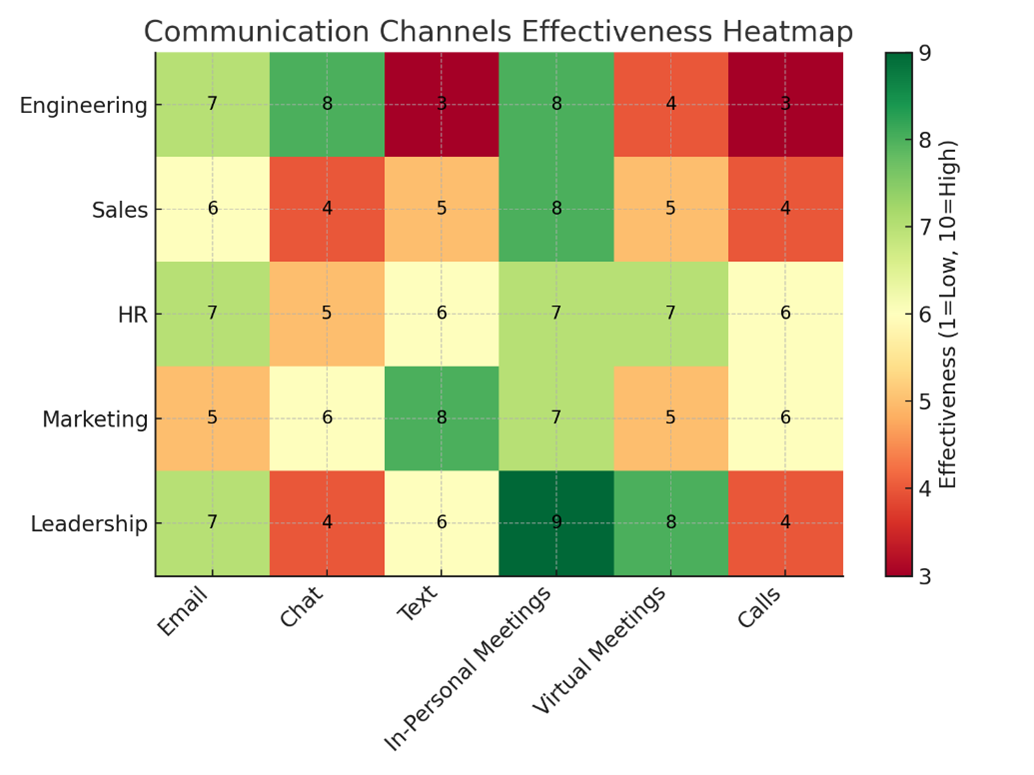
Using our simple but powerful “Contextual & Intentional Communication” framework, we address real-world business communication challenges—including emails, meetings, chat tools, and other daily interactions. We focus on shifting from “what I want to say” to “what the audience needs to hear.” Participants explore the limitations of AI-powered translation and the nuances often lost in automated communication. They learn to simplify complex messages for clarity, especially when working with culturally or linguistically diverse teams. Through “before and after” communication exercises drawn from real-life business examples, participants practice improving clarity, intention, and resonance. These exercises build the habit of initiating and closing conversations with purpose, enhancing daily collaboration and strengthening relationships.
The program also addresses cultural fluency without encouraging mechanical conformity. We explore how to stay grounded in personal values while respecting cultural differences, how to balance authenticity with expected business norms, and how to build trust through the three “C” framework: curiosity, clarity, and compassion. We provide structured guidance for managing difficult conversations with professionalism and empathy, offering real-world case studies including expatriate integration and multicultural team onboarding.
The final phase of the program is dedicated to meaningful integration and action planning. Participants develop practical individual and team-level plans that align with their day-to-day work and long-term goals. These action plans are structured into three timeframes: immediate next steps, changes to implement within 30 days, and longer-term goals over the next 12 months. The workshop concludes with creative use cases and examples that reinforce the application of concepts across various team dynamics, communication scenarios, and corporate cultures.
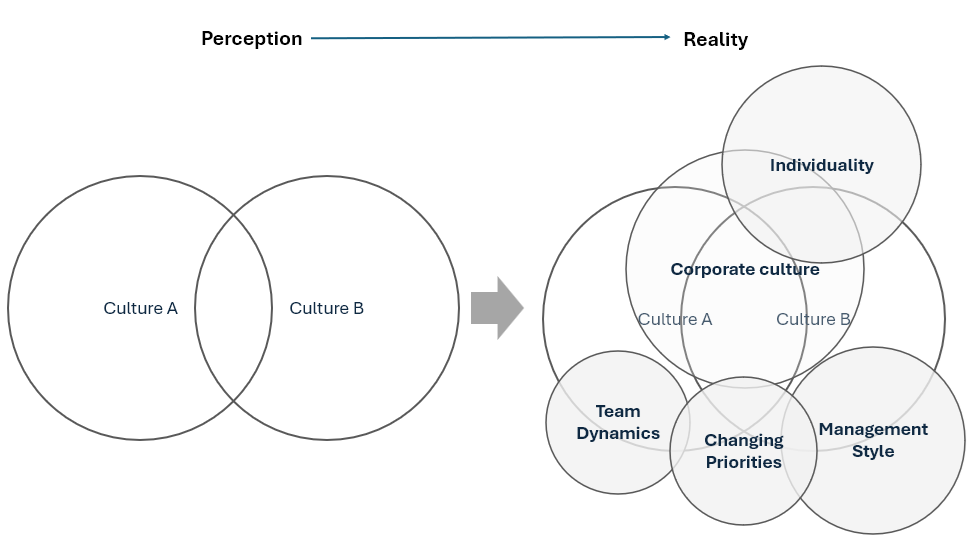
Figure 1.1 explores the gap between perception and reality when working across functions and cultures. What we believe we’re communicating is not always what others perceive. This program is designed to close that gap, transforming awareness into action and intention into lasting impact. This view is important for leaders to keep in mind for their day-to-day interactions with their diverse teams and decide to apply the three “C” accordingly and empower individuals to lead more collaboratively with enhanced cultural fluency. It is also a visual reminder that we can only lead others with genuine compassion by staying true to ourselves.
Industries
This service is primarily available to the following industry sectors:

Automotive
The Automotive Industry is experiencing a transformative period in its history – electrification, autonomous driving, and shifting consumer expectations that are driven by changes in their lifestyles and consumer technology. Global supply chains remain fragile, competition is intensifying with brand new competitors from global markets, and regulatory pressures are reshaping strategy. For leaders, the challenge is not only to innovate, but also to align diverse teams around transformation and resilience across borders and functions. In addition to the external changes, leaders must manage transformation toward software, data services, and mobility-as-a-service, not just hardware or production, by upskilling the existing workforce as well as attracting and retaining talent. According to a recent report from Reuters, Europe is expected to see battery electric vehicles (BEVs) exceed 50% of new light vehicle sales by 2032, overtaking hybrids after 2030. Europe has been the leading major market for electrified vehicles, and other markets are following at varying paces.

Technology
Technology is the engine driving nearly every sector’s evolution and innovation, impacting everything from the very core of the product to the backbone of services. Which means, from high-computing AI to cybersecurity to cloud infrastructure, the pace of advancement has been faster than ever. This rapid and continuous change comes with challenges such as talent shortages, ethical questions, and constant competitive leapfrogging. Tech leadership now means more than overseeing engineers; it requires compassion, empathy, and building genuine relationships for long-term teamwork. It’s also about having a clear vision, adaptability, and cultivating cultures that attract and retain the best minds. Programs that develop leaders capable of balancing innovation with discipline, and ambition with accountability, are the cornerstone of sustainable advantage. True collaboration is a superpower that only humans have through meaningful connection and open-mindedness to learn from each other.
Between 60 and 90% of tech leaders report they’re facing challenges finding skilled workers; it is more critical than ever to not only find the talent but also develop and retain them. Culture, vision, and clarity of mission matter more than ever in attracting and holding onto scarce talent. You need to create the right environment for skilled workforce to stay productive and creative by inspiring them, not only by incentivizing them.

Consumer Products
Consumer products are transforming into a new reality: buyers are more informed with easy access to information, and more demanding ever, in part driven by “on-demand” services that are nearly instantaneous. E-commerce, social platforms, and direct-to-consumer models have dismantled traditional channels. Supply chain shocks, cost pressures, and sustainability demands from consumers, as well as regulations, add to the complexity of the full picture. For global leaders, the competitive market is not just shelf space, but trust and relevance (especially for younger generations who want to know the purpose behind actions for corporations). Strong leadership is required to anticipate shifts, act decisively, and energize organizations to deliver value faster than competitors. Those who build leaders who can connect vision to execution will define the next generation of consumer brands.
Supply chain and cost pressures are intense: in Europe, 94% of fast-moving consumer goods (FMCG) firms report increased costs (labor, transportation, raw materials); 40% are experiencing labor shortages; almost 20% report disruptions affecting up to 20% of product lines, based on recent publications by Allied Market Research. Leaders in CPG must be more strategic than ever, using temporary tactics to address supply chain challenges or talent shortage for labor or other highly critical areas often create even more substantial challenges in the long run. They must foster innovation under margin pressure: balancing this quarter’s sales with investing for future product opportunities that are differentiating and innovative. Leading through disruption requires not just operational competence but vision and culture that encourage adaptability, experimentation, and resilience.
Locations
This service is primarily available within the following locations:

Detroit MI
Reinventing the Motor City
Detroit’s identity remains inextricably linked to the automobile. “The big three” of American automotive manufacturers, General Motors, Ford, and Stellantis anchor the city, while both established and emerging technology suppliers provide critical support in electrification and software-defined vehicles as well as traditional needs that are all important part of the automotive industry. A new layer of start-ups in EV batteries and ADAS software continues to innovate and energize the city of Detroit and its surrounding areas. mobility incubators like Detroit’s Newlab — signal the city’s attempt to redefine itself as a hub for mobility innovation.
Detroit’s tech industry today is a vibrant and rapidly expanding ecosystem that has transformed the city from its historic auto manufacturing roots into an emerging tech hub. Since 2010, Detroit’s tech sector has grown by about 60%, significantly outpacing the national average. Major technology companies such as Google, Microsoft, Apple, Amazon, IBM, and Rocket Mortgage have established significant operations in Detroit, attracted by the city’s growing tech talent pool and affordable cost of living. Detroit’s supportive startup ecosystem includes hubs like TechTown Detroit and initiatives like the Michigan Pre-Seed Fund 2.0, which bolster early-stage ventures
Downtown Detroit has undergone a remarkable revival over the past decade, featuring vibrant stores, restaurants, and a riverwalk that overlooks the Canadian side. For families, Detroit offers a cultural renaissance to match its economic reinvention. The revitalized downtown and riverfront, the Detroit Institute of Arts, and music legacies such as Motown remain draws. Sports are also central: a family weekend can include a Tigers baseball game or Red Wings hockey alongside hands-on exhibits at the Michigan Science Center. The challenge is keeping residents and talent in the city, as harsh winter conditions and a short spring season compared to other big cities on the West Coast deter them. However, if you are an avid traveler, you will find Detroit to be an ideal location for direct flights to most major cities in the world, as it naturally serves as a key geographical hub.

Chicagol IL
The Middle Market Powerhouse
Chicago is located in the northern part of the state of Illinois, on the shore of Lake Michigan, offering stunning waterfront views in the heart of the city. Chicago’s strength lies in its diversified economy. Aerospace giants like Boeing (until recently headquartered there) and United Airlines give it an aviation backbone, while food companies such as Mondelez and Kraft Heinz highlight its role as a consumer goods centre. In healthcare and medical devices, Abbott Laboratories and Baxter International are global leaders, joined by a thriving ecosystem of medtech suppliers and research tied to Northwestern and the University of Chicago. These top universities draw talent from all over the world, providing a natural and robust ecosystem for new tech startups.
Chicago’s tech industry has been growing over the past decade and have sustainable growth projections thanks to the pipeline of academic support, skilled workforce, and affordable living. Key growth areas include FinTech, leveraging the city’s financial roots; HealthTech, with companies focusing on healthcare innovation; Logistics Tech, benefiting from Chicago’s status as a transportation hub; and Food Tech, building on the city’s presence. The tech sector is also integrated into existing industries, with large corporations like Google, Salesforce and other key technology companies establishing a presence and benefiting from Chicago’s strategic location and vibrant business environment. Chicago is home to companies with long roots, and its rail and highway networks make it indispensable to US supply chains.
Culturally, Chicago offers a balance of world-class arts and family accessibility. Millennium Park and Navy Pier are magnets for families, while the Museum of Science and Industry remains one of the most interactive in the country. Chicago’s theatre scene rivals New York’s, and its architectural tours along the Chicago River are a showcase of the city’s commercial rise.

New York NY
The Entire World in One City
No American city combines so many aspects of our economy and culture as seamlessly as New York. While Wall Street still dictates the rhythm of international markets, today’s New York features a tech industry that stands as a true rival pillar to finance. More than 600,000 tech professionals work across the city, with leading firms like Google (Chelsea), Amazon (Long Island City), Meta, IBM, and a flourishing ecosystem of over 220,000 tech businesses and startups, especially in fintech, AI, and cloud computing. New York hosts Empire AI—a $400 million initiative making the city America’s center for artificial intelligence R&D and startup activity. Venture capital, top schools such as NYU, Columbia, Cornell Tech, and the proximity to global finance drive innovation throughout the five boroughs.
Healthcare is equally formidable: major institutions such as Mount Sinai, NYU Langone, and Memorial Sloan Kettering anchor a rapidly expanding “life sciences corridor” on the East River, now home to emerging biotech and medical device companies fueling nationwide breakthroughs.
Culturally, New York’s depth is unmatched. Families enjoy world-class experiences at Central Park Zoo, the American Museum of Natural History, and Bronx Zoo, while Broadway opens theatres to all generations. Sports franchises—from the Yankees and Mets to the Knicks and Liberty—power intergenerational city traditions. Still, affordability remains a challenge: cultural abundance is often inaccessible to middle-class families, with rising costs felt acutely across neighborhoods.
For food lovers, New York is unparalleled—offering everything from iconic New York bagels and pizza to innovative Michelin-starred experiences, with endless options for daily culinary discovery and global flavors.
Today’s New York is a city in dynamic balance: finance, tech, healthcare, culture, and commerce fuel explosive growth and creative re-invention, yet questions of accessibility, affordability, and family-friendliness linger beneath the dazzling surface.
Program Benefits
Management
- Leadership effectiveness
- Cultural fluency
- Higher empathy
- Increased productivity
- Increased collaboration
- Improved communication
- Global perspective
- Positive environment
- Increased engagement
- Conflict resolution
Human Resources
- Leadership development
- Higher engagement
- Talent retention
- High-impact teams
- Compassionate leadership
- Growth mindset
- Improved coaching
- Improved collaboration
- Empowered employees
- Inclusive environment
Sales
- Increased Productivity
- Effective Storytelling
- Value proposition
- Empathetic selling
- Clear communication
- Global perspectives
- Trust building
- Presentation Skills
- Customer benefits
- Negotiation & closure
Achievements
Ms. Palmer brings more than 25 years of proven leadership in transforming ideas into market-defining products and building high-performing teams across North America, South America, Europe, and Asia. Her career has been defined by delivering measurable results in some of the most complex and competitive industries, where collaboration across cultures, disciplines, and geographies was not optional but essential for success.
At a leading global automotive OEM, Stellantis she led the prioritization of strategic investments in autonomy, infotainment, and connectivity, uniting diverse stakeholders to drive sustained business growth. She spearheaded company-wide technology implementation, fostering collaboration across all functional leaders and securing C-suite endorsement. As a trusted advisor and mentor, she developed exceptional executives who continue to lead authentically and inspire excellence in the Automotive and Consumer Electronics Industries.
She also partnered with law enforcement agencies and the FBI to improve stolen vehicle tracking processes, leading cross-functional efforts that combined corporate, technical, and investigative expertise to assist local police and customers.
Her track record extends to leadership development and corporate training, where she designed and delivered executive workshops for a major global technology company. The program focused on cross-cultural collaboration and achieved over 80% positive feedback on its practical application, equipping leaders to work more effectively across international teams and functions.
Today, through her company, she continues to guide global executives in mastering collaborative leadership. By blending technical expertise with cultural intelligence and practical coaching, she empowers leaders to build trust, break down silos, and create sustainable impact in an increasingly interconnected world.
More detailed achievements, references and testimonials are confidentially available to clients upon request.
Client Telephone Conference (CTC)
If you have any questions or if you would like to arrange a Client Telephone Conference (CTC) to discuss this particular Unique Consulting Service Proposition (UCSP) in more detail, please CLICK HERE.