

Enlightened Leadership – WDP1 (New foundation)

The Appleton Greene Corporate Training Program (CTP) for Enlightened Leadership is provided by Dr. Hattingh Certified Learning Provider (CLP). Program Specifications: Monthly cost USD$2,500.00; Monthly Workshops 6 hours; Monthly Support 4 hours; Program Duration 24 months; Program orders subject to ongoing availability.
If you would like to view the Client Information Hub (CIH) for this program, please Click Here
Learning Provider Profile

Dr. Hattingh is a leading executive coach and a qualified psychologist and lectured to MBA students in organizational psychology at leading universities. She is also an international speaker, authentic, enlightened leadership expert, and author of over twenty-five books.
In the early 1990s, Dr. Hattingh was appointed, under the leadership of Nelson Mandela, as part of the healing, change, and transformation agents of a country like South Africa in crisis. She received the Professional Business Woman of the Year Award for her transformational contributions.
The inspiring transformation journey of Nelson Mandela is a living example of what enlightened leadership and Power Intelligence in action are all about. He emerged as one of the world’s most acclaimed leaders, mentors, bridgebuilders, pathfinders, and mapmakers, forging a new path to a quality future that benefitted all. Madiba, as he is lovingly known, was a modern-day alchemist who could turn lower-order mindsets, power games, anger, frustration, hate, and the inevitable implosion of a country and its people into peace, harmony, cooperation, resilience, and progress. His light still shines brightly.
Dr. Hattingh has published two books on the life and leadership of Nelson Mandela.
This is the essence of Enlightened Leadership. This is also the essence of the new emerging intelligence, Power Intelligence – the intelligence of the future. Welcome to this program on enlightened Leadership, where you will learn about Power Intelligence in action from an experienced thought leader, pathfinder, and mapmaker.
Dr. Hattingh has over 30 years of experience in executive coaching, business and HR consulting, and training CEOs, Executives, and leaders in various positions in self-coaching, Power Intelligence, Enlightened leadership, and strategic planning. She has also facilitated change and transformation in communities, teams, companies, organizations, and government departments. Her clients include Anglo-American, the Reunert Group, Zeis International, Sasol, The South African Government, the SA Defence Force, the SA Police services, Mercedes-Benz, Audi, Volkswagen, Nissan, SANLAM, Independent Development Corporation (IDC), Telkom, and other national and international companies.
Dr, Hattingh’s areas of Expertise cover personal development by recovering our DNA success blueprint, transforming companies by rewriting organizational DNA, and developing enlightened leaders. She uses the science of Epigenetics in the workplace to enhance organizational culture. Her work is about recovering our original DNA blueprint as our authentic selves, rewriting personal and organizational DNA, and enhancing organizational culture while creating a new mindset and foundation to secure a sustainable future.
Her wide range of industry experience includes various sectors, like Human Resource Development, Technology, Education, Banking and Financial Services, Insurance, Oil and Gas, Healthcare, Mining, Communications, Agriculture, Automotive Industry, and Energy. She has commercial experience in the following countries and cities: New York in the United States, London in the United Kingdom, Johannesburg and Cape Town in South Africa, Stuttgart in Germany, and Sydney in Australia. Other African cities and countries include Windhoek in Namibia and Cairo in Egypt.
Dr. Hattingh has excelled in providing the latest research and development of new, cutting-edge information on Power Intelligence, Epigenetics in the workplace, and Enlightened Leadership. Self-coaching, personal and organizational assessment, and new development strategies form part of her body of work that includes over twenty-five published books. She is also an international speaker and is frequently invited as a keynote speaker at national and international academic conferences and business and organizational events.
Her aim is not only to bring Enlightened Leadership with Power Intelligence and all it encompasses to the marketplace at a time like this – but to contribute to making authentic, enlightened living and leading a way of life. You are invited to join this exciting adventure of discovering this new power and potential for – herein lies our future. You are invited to join this exciting adventure.

MOST Analysis

Mission Statement
As the world and its people change and shift, we need to lay a new foundation. The foundation is found by understanding three important concepts: what is the truth about success, happiness, and prosperity, what does the future hold, and how do we co-create this new future? In this workshop, we start by developing a big-picture view of life. The next step is to draw up a map of obtaining this prosperous future. The third step is identifying all the necessary skills and tools, including developing Power Intelligence, to create this prosperous future. We find the answer to the question, What is an enlightened leader? After this workshop, you will have a new mindset with a list of ten vital skills and tools that must be developed to reach the next level of success and prosperity. You will also know how to navigate the power shift and take others with you.

Objectives
01. Introduction and background: Getting to know who you are and who your program attendees are as fellow travelers provides a safe space for interaction and collaboration.
02. Future Vision: Creating a vision of the desired outcomes for our personal lives and the future of the organization as provides the motivation and inspiration to get involved, stay mindful and conscious, and put in the necessary effort to make the vision a reality. organization.
03. Aligning Global Values: Laying a new value foundation and aligning it with global values provides a sound base on which to build the new vision of the future.
04. Recovering DNA-blueprint: In this lesson, we focus on the latest genetic research and learn how to recover our original DNA Success blueprint, as our authentic self.
05. Power Intelligence (PI): We focus on emerging new intelligence, power intelligence (PI), which is the intelligence of the future. All enlightened leaders now need to develop their PI.
06. Map Development: Empowered with a new vision and mindset from the previous lessons, each participant refines their vision of the future and develops a map that will take them there.
07. Self-assessment: Self-awareness, self-assessment, and self-knowledge are cornerstones of authentic, enlightened leadership. We implement the Power Intelligence Success Profile (PISP) as a self-assessment tool.
08. Self-coaching program: From the Power Intelligence Success Profile Report (PISP-Report) each participant draws up their self-development program.
09. Authentic-self vs ego-self: In this lesson, we learn about the authentic self and the shadow ego-self, as well as how to distinguish between these aspects of self, including others.
10. Epigenetics in Organizations: Understanding the fundamentals of Epigenetics has become increasingly important in harnessing this power to secure progress.
11. Rewriting Organizational DNA: Empowered with a new foundation and mindset, participants will understand how to rewrite organizational DNA and empower HR development.
12. Enlightened Leadership: To achieve all these goals, participants must learn to become enlightened leaders, our new pathfinders, mapmakers, and bridge builders. These modern-day alchemists transform lower-order values and thinking into higher-order power and potential.

Strategies
01. Introduction and background: Each participant has the opportunity to introduce themselves and meet the other participants on this journey. There is an opportunity to share mutual expectations, values, and visions.
02. Future Vision: Using visualization techniques, each participant creates a future vision and draws a map for themselves and their organization. Visualization is a technique that includes breathing to access deeper brain waves, moving from alpha to beta to gamma brain waves. It is here that we find a clearer picture of what the future holds.
03. Aligning Global Values: The Five Pillars of Authenticity, as being connected, centred, grounded, focused, and inspired, provide a sound foundation for implementing the new mindset and brings clarity for further map development. We align with global values outlined in the UNITED NATIONS Development Goals. This includes the five P’s – people, planet, prosperity, peace, and partnership. (See UN PDF included)
04. Recovering DNA blueprint: In a PowerPoint presentation, we outline the basics of success and the success DNA blueprint. Each participant summarizes their own success markers and the success symbols of the organization.
05. Authentic-self vs ego-self: In a PowerPoint presentation, each participant learns about the authentic self and their shadow ego-self and how to distinguish between these aspects of self, including others.
06. Power Intelligence (PI): Power Intelligence (PI) is introduced as the intelligence of the future and the counterbalance to Artificial Intelligence (AI. We learn how to activate the frontal lobe of the brain with visualization techniques.
07. Self-assessment: The Power Intelligence Success Profile (PISP) is implemented as a self-assessment tool. The PISP is an online assessment tool, and the link will be provided for each participant to complete the questionnaire.
08. Self-coaching program: From the Power Intelligence Success Profile Report (PISP-Report) each participant draws up their self-development program. A one-pager gives guidelines of what needs to be included in the self-development and self-coaching program.
09. Epigenetics in Organizations: The basics of Epigenetics are discussed. Participants learn about Epigenetics and have the opportunity to develop a strategy for implementing Epigenetics in the workplace.
10. Rewriting Organizational DNA: Empowered with a new foundation and mindset, participants will understand how to rewrite organizational DNA and empower HR development.
11. Enlightened Leadership: To achieve all these goals, participants must learn to become enlightened leaders, our new pathfinders, mapmakers, and bridge builders. These modern-day alchemists transform lower-order mindsets, belief-systems, hearts and minds into higher-order power and potential for herein lies our future.

Tasks
01. Participation in the meet and greet session: Each participant has the opportunity to introduce themselves and meet the other participants on this journey. This important step creates a foundation for further cooperation and collaboration.
02. Visualization techniques: We use various visualization techniques to access the subconscious mind, which not only holds a vision of the future but also solutions to our problems and answers to our questions.
03. With this new information, each persona creates a map for their personal future. Collaborating with each other also creates a map for the future of the organization.
04. In order to align with global values, each participant needs to read through the The United Nations Development Goals.
05. We draw a outline of the basics of success as defined by the shadow ego-self versus the authentic self and discuss the techniques of accessing and utilizing the the DNA success-blueprint.
06. Self-assessment: The Power Intelligence Success Profile (PISP) is implemented as a self-assessment tool.
07. Self-coaching program: From the Power Intelligence Success Profile Report (PISP-Report) each participant draws up their self-development program.
08. Authentic-self vs ego-self: In a PowerPoint presentation, each participant learns about the authentic self and their shadow ego-self, as well as how to distinguish between these aspects of self, including in others.
09. Power Intelligence (PI): Power Intelligence (PI) is introduced as the intelligence of the future and the counterbalance to Artificial Intelligence (AI)
10. Epigenetics in Organizations: We discuss the basics of Epigenetics, participants and develop a strategy for implementing Epigenetics in the workplace.
11. Rewriting Organizational DNA: Empowered with a new foundation and mindset, participants will understand how to rewrite organizational DNA and empower HR development.
12. Enlightened Leadership: To achieve all these goals, participants must learn to become enlightened leaders who are our new pathfinders, mapmakers, and bridge builders. These modern-day alchemists transform lower-order values and thinking into higher-order power and potential.
Introduction

You are now reading this information because you are attracted and inspired by leadership and the future we can create together. However, we need to create a holistic view of the history, development and future prospects of leadership and leadership development for you to understand where you fit in into the big picture.
History
While leadership was not formally studied until the 20th century, its history can be traced back to the dawn of human civilization. In ancient times and early civilizations, leaders emerged to organize essential activities, such as hunting and gathering, playing a crucial role in the survival and development of communities.
Early Leadership Theories. Early leadership theories included the Great Man Theory (19th Century). This theory suggests that great leaders are born with inherent traits that predispose them to leadership, drawing inspiration from historical figures like Julius Caesar and Abraham Lincoln. The Trait Theory was an extension of the Great Man Theory. This theory focused on identifying the personality traits that great leaders possess.
New leadership theories have emerged since the 20th century, including: The Behavioral Leadership Theory (1960s), which shifted the focus from inherent traits to the behaviors and actions of leaders. These theories emphasized that effective leadership could be learned through observation and practice. At the same time, Situational Leadership recognized that effective leadership depends on a given situation’s specific circumstances and context, emphasizing the importance of flexibility and adaptability.
Contingency Theories, such as Hersey-Blanchard’s Situational Leadership model and Fiedler’s leadership model, examine leadership effectiveness in relation to the situation and the leader’s ability to adapt.
Perspectives on leadership. Numerous books have been published since the early 2000s exploring various aspects and perspectives on leadership. These books encompass a diverse range of thinking and time periods. Although comprehensive, these diverse theories also brought confusion to the leadership development and training community. The question was, ‘What theory do you follow?’ It became evident that it was time for something new to emerge from a higher, all-encompassing perspective, explaining leadership in its entirety.
Leadership positions are usually viewed as political, financial, business, and social. In social media, the terms ‘influencer’, ‘trendsetter’, or ‘thought leader’ are used to denote new pathfinders, mapmakers, and influencers.
Senior positions in companies and organizations are usually seen as ‘leadership’ positions, although most of these posts are, in fact, management or project management positions. Not everyone in a senior position is necessarily also a leader. Therefore, leadership training for middle and senior management has become a necessity, emphasizing the importance of guiding, influencing, inspiring, and motivating individuals and teams within organizations.
Leadership styles have evolved significantly over time, with various approaches emerging in response to different social, economic, and political contexts.
Leadership is part of life. ‘Leader’ is derived from the Latin word leido, which means ‘to show the way’. A leader is a pathfinder, mapmaker, bridgebuilder, and guide to a new way of doing things and a brighter future. The leader has a vision of how things should be and how it can be done.
Leadership influence. Leadership is about influencing the direction of movement and change, whilst affecting the quality of the lives of others. We all have a conscious or unconscious power to directly or indirectly affect other people’s lives. This means that everyone, at some stage, takes on an influential or leadership role and makes an impact or gives direction. The only things that differ are the levels of influence and the quality and quantity of effects that we have. Different levels of consciousness and awareness determine various levels of influence and leadership. In essence, we all have influence – we are all leaders in our own way, where we are with what we have.
Confusion in the leadership profession. Although much has been done regarding leadership training and development, there is still much confusion in the hearts and minds of academics, trainers, coaches, and mentors. The reason is that an iconic leader like Nelson Mandela never had formal leadership training, spent almost twenty-eight years of his life in prison, and rose to become an iconic leader, gaining respect all over the world.
The leadership of Nelson Mandela. Nelson Mandela grew up in a rural area surrounded by a primarily illiterate community. As a youngster, he sat at the feet of the tribal leaders of the Xhosa nation. Madiba, as he was lovingly known, never attended formal leadership conferences or training courses as we have today. He knew nothing about leadership theories, and spent almost twenty-eight years of his life in prison and a maximum jail on Robben Island. However, he had a vision, and idea, and a focus that carried him through all the dark times until it was achieved.
“I have cherished the ideal of a democratic and free society in which all persons live together in harmony and with equal opportunities. It is an ideal which I hope to live for and achieve, but, if need be, it is an ideal for which I am prepared to die.”

However, Nelson Mandela is today celebrated as an iconic national and international leader who shone his light into the darkest of situations, bringing a new vision, hope, compassion, and prosperity to all. Madiba led from the heart, challenging all the academic perspectives and theories, and bringing a totally new perspective to leadership.
The question is, ‘What did Nelson Mandela have that set him apart from other leaders? How can we learn from his example and develop more enlightened leaders who can shine their light into a prosperous future that benefits all?’
This calls for a new mindset, a new heart set, a new value system, and a whole new skill set. We need to lay a new foundation and develop a new intelligence: Power Intelligence (PI). Power Intelligence is the intelligence of the future.
In workshop 1 of the Enlightened Leadership Program the aim is to lay a new foundation and equip those attending with a new approach to leadership, a new mindset, heart-set, skills, and tools so that they can accept their calling as our new pathfinders, mapmakers, and way-showers into a new season of success and prosperity.
This groundbreaking body of work is a global first. It is founded on the latest research, including the results from the Human Genome Project (HGP), which has changed the way we think about life and leadership.
Current
The Leadership Development and Coaching Profession.
A formalized global leadership development and coaching profession has evolved over many decades, and is today the global leadership development coaching market is estimated to be valued at US$ 105.69 billion
Anyone who sees themselves fit has climbed onto the leadership training bandwagon, for herein lies a lot of money. However, not everyone successfully trains and transforms their clients and students into enlightened leaders who can show the way into a brighter future. In many cases, people became confused and even stuck.
It is time to move to the next level. The challenge is to create a new mindset, develop a new skillset, and lay a new foundation, which evolved from the results of the Human Genome Project.
The Human Genome Project.
The Human Genome Project (HGP) was a major international research effort that lasted thirteen years. The aim was to map and sequence the entire human genome and identify and understand all the genes in human DNA. The goal was to advance our understanding of human biology and diseases and foster health, healing, and wellness.
The authentic self. The results revealed that humanity has genetic codes for biological functioning and holds the codes and keys for mental, emotional, and spiritual functioning, as well. The complete human genome, therefore, holds the codes and keys to a fully functional human being on all levels of existence as the authentic self.
The authentic self can create a life of health, wellness, success, happiness, and prosperity that benefits all.
The shadow ego-self. Unfortunately, we became disconnected from this power and potential and created our own self-image, as a delusional ego-self that is but a mere shadow of our true power and potential. This shadow ego-self created a world of disarray, poverty, sickness, negativity, and inevitably, an implosion. It is from this disaster that we are now trying to prevent by finding our way back.
Enlightened Leaders. To accomplish this goal, we need new enlightened leaders as our new pathfinders, mappers, bridgebuilders, and way-showers. These leaders have already identified and overcome the delusion of the shadow ego-self and know the way and go that way. These new enlightened leaders are conscious, mindful, and equipped to show the way back to authenticity, prosperity, and a flourishing society, community, organization, and, in the end, humanity. You are now reading this because you have a calling to become one of these enlightened leaders and help others to recover their original DNA Success Blueprint, while rewriting organizational and even global DNA. Our future depends on you standing up, taking back your power, and becoming the leader as new way-shower you have been called to be.
Conflicting value systems. The authentic self and the shadow ego-self have two mutually exclusive perspectives and value systems constantly battling for control. The power games of power-hungry, ego-driven leaders have caused much conflict, pain, turmoil, and wars. We find shadow ego-driven people in companies, organizations, and governments protecting their own interests while causing division, conflict, discrimination, and inevitable implosion.
Your calling. The calling is to stop this delusion by bringing truth and authenticity, turning the process around, and laying a new foundation of honesty, truth, integrity, enlightenment, and prosperity. This is what Nelson Mandela did. This is now our calling.
To achieve this goal, we lay a new foundation in workshop one, that not only includes a new mindset and heart-set but also a whole new intelligence—power Intelligence (PI). Power Intelligence is the conscious ability to take back our power and recover our original DNA blueprint by reconnecting with the authentic self and creating a new season of health, wealth, happiness, success, and prosperity that benefits all.
This is what this Enlightened Leadership Program (ELP) is all about. The ELP is a global first. It is the only leadership program that begins with the original DNA blueprint of the authentic self as the foundation for all leaders and leadership development. Without this sound foundation, leadership training is vulnerable to the shadow ego-self creeping in and taking over with disastrous consequences for all. The future, therefore, depends on the decisions we make now. The reason we can trust this process is because of the science and psychology of Epigenetics.
Epigenetics. The results of the Human Genome Project confirmed that our DNA potential is not fixed but flexible. Although we have an original DNA blueprint, various factors can influence how this power and potential are expressed. Epigenetics is the study of how behaviors and environmental factors can cause changes in gene expression without altering the underlying DNA sequence. It’s essentially how cells regulate gene activity, determining which genes are turned on or off, which affects how we function. These changes can be passed down to future generations.
Human Resource Development. In workshop one of the ELP, we focus on the power of Epigenetics in the workplace and how organizational culture can and does influence the release or inhibition of potential, right down to a DNA level. This has far-reaching implications for Human Resource Development (HRD). With this new information, companies, organizations, and even governments can safely ride the waves of escalating change while others will be left behind.
Rewriting organizational DNA. With Power Intelligence, this new mindset, heart, skills, and tools, we can now rewrite organizational DNA that includes more than structuring the company, but also human potential development. The Power Intelligence Success Profile (PISP) provides a one-page worksheet to start this process of recovering our original DNA blueprint. The PISP also provides a map for self-coaching.
Self-coaching. The coaching profession has evolved from ancient roots to a formalized field with distinct specializations. Early coaching practices can be traced back to ancient Greece, where philosophers like Socrates used questioning to guide individuals. In the 18th and 19th centuries, coaching was primarily associated with sports, focusing on athlete performance.
The modern coaching movement emerged in the 20th century, with coaching being used in education in the 1920s and then expanded to personal and professional development in the 1950s. Until now, the coaching profession has been an outside-in practice as a relationship between the coach and the coachee. The current shift now demands an inside-out approach where a person needs to learn how to coach the self. Self-coaching has become one of the most important skills anyone, especially leaders, needs to acquire and develop. Self-awareness and self-coaching form part of workshop one of the ELP.
In workshop one, we lay a new foundation for a new kind and quality of future, of a new kind and quality of leader, self-coaching, leadership training, Human Resources Management, and organizational development. We are creating the future in the … now.
The Future
The leadership and coaching profession.
The global leadership development coaching market is expected to reach US$ 206.08 billion by 2032, exhibiting a compound annual growth rate (CAGR) of 10.0% from 2025 to 2032.
The leadership development coaching market is a significant global industry with substantial growth potential. Driven by the growing demand for leadership development programs and coaching services, the market is projected to experience a significant increase in value over the next few years.
Factors Driving Growth include the need for organizations to develop effective leaders, improve employee engagement, and enhance overall performance are key drivers of this market growth. Organizations are investing heavily in leadership development programs, with some spending between 1% to 5% of their total annual revenue on these programs.
Benefits of Leadership Development: Leadership development drives employee engagement, increases the organization’s ability to deal with gaps in the talent pipeline, and reduces the costs associated with turnover. Leadership development is crucial for organizations to adapt to changing business environments, achieve sustainable growth, and maintain a competitive edge
Choosing the right leadership program.
Choosing the best leadership and coaching training programs for leaders and their organizations is a significant investment in human potential development, time, and cost-effectiveness. There are only two choices.
The answer to the question, ‘Where is this coming from?’ supplies the answer. Where a person is coming from will determine where they are going.

There are two options: people and training courses come from the authentic self, leading to health, wellness, and prosperity. The other option is that people and training courses come from the shadow ego-self without a sound foundation and bring confusion. It is essential to be informed when choosing the best leadership and coaching program for the organization, as it prepares everyone for the future.
“Two roads diverged in a wood, and I – I took the one less travelled by,
and that has made all the difference.”
The Road Less Traveled. Robert Frost.
Challenges of the future. The future holds significant changes across various aspects of life, including technology, climate, and the workplace. We can expect advancements in AI, renewable energy, and interconnectedness while facing challenges like climate change and its impact on human well-being. The future of work will likely see increased automation and a greater emphasis on human-centric skills, creativity, and adaptability.
Needs of the future. This emphasizes the need for a new kind and quality of human being to emerge to a new level of mindfulness and consciousness. Developing mindfulness, raising awareness, and elevating consciousness are pivotal in securing a prosperous future. This has triggered a fundamental shift and is forging a new paradigm.
The Paradigm shift. A paradigm shift is also a power shift – a shift in consciousness. These shifts result from evidence challenging the status quo or revolutionary innovation, ground-breaking information, or discovery. At the same time, they are also a power shift—a shift in consciousness and awareness. This not only includes coming from the heart, but also includes a genetic shift.
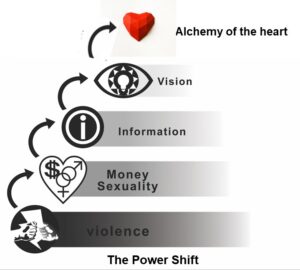
Genetic shift. As human consciousness awakens, new DNA potential is released at the same time, and vice versa. Genetic shifts are natural occurrences in nature, as only the fittest survive. Human DNA potential is no different. However, with the right mindset, heart-set, and skillset, we can fast-forward this process, thereby releasing new potential and gaining cutting-edge advantages. This process guarantees adaptability, resilience, and longevity.
Resilience and adaptability. The greater emphasis on human-centric skills, creativity, and adaptability will continue to grow as we prepare for the future. A paradigm shift is a fundamental and significant change in how people think and get things done that upends and replaces a prior paradigm. The new paradigm shift includes understanding authenticity, our DNA success blueprint, and the role of Epigenetics in the process.
This ground-breaking, cutting-edge information will continue to drive the paradigm shift, which will gain momentum as it moves from the periphery of traditional training and development to the core of human existence. Those leaders, companies, and organizations that invest in this training will gain the same cutting-edge advantages.
Future challenges for leadership
The future of leadership training and development focuses on equipping leaders with the skills to thrive in rapidly changing, digitally driven environments. Key trends include personalized learning, digital fluency, emotional intelligence, and adaptability. This includes leveraging technology for immersive learning, real-time feedback, and AI-driven coaching.
Personalized Learning: Leadership development programs are moving towards individualized learning journeys that cater to specific needs and career goals.
Digital Leadership: Leaders must be proficient in leveraging technology, managing digital initiatives, and leading in virtual/hybrid work settings.
Emotional Intelligence: Strong emotional intelligence is becoming a core leadership competency, enabling leaders to build trust, manage change, and foster inclusive environments.
Adaptive Leadership: Leaders must adapt to changing circumstances, make quick decisions, and embrace a culture of continuous learning.
Focus on Soft Skills: While technical skills remain essential, soft skills like communication, collaboration, and empathy are increasingly crucial for leadership success.
Vertical Development: Leaders need to focus not only on acquiring new competencies (“horizontal development”) but also on developing their capacity for growth and learning (“vertical development”).
Leadership at All Levels: Leadership development should extend beyond senior executives to encompass all levels of the organization, empowering individuals to take initiative and make impactful decisions. Leadership has become a way of life.
AI and Technology: AI-driven platforms, immersive technologies, and personalized learning experiences are transforming the development of leaders. At the same time, leaders must develop Ether Power Intelligence (PI) to be able to balance human potential and the
Emphasis on Mentorship and Coaching: One-on-one mentorship and small-group coaching can foster a coaching mindset and help leaders develop their own coaching skills. This should include self-coaching as an essential skill for effective, enlightened leaders.
Breaking out of the mould: Modern leadership development is moving away from traditional, positional power-based models and toward more strategic, inclusive approaches that reach across the entire organization.
Focus on Behaviors: Leadership development increasingly emphasizes mastering a wider range of effective leadership behaviors to meet current and future business needs.
These factors matter for several reasons: The business landscape constantly evolves, requiring leaders to be adaptable and innovative. Technology is transforming how businesses operate and how leaders lead. Leaders play a crucial role in promoting employee engagement and mental health, particularly in hybrid work environments. Creating diverse and inclusive workplaces requires leaders who foster a sense of belonging and respect for all. Effective leadership development drives innovation, improves performance, and achieves organizational goals.
Today, modern leadership training and development also includes spirituality.
Leadership, spirituality, and DNA
Spirituality involves the recognition of a feeling or sense or belief that there is something greater than myself, something more to being human than sensory experience, and that the greater whole of which we are part is cosmic or divine in nature.
Scientists have identified a specific DNA sequence that correlates with a connection to the universal grid. The VMAT2 gene has been found to play a role in comprehending higher truth, faith, and spirituality.
The geneticist, Dean Hamer, uses the term “God gene” in his book “The God Gene: How Faith is Hardwired into Our Genes”. Hamer suggested a genetic predisposition towards spirituality or mystical experiences. The gene VMAT2 comes from ‘vesicular monoamine transporter 2’ and is believed to influence the levels of certain neurotransmitters, potentially impacting one’s tendency towards spirituality. However, it’s important to note that the idea of a single “God gene” is not universally accepted within the scientific community, as spirituality is more complex than a single gene.
However, the principle of genetic connection to the universal mind and spirituality is widely accepted. However, it is essential to acknowledge that spirituality is a multifaceted human experience influenced by various factors, including genetics, environment, culture, and personal beliefs.
The takeaway is that we can become more aware and spiritually conscious when this genetic code, along with all our other DNA codes and keys, is active. Unfortunately, in most people, especially leaders in powerful positions, this valuable potential has become disabled. The decision-making process is therefore reduced to lower-order functioning. Combine this with ego-driven personalities, and the world is faced with conflict, confusion, and an inevitable implosion.

The challenge is to stop this downward spiral and develop enlightened leaders with a new leadership DNA. The aim of the Enlightened Leadership Program (ELP) to recover and activate our original DNA blueprint. By developing a new leadership DNA, enlightened leaders will be able to shine their light into the future, bringing solutions and hope to the people.
New foundation
In Workshop One, we lay a new foundation and create a new mindset necessary for being an effective, inspiring, and transformational leader. In workshop one, each participant receives a workshop manual and access to complete their Power Intelligence Success Profile (PISP), We also include guidelines for implementing a tangible business process and integrating new information, skills, and tools within your team and organization.
The following outlines represent the course workshop’s key program objectives (KPO): mission, Objectives, strategies, and tasks. We first start with a new vision.
Future world vision. As the world and its people change and shift, we need to lay a new sustainable foundation to keep us grounded. The foundation lies in finding answers to the following: What does the future hold? What is the truth about success, happiness, and prosperity? How do we co-create this new future?
In this workshop, we create a vision of a new kind and quality of future that includes fully functional people, teams, companies, organizations, and leaders that secure a future of health, wealth, happiness, success, and prosperity that benefits all, including Mother Nature.
The mission of this program is to empower fully functional people, teams, and organizations. To achieve this, the program aims to empower personal and business processes to ensure successful, flourishing organizations where people love working.
Unfortunately, the price of ineffective and dysfunctional people and processes is unhappy customers, stressed colleagues, missed deadlines, and increased costs, to name just some of the problems that dysfunctional processes can create. The aim of this program is to facilitate fully functional people in a fully functional organization.
This workshop aims to help you transform into an authentic, enlightened leader by recovering your original DNA Success blueprint. We achieve this goal by creating a new mindset, understanding Power Intelligence, developing new skills and tools, and laying a new foundation to create a new, prosperous future for each individual, team, and organization by rewriting organizational DNA.
Recovering our original DNA success blueprint.

Very few people are aware of our original DNA success blueprint as the blueprint of our authentic self. The authentic self as a DNA blueprint, holds the codes and keys to our health, wellness, success, and a prosperous future. Not only do we have a personal, authentic self and DNA code, but we also have a collective authentic self, like in a family, team, or organization, and DNA code. The whole organization is as good as the individual parts.
Unfortunately, we became disconnected from the DNA blueprint and authentic living. We created a self-made shadow ego-self. The self-made shadow ego-self formed out of the disconnection, fear, delusion, struggle, and survival that only leads to destruction. The mission is to identify these two parts of the personal and collective selves as the authentic self versus the shadow ego-self, stop any destructive processes, create a new vision of the future, lay a new foundation, and begin to make new, quality, informed, mindful choices that will take us forward.
In creating a new mindset, we need to revisit and identify the negative influence of the shadow ego-self not only in our personal lives but also in relationships, teams, and the organization as a whole. We can then create a new mindset by developing a new level of consciousness and awareness that the future is created in the present, in the NOW. Whatever new decisions we make now reverberate through to the future.
We set the stage for a new kind and quality of future by revisiting old mindsets, belief systems, and social programming to determine what is relevant in the new season and what is old, worn-out, and should be discarded. We replace the old with a new level of understanding, consciousness, and mindful living. To fulfill our mission, we need to develop a whole new intelligence – Power Intelligence (PI)
Develop our Power Intelligence (PI), the intelligence of the future. Not only is a new part of our DNA sequencing and our genome being activated by clock genes, but a new part of the brain is also awakening. This ‘awakening’ process is a natural occurrence. The reason is that only the fittest will survive in the future. to We need new power and potential to emerge to guarantee our survival. Herein also lies the longevity of an organization.
We can accelerate the process by becoming mindful and consciously releasing new power and potential. Unfortunately, most people are disconnected and, therefore, ‘blind’ to what potential is at our disposal and what the future can hold. Our mission is to raise awareness and help people reconnect.
This new awakening includes activating the frontal lobes of the brain. This highlights the importance of neurodiversity. Here, we can reconnect to the Power Spot or the Guide Spot. This is also the center and seat of Power Intelligence.
The Guide Spot is also the seat of our vision. It is here where we create our future. Power Intelligence is, therefore, the intelligence of the future.
New manual and toolbox. The next step in our mission is to develop a new manual and toolbox containing the skills and tools necessary to unleash all this new power and potential. Research has shown that we need nine basic skill groups to become fully functional, mature, successful adults who can meet the challenges of now and in the future and live happy, successful, and balanced lives.
The skills are rational intelligence (IQ), including neurodiversity (thinking), Emotional Intelligence (EQ), Driving forces (Motivation and Intentions), Processing of information (Communication), physical functioning (health), Gender orientation, Social Intelligence, Spirituality (including religion), and Self-awareness. At the same time, each person needs to navigate the demands of life and be flexible enough to live a balanced life. The aim is to streamline and boost formal and informal business processes to secure fully functional people, teams, and organizations.
This is what the Enlightened Leadership and Power Intelligence Corporate Training Program is all about.
Our mission is to reconnect and activate our Power Spot, the Guide Sopot, our inner GPS, which will guide us to this new, prosperous future. In the process, we also aim to develop a new kind and quality of a leader, such as an Enlightened Leader who can mindfully and responsibly work with power and potential. Enlightened Leaders have also mastered their Power Intelligence (PI).
The PI leader can say, “I know the way, I go the way, and I show the way.” They can say, “I know who I am, where I come from, where I am going, and why. Follow me.” These enlightened leaders are our way-showers, pathfinders, and mapmakers. They are our modern-day alchemists, changing lower-order potential to higher levels of conscious awareness and showing the way to a new and brighter future.
Case studies. We include a case study of a leading IT company undergoing a challenging transformation and amalgamation with another international IT company. See the PDF “Enlightened Leadership – Case Studies,” which is hereby included. You can download the PDF file here.
=During this program, we will use Nelson Mandela’s life and leadership as an example of one of the world’s most iconic enlightened leaders and the essence of enlightened leadership and Power Intelligence in action. Here, we find a practical implementation of this new enlightened mindset, heart-set, and value system. Here, we find an example of the power of love in action.

Case Study
CEO Stan
Stan, a 32-year-old CEO of a large IT company, was brought in to turn the business around during a time of restructuring and a pending international merger. Amidst financial instability and employee retrenchments, Stan also faced personal pressures: a new baby, a vulnerable wife, and a recently changed home environment.
Despite these challenges, Stan’s Power Intelligence Success Profile (PISP) indicated a 7.8% PI Positive force. While relying on strengths like leadership, big-picture thinking, and self-discipline, he was also drained by fears, frustrations, and unclear priorities. The data warned of potential burnout due to overextension and neglect of personal wellbeing.
Stan’s strengths included responsibility for others, self-respect, and inner character. However, his personal and intimate life were neglected. He was getting little rest, not eating well, and avoiding exercise. This imbalance posed serious risks to his health, marriage, and organizational goals.
To counteract this, Stan took strategic action: improving his diet, playing squash, taking his wife on a weekend getaway, and communicating openly with his staff. He committed to coaching sessions and made personal development a priority. Honest communication became a key focus. He began to see frustrations as indicators for growth and acknowledged fears of criticism, powerlessness, and failure.
Stan expanded his leadership by understanding the importance of emotional intelligence and managing “soft” issues, once overlooked. Through coaching, he gained tools to manage fear, frustration, and realign priorities toward balance.
His quadrant profile showed limited perception, initially sufficient for financial goals but inadequate for innovation. Guidelines were set to expand his perspective in priorities, fears, strengths, and frustrations.
Stan’s plan of action included:
• Personal time management
• Family connection and quality time
• Diet and exercise routines
• Coaching and leadership development
• Staff empowerment through open communication
Outcome: Stan successfully navigated personal and organizational demands, establishing himself as a balanced leader while guiding his company toward innovative growth.
For further reading:
You can download the PDF of these two case studies HERE
Executive Summary

Curriculum
The twelve focus areas or chapters in workshop one of the Enlightened Leadership Program include the following.
Chapter 1: New Foundation
Leadership is all about movement, guidance, direction, vision, and purpose. As a leader, you need to meet the people where they are, get them on board by selling your vision and mission, and inspire buy-in from all involved. Successful leadership always starts with a sound foundation. Many have tried various theories, but only those with a sound foundation can stand the tests of time.
A value system is not necessarily a sound foundation for values to change.
The only sound foundation is the kind and quality of your connections on all levels. This includes the internal connection with yourself, encompassing physical, mental, emotional, and universal/spiritual aspects. External connections in relationships, work, communities, cultures, and religions flow from inside out with people, things, and.
To become a fully functional leader, you first need to be connected, centered, grounded, focused, and inspired within yourself. The rest will flow from the kind and quality of your connection with yourself. You cannot fake this.
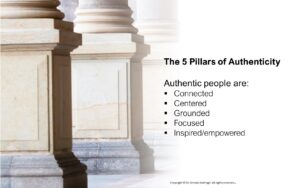
You can only be connected, mindful, conscious, or disconnected and mindless, or somewhere in between. This is also the difference between the authentic self and the shadow ego-self. Therefore, we only have two kinds of leaders. On the one hand, we have connected, centred, and grounded authentic leaders shining their light into the future. They build their leadership on the five pillars of authenticity.
On the other hand, we have disconnected, shadow ego-driven leaders who cause conflict and chaos.
In the introduction to Workshop One of the ELP, we create a new mindset and lay a new foundation of being connected, centered, grounded, focused, and inspired.
We will meet others attending this workshop and understand that we all have a unique piece of the puzzle to contribute to the big picture. The world is waiting for you to take in your place.

Chapter 2: Future Vision
Creating a vision of the desired outcomes for our personal lives and the future of the organization provides the motivation, direction, and inspiration to get involved, stay mindful and conscious, and put in the necessary effort to make the vision a reality. organization. This calls for the activation of the frontal lobe of the brain.
The frontal lobe of the brain is our guidance centre. In many instances, it is called the Miracle Mind or Guide spot (GS). Previously, the activation of the frontal lobe facilities was a natural occurrence. This set people apart from others who were still functioning on a lower level of consciousness and understanding.
It is estimated that approximately 80% of people are still part of the mindless masses. These are the followers. Understanding who you are going to lead is important for your success as a leader.
With the latest information in neuroscience and genetic psychology, we can now mindfully and consciously activate the frontal lobe, thereby releasing new energy, vision, understanding, and guidance. Those who develop these skills become our new enlightened leaders – people who shine their light into the future and ‘show the way’.
In this chapter, we learn how to activate the frontal lobe and the importance of visualisation to enhance the guidance process. Herein lies the core of enlightened Leadership. Here we find the core of our Power Intelligence. (PI).

Chapter 3: Aligning Global Values
When embarking on the path of enlightened leadership, a vast amount of power, potential, and new energy is released. The challenge is, therefore, not only to release and harness the new power and potential but also to steer the unfolding of this process in the right direction. Our value system provides the guidelines. A clearly outlined value system is therefore crucial in moving forward.
However, each person has their own value system, and so do organizations have their own value system and mission statement. The challenge is to combine these value systems and summarise these values that benefit all. The United Nations Development Guidelines provide a global value system within which development programs can unfold to the benefit of all. This is based on the five P’s: people, planet, peace, prosperity, and partnership.
UN vision and mission statement and development plan, states the following:
“We are determined to end poverty and hunger, in all their forms and dimensions, and to ensure that all human beings can fulfil their potential in dignity and equality and in a healthy environment.”
Planet. We are determined to protect the planet from degradation, including through sustainable consumption and production, and sustainably managing its natural resources and taking urgent action on climate change, so that it can support the needs of the present and future generations.
Prosperity. We are determined to ensure that all human beings can enjoy prosperous and fulfilling lives, and that economic, social, and technological progress occurs in harmony with nature.

Peace: We are determined to foster peaceful, just, and inclusive societies which are free from fear and violence. There can be no sustainable development without peace, and no peace without sustainable development.
Partnership. We are determined to mobilize the means required to implement this Agenda through a revitalized Global Partnership for Sustainable Development, based on a spirit of strengthened global solidarity, focused in particular on the needs of the poorest and most vulnerable, and with the participation of all countries, all stakeholders and all people.”
The interconnections and integrated nature of the Sustainable Development Goals are of crucial importance in ensuring that the purpose of the new UN Agenda is realized. If we realize our ambitions across the full extent of the UN Agenda, the lives of all will be profoundly improved, and our world will be transformed for the better.
Vision, mission statements, and value systems give direction for the choices and actions that need to be made. Once we make a decision and act on it, a process is put into motion. An idea and value become an process. Things begin to happen. The direction we move in will be determined by the values that guide the decision-making process. Leadership is all about directing this movement.
There are only one of two possibilities. Decisions are made by the authentic self that takes everyone into account and focuses on the well-being of all. The shadow ego-self is self-serving and bases its decisions on me and mine. This leads to destruction.
In this chapter, we will lay a new value foundation and align it with global values, which provide a sound foundation for building a new vision of the future.

Chapter 4: Recovering DNA blueprint
The Human Genome Project provided a deeper understanding of genetically coded human potential. The research revealed not only genetic codes for physical functioning, but also highlighted the fact that we have mental, emotional, and spiritual codes and keys that regulate our psychological and spiritual functioning. It was further found that our genetic potential is not static but is flexible, vibrant, and fluid. With the right mindset and skillset, we can activate new DNA potential, thereby moving to a next level of health, wellness, and prosperity.
Original DNA blueprint. At the core, we find our original DNA blueprint that holds the codes and keys to becoming a fully functional, happy, flourishing human being. This is our authentic self that holds the codes for health, wealth, happiness, success, and prosperity that benefit all. Unfortunately, we became disconnected from all this power and potential, and created a self-made delusional self that is a mere shadow of who we are and what we are capable of. The shadow ego-self is the reason for all our struggles and suffering.
We need to escape this delusional state and help others do the same. Herein lies our future.
In this Chapter, we focus on the latest genetic research and learn how to recover our original DNA Success blueprint, as our authentic self, the personification of our original DNA success blueprint. Combine this with the five pillars of authenticity and a secure value system as previously discussed, we have a sound foundation to build a new and brighter future on. Our role as enlightened leaders is pivotal in this process.
To achieve these goals, we not only need to develop a new mindset, heart-set, skills and tools, we need to transform our current situation, move to the next level, and even develop a new intelligence, Power Intelligence (PI). Power Intelligence is the intelligence of the future.

Chapter 5: Authentic-self vs ego-self
In this part of workshop one, we pay closer attention to the differences between the authentic self and the shadow ego-self. This is not only an important part of self-awareness, but we also need to understand where others are coming from. In most situations, leaders not only need to manage their own egos but also the egos of others. Your leadership role, therefore, includes facilitation and diplomacy. It is easier to lead while maintaining clarity of who comes to the table, the authentic self, or the shadow ego-self.
Authentic self, We all have an original genetic blueprint of who we are that holds the codes and keys to our physical, mental, emotional, and spiritual health, well-being, success, and prosperity. Here, success means to become fully functional as a mature, happy, fulfilled, self-aware adult person, being of service to others. Compassion, cooperation, and progress form part of the path of peace, happiness, success, and prosperity. The authentic self is rooted in truth and authenticity, and is the original part of the self, known as the higher self, soul self, or best self. The more self-aware we become, the better we can harness the power and potential of the authentic self.
The shadow ego-self. Unfortunately, we became disconnected and created a self-made shadow ego-self based on half-truths, untruths, lies, deception, anger, and fear. This brings separation and inevitably, destruction. The fact that the shadow ego-self is based on ignorance, disconnection, and fear, the values, belief system, and actions are not reliable but pivot according to the way the wind blows. The shadow ego-self is a mere shadow of who we truly are and cannot secure a brighter future that benefits all.
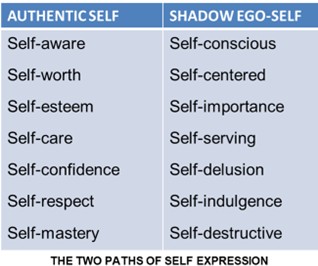
Inner conflict. These two parts of the self have opposing value systems that represent two different paths of self-expression as seen in the diagram. These two parts are in constant battle for control over our decision-making process. Whatever side wins this battle will determine our choices, actions, and, inevitably, the outcome. Outer battle, conflict, and chaos are just the reflection of inner battles and conflicts of people, groups, and teams. and even countries.
Prosperity is a choice. We are growing in consciousness and becoming aware that the quality of people’s lives, organizational culture, and success levels are a choice. The authentic self leads to power and success. The shadow ego-elf creates chaos and destruction. The challenge is to overcome the shadow ego-self and develop new enlightened leaders as outlined in the table below. To obtain this goal, we need to make conscious, mindful choices and accept responsibility for the outcome.
Daily Power Tools for Power People will be delivered to your inbox daily. It contains a fifty-twp power categories and themes, one for every week. Included are seven power tools for each day of the week. At the end of the year, you will have developed 365 new power tools.
Securing the future. To secure a prosperous future, we first need to be conscious of our own authentic self and shadow ego-self and master who is controlling our decision-making processes. At the same time, we need to be highly aware of and manage the egos of those around us, for herein lies the success of an enlightened leader.

Chapter 6: Power Intelligence (PI)
Research has revealed that we have clock genes that switch certain processes on and others off at certain times. The emerging of a new level of human consciousness also includes the unfolding of a new intelligence. The reason is that recently, the frontal lobes of the brain have been activated. This not only brings new insight and vision, but also the activation of new genetic potential and vice versa.
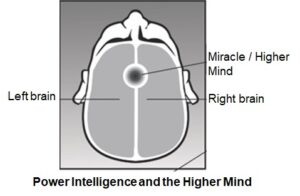
Rational Intelligence (IQ) and Emotional Intelligence (EQ) represent different parts of the brain. Power Intelligence(PI) represents not only whole brain functioning, but also the higher mind activation. The higher mind is seated in the frontal lobes of the brain. This is called the Power Spot, or even the miracle mind. Here we find the keys to visualizing, creating, and manifesting a new reality and a better future.
Power Intelligence comes from ‘power’ or ‘energy’, which secures life and movement. ‘Intelligence’ has two parts as intel, meaning ‘between two’, and ligence, meaning ‘to choose’. As human beings, we have been given free will, the ability to choose in what direction we want to move. There is only one of two points of departure. On the one side, we find the authentic self that leads to happiness and success. On the other side, we have the shadow ego-self that leads to implosion. Wherever you are coming from determines where you are going. Enlightened Leaders learn to overcome their shadow ego-self, develop their authentic self and master Power Intelligence.
The Power Pyramid, depicted below, is a model of the different levels of consciousness or power people function on. This also depicts the levels of choices people can make. The challenge is to take back your power from lower-order programming, elevate your consciousness, overcome false perceptions, lies, half-truths, and untruths, change outworn values, and recover your original DNA success blueprint.
Herein lies the future. Here we find enlightened leaders in action.

Power Intelligence is the conscious ability to recover our original DNA blueprint of health, wealth, happiness, success, and prosperity that benefits all, including Mother Earth.
In this part of workshop one, we focus on activating our Power Intelligence (PI), and how to fast-forward the process of becoming an enlightened leader.

Chapter 7: Strategic planning
Empowered with a new vision, mission, value system, and new intelligence, from the previous lessons, each participant can refine their vision of the future and develop a map that will take them there.
Journey of the soul. This map includes our physical, mental, emotional, and spiritual paths. The reason is that, as human beings, we function as a unified whole, as body, mind, heart, soul, and spirit. These parts of the self are interconnected. You cannot plan for one part without considering the other. This means that we need to understand the path of the soul, that deeper part of the self, connected to the universal intelligence, thereby bringing universal value, meaning, and purpose.
We use the diagram below to outline the map for this journey. This includes a map for each individual and also a map for the organization.
The soul of the organization. An organization also functions as a living, breathing, unified entity as a whole. This means an organization also has a soul, mostly known as ‘organizational culture’. When the soul of the organization is healthy, balanced, happy, and meaningful, people will love to come to work and deliver their best. Unfortunately, the shadow ego-selves of all involved can and do contaminate the organization, thereby bringing negativity, lack of cooperation, and even destruction to the organization as a whole.

Chapter 8: Self-assessment
Self-awareness, self-assessment, and self-knowledge are cornerstones of authentic, enlightened leadership. We implement the Power Intelligence Success Profile (PISP) as a self-assessment tool.
Choices. The dynamics behind making choices and acting on them determine the direction the unfolding of a plan and process will take. It is therefore important to understand why and how people make choices. We need to ask the question, ‘Where are they coming from?’ You also need to understand where you are coming from.
The choices we make can only come from one of two parts of the self. On the one side is the authentic self that makes choices based on peace, prosperity, cooperation, and the greater good. The shadow ego-self makes self-serving choices based on fear, anger, resentment, and elimination. Whatever side wins the inner battle will determine the choices, actions, and therefore the outcome, positive or negative. The question is, ‘How do we know where a person, team, or organization is coming from?’ The Power Intelligence Success Profile (PISP) provides answers to these questions.
The Power Intelligence Success Profile (PISP). The PISP is an online self-assessment tool that provides the necessary information needed to complete the plan outlined above. The PISP has a questionnaire where you need to make 37 choices. These choices represent different combinations of choices on different levels, depicting the influence of the shadow ego-self and the authentic self. The shadow ego-self is represented by fears and frustrations, and the authentic self is represented by priorities and strengths.
The number of choices eliminates rationalization, and you need to go with the gut, the subconscious mind. This is where we find inner dynamics. This is where we access the truth about where a person, team, or organization is coming from. This can only come from one of two positions – positive or negative, as indicated in the diagram below.
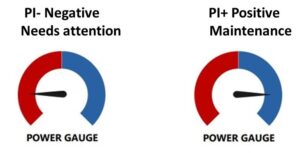
A positive disposition indicates that there is enough energy to move forward. A negative disposition indicates underlying fears and frustration that drain the energy and lead to an implosion if not rectified.
The PISP Report provides all the necessary information that includes skills and tools to stop the implosion, turn the process around, and once again create a successful, flourishing person, team, and organization. From this information, you can develop your self-coaching program.

Chapter 9: Self-coaching program
Each participant creates their personal self-development program with the information obtained from the Power Intelligence Success Profile Report (PISP Report).
The PISP Report provides all the necessary information to understand yourself on a deeper, subconscious level, be mindful and conscious of your strengths and priorities as aspects that take you upward and forward. You become aware of powerful underlying, subconscious programs that include fears and frustrations that pull you down and inhibit progress. With all this information, you can now create a self-development and self-coaching program.
The PISP Report can be summarised in a one-page worksheet that provides guidance on how to change the aspects that bring you down while elevating yourself to the next level. Self-awareness and a self-coaching program are essential in becoming an enlightened leader who knows the way, goes the way, and shows the way into a new and brighter future. Without this information, you are doomed to fail. This is why many leadership development programs fail to bring lasting results. Transformation needs to start from the inside out. You must first become the change you want to see. Only then can you expect others to follow.

Chapter 10: Epigenetics in Organizations
The Human Genome Project revealed that our DNA potential is flexible because of clock genes, which can switch on and off at certain times, in certain places, and under certain circumstances. This means that with a new mindset, skills, and tools, we can mindfully and consciously harness our genetic potential and recover our original DNA blueprint by mindfully switching our power and potential on or off. One of the methods is using the science of Epigenetics.
Epigenetics is the study of how the environment influences the expression of genetic potential and how the genetic potential influences the environment. The example of the functioning of a school of fish is used to explain Epigenetics.
Although each fish in a school of fish is a unique entity on its own, the school of fish functions as a unified whole. Communication between all the fish takes place instantly on an electromagnetic genetic level. When one fish changes course, it immediately reverberates through the whole school of fish and all change course.
An organization functions in the same way.
Understanding and implementing Epigenetics in the workplace has become a necessity in a rapidly changing world where change has become a constant. In this part of workshop one, we focus on implementing Epigenetics in the workplace. In the process, we also learn to create a positive organizational culture and rewrite organizational DNA.

Chapter 11: Rewriting Organizational DNA
Empowered with a new foundation and mindset, participants will understand how to rewrite organizational DNA and empower HR development.
A fully functional organization is a successful, flourishing organization that secures its longevity by being flexible and able to change with the times. People are primarily responsible for this process in the organization. Tapping into deeper potential and recovering the original DNA success blueprint of all staff or team members can and does influence the level of functioning and success of a team, department, and, in the end, the organization as a whole.
Organization DNA. As a living entity, an organization has collective DNA potential. This will remain potential, as ‘power on hold’, unless the right actions are taken to release, harness, synergize, and focus this energy on the movement towards the new vision. It is the task of the leader to show the way and differ from that of a manager, who manages processes. Leaders are, therefore, not always managers, as managers are not always leaders.
Rewriting organizational DNA is therefore more than restructuring and reorganizing the team, company, or organization. Rewriting organizational DNA must include releasing the power and potentila within people during change, transformation, or even a restructuring process to prevent the loss of momentum. It is difficult and time-consuming to recover the loss of momentum and the loss of power, as it hinders progress and negatively influences productivity. Implementing the Power Intelligence Success Process counteracts these negative influences and places the organization on a next level.
It takes a special kind of leader, as an enlightened leader, to achieve the goal of rewriting organizational DNA. In this part of workshop one, we will focus on how to rewrite organizational DNA while harnessing the power and potential of Human Resource Development. Each participant will understand the role of Epigenetics in the workplace and how to keep up with constant change and transformation.

Chapter 12: Enlightened Leadership
The word ‘leader’ comes from the Latin leido, meaning to show the way. Although there is a multitude of leadership training courses and the Leadership Development Profession is worth billions of dollars, there is still a lack of true leaders. The reason is that the shadow ego-self has mostly been in control of these processes.
Power Shift. We are currently undergoing a power shift – a shift in consciousness. Authentic leaders are becoming more conscious, mindful, and aware of higher processes and possibilities. Authentic, enlightened leaders can lead from the heart and bring peace. Prosperity and progress. The shadow ego-self is stuck in the darkness of old, outworn value systems, mindsets, and heart-sets, while leading from anger and fear. Conflict and an implosion become inevitable.
The power shift includes moving from lower-order methods of obtaining what you want to higher-order methods that include love and compassion. The shifts taking place include moving from using violence, the abuse of money, and sex to the next level of obtaining new information and searching for the truth. From this stance, we can create a new vision of the future. However, to achieve this brighter future, we need to make the leap, a quantum leap, towards opening and leading from the heart. It is on this level that our new enlightened leaders function.
This is where the iconic leader Nelson Mandela functioned.
To achieve the goal, each participant must do some self-assessment, soul-searching, and heart-searching. These are important steps in becoming our new pathfinders, mapmakers, and bridge builders. The enlightened leader is also a modern-day alchemist who transforms lower-order consciousness, values, and thinking into higher-order awareness, power, and potential.
Herein lies our future.
We will close off workshop one of the Enlightened Leadership Program with a map of how to become an enlightened leader while preparing and planning to implement this information in a team, department, or organization.
SUPPORT DOCUMENTS
The following support documents are hereby included.
Case study PDF. Download here
United Nations Development Goals. Download here.
Daily Power Tools for Power People. Subscribe HERE
Curriculum

Enlightened Leadership – WDP1 – New foundation
- New Foundation
- Future Vision
- Aligning Global Values
- Recovering DNA blueprint
- Authentic-self vs ego-self
- Power Intelligence (PI)
- Strategic planning
- Self-assessment
- Self-coaching program
- Epigenetics in Organizations
- Rewriting Organizational DNA
- Enlightened Leadership
Distance Learning

Although we have covered many of these topics under planning, you will find some additional suggestions to help you get the most out of this workshop, included here.
Introduction
Welcome to Appleton Greene. Thank you for enrolling in Enlightened Leadership. Power Intelligence in Action Corporate Training Program. You will be learning through our unique facilitation via distance-learning method, which will enable you to practically implement everything that you learn academically. The methods and materials used in your program have been designed and developed to ensure that you derive the maximum benefits and enjoyment possible. We hope that you find the program challenging and fun to do. However, if you have never been a distance learner before, you may be experiencing some trepidation at the task before you. So we will get you started by giving you some basic information and guidance on how you can make the best use of the modules, how you should manage the materials and what you should be doing as you work through them. This guide is designed to point you in the right direction and help you to become an effective distance-learner. Take a few hours or so to study this guide and your guide to tutorial support for students, while making notes, before you start to study in earnest.
Study environment
You will need to locate a quiet and private place to study, preferably a room where you can easily be isolated from external disturbances or distractions. Make sure the room is well-lit and incorporates a relaxed, pleasant feel. If you can spoil yourself within your study environment, you will have much more of a chance to ensure that you are always in the right frame of mind when you do devote time to study. For example, a nice fire, the ability to play soft soothing background music, soft but effective lighting, perhaps a nice view if possible and a good size desk with a comfortable chair. Make sure that your family know when you are studying and understand your study rules. Your study environment is very important. The ideal situation, if at all possible, is to have a separate study, which can be devoted to you. If this is not possible then you will need to pay a lot more attention to developing and managing your study schedule, because it will affect other people as well as yourself. The better your study environment, the more productive you will be.
Successful distance-learning
Distance-learners are freed from the necessity of attending regular classes or workshops, since they can study in their own way, at their own pace and for their own purposes. But unlike traditional internal training courses, it is the student’s responsibility, with a distance-learning program, to ensure that they manage their own study contribution. This requires strong self-discipline and self-motivation skills and there must be a clear will to succeed. Those students who are used to managing themselves, are good at managing others and who enjoy working in isolation, are more likely to be good distance-learners. It is also important to be aware of the main reasons why you are studying and of the main objectives that you are hoping to achieve as a result. You will need to remind yourself of these objectives at times when you need to motivate yourself. Never lose sight of your long-term goals and your short-term objectives. There is nobody available here to pamper you, or to look after you, or to spoon-feed you with information, so you will need to find ways to encourage and appreciate yourself while you are studying. Make sure that you chart your study progress, so that you can be sure of your achievements and re-evaluate your goals and objectives regularly.
Self-assessment
Appleton Greene training programs are in all cases post-graduate programs. Consequently, you should already have obtained a business-related degree and be an experienced learner. You should therefore already be aware of your study strengths and weaknesses. For example, which time of the day are you at your most productive? Are you a lark or an owl? What study methods do you respond to the most? Are you a consistent learner? How do you discipline yourself? How do you ensure that you enjoy yourself while studying? It is important to understand yourself as a learner and so some self-assessment early on will be necessary if you are to apply yourself correctly. Perform a SWOT analysis on yourself as a student. List your internal strengths and weaknesses as a student and your external opportunities and threats. This will help you later on when you are creating a study plan. You can then incorporate features within your study plan that can ensure that you are playing to your strengths, while compensating for your weaknesses. You can also ensure that you make the most of your opportunities, while avoiding the potential threats to your success.
Accepting responsibility as a student
Training programs invariably require a significant investment, both in terms of what they cost and in the time that you need to contribute to study and the responsibility for successful completion of training programs rests entirely with the student. This is never more apparent than when a student is learning via distance-learning. Accepting responsibility as a student is an important step towards ensuring that you can successfully complete your training program. It is easy to instantly blame other people or factors when things go wrong. But the fact of the matter is that if a failure is your failure, then you have the power to do something about it, it is entirely in your own hands. If it is always someone else’s failure, then you are powerless to do anything about it. All students study in entirely different ways, this is because we are all individuals and what is right for one student, is not necessarily right for another. In order to succeed, you will have to accept personal responsibility for finding a way to plan, implement and manage a personal study plan that works for you. If you do not succeed, you only have yourself to blame.
Planning
By far the most critical contribution to stress, is the feeling of not being in control. In the absence of planning we tend to be reactive and can stumble from pillar to post in the hope that things will turn out fine in the end. Invariably they don’t! In order to be in control, we need to have firm ideas about how and when we want to do things. We also need to consider as many possible eventualities as we can, so that we are prepared for them when they happen. Prescriptive Change, is far easier to manage and control, than Emergent Change. The same is true with distance-learning. It is much easier and much more enjoyable, if you feel that you are in control and that things are going to plan. Even when things do go wrong, you are prepared for them and can act accordingly without any unnecessary stress. It is important therefore that you do take time to plan your studies properly.
Management
Once you have developed a clear study plan, it is of equal importance to ensure that you manage the implementation of it. Most of us usually enjoy planning, but it is usually during implementation when things go wrong. Targets are not met and we do not understand why. Sometimes we do not even know if targets are being met. It is not enough for us to conclude that the study plan just failed. If it is failing, you will need to understand what you can do about it. Similarly if your study plan is succeeding, it is still important to understand why, so that you can improve upon your success. You therefore need to have guidelines for self-assessment so that you can be consistent with performance improvement throughout the program. If you manage things correctly, then your performance should constantly improve throughout the program.
Study objectives & tasks
The first place to start is developing your program objectives. These should feature your reasons for undertaking the training program in order of priority. Keep them succinct and to the point in order to avoid confusion. Do not just write the first things that come into your head because they are likely to be too similar to each other. Make a list of possible departmental headings, such as: Customer Service; E-business; Finance; Globalization; Human Resources; Technology; Legal; Management; Marketing and Production. Then brainstorm for ideas by listing as many things that you want to achieve under each heading and later re-arrange these things in order of priority. Finally, select the top item from each department heading and choose these as your program objectives. Try and restrict yourself to five because it will enable you to focus clearly. It is likely that the other things that you listed will be achieved if each of the top objectives are achieved. If this does not prove to be the case, then simply work through the process again.
Study forecast
As a guide, the Appleton Greene Enlightened Leadership. Power Intelligence in action corporate training program will take 12 months to complete, depending upon your availability and current commitments. The reason why there is such a variance in time estimates is because every student is an individual, with differing productivity levels and different commitments. These differentiations are then exaggerated by the fact that this is a distance-learning program, which incorporates the practical integration of academic theory as part of the training program. Consequently, all of the project studies are real, which means that important decisions and compromises need to be made. You will want to get things right and will need to be patient with your expectations in order to ensure that they are. We would always recommend that you are prudent with your own task and time forecasts, but you still need to develop them and have a clear indication of what realistic expectations are in your case. With reference to your time planning: consider the time that you can realistically dedicate towards study with the program every week; calculate how long it should take you to complete the program, using the guidelines featured here; then break the program down into logical modules and allocate a suitable proportion of time to each of them, these will be your milestones; you can create a time plan by using a spreadsheet on your computer, or a personal organizer such as MS Outlook, you could also use a financial forecasting software; break your time forecasts down into manageable chunks of time, the more specific you can be, the more productive and accurate your time management will be; finally, use formulas where possible to do your time calculations for you, because this will help later on when your forecasts need to change in line with actual performance. With reference to your task planning: refer to your list of tasks that need to be undertaken in order to achieve your program objectives; with reference to your time plan, calculate when each task should be implemented; remember that you are not estimating when your objectives will be achieved, but when you will need to focus upon implementing the corresponding tasks; you also need to ensure that each task is implemented in conjunction with the associated training modules which are relevant; then break each single task down into a list of specific to do’s, say approximately ten to do’s for each task and enter these into your study plan; once again you could use MS Outlook to incorporate both your time and task planning and this could constitute your study plan; you could also use a project management software like MS Project. You should now have a clear and realistic forecast detailing when you can expect to be able to do something about undertaking the tasks to achieve your program objectives.
Performance management
It is one thing to develop your study forecast, it is quite another to monitor your progress. Ultimately, it is less important whether you achieve your original study forecast and more important that you update it so that it constantly remains realistic in line with your performance. As you begin to work through the program, you will begin to have more of an idea about your own personal performance and productivity levels as a distance learner. Once you have completed your first study module, you should re-evaluate your study forecast for both time and tasks so that they reflect your actual performance level achieved. In order to achieve this you must first time yourself while training by using an alarm clock. Set the alarm for hourly intervals and make a note of how far you have come within that time. You can then make a note of your actual performance on your study plan and then compare your performance against your forecast. Then consider the reasons that have contributed towards your performance level, whether they are positive or negative, and make a considered adjustment to your future forecasts as a result. Given time, you should start achieving your forecasts regularly.
With reference to time management: time yourself while you are studying and make a note of the actual time taken in your study plan; consider your successes with time-efficiency and the reasons for the success in each case and take this into consideration when reviewing future time planning; consider your failures with time-efficiency and the reasons for the failures in each case and take this into consideration when reviewing future time planning; re-evaluate your study forecast in relation to time planning for the remainder of your training program to ensure that you continue to be realistic about your time expectations. You need to be consistent with your time management, otherwise you will never complete your studies. This will either be because you are not contributing enough time to your studies, or you will become less efficient with the time that you do allocate to your studies. Remember, if you are not in control of your studies, they can just become yet another cause of stress for you.
With reference to your task management: time yourself while you are studying and make a note of the actual tasks that you have undertaken in your study plan; consider your successes with task-efficiency and the reasons for the success in each case; take this into consideration when reviewing future task planning; consider your failures with task-efficiency and the reasons for the failures in each case and take this into consideration when reviewing future task planning; re-evaluate your study forecast in relation to task planning for the remainder of your training program to ensure that you continue to be realistic about your task expectations. You need to be consistent with your task management, otherwise you will never know whether you are achieving your program objectives or not.
Keeping in touch
You will have access to qualified and experienced professors and tutors who are responsible for providing tutorial support for your particular training program. So don’t be shy about letting them know how you are getting on. We keep electronic records of all tutorial support emails so that professors and tutors can review previous correspondence before considering an individual response. It also means that there is a record of all communications between you and your professors and tutors and this helps to avoid any unnecessary duplication, misunderstanding, or misinterpretation. If you have a problem relating to the program, share it with them via email. It is likely that they have come across the same problem before and are usually able to make helpful suggestions and steer you in the right direction. To learn more about when and how to use tutorial support, please refer to the Tutorial Support section of this student information guide. This will help you to ensure that you are making the most of tutorial support that is available to you and will ultimately contribute towards your success and enjoyment with your training program.
Work colleagues and family
You should certainly discuss your program study progress with your colleagues, friends and your family. Appleton Greene Enlightened Leadership. Power Intelligence in Action’s corporate training programs are very practical. They require you to seek information from other people, to plan, develop and implement processes with other people and to achieve feedback from other people in relation to viability and productivity. You will therefore have numerous opportunities to test your ideas and solicit the views of others. People tend to be sympathetic towards distance learners, so don’t bottle it all up in yourself. Get out there and share it! It is also likely that your family and colleagues will benefit from your efforts with the program, so they are likely to be more interested in being involved than you might think. Be bold about delegating work to those who can benefit from it themselves. This is a great way to achieve understanding and commitment from people whom you may later rely upon for process implementation. Share your experiences with your friends and family.
Making it relevant
The key to successful learning is to make it relevant to your circumstances. At all times, you should strive to make connections between the program’s content and your situation. Whether you achieve this through quiet reflection or through interactive discussion with your colleagues, client partners or your family, remember that it is the most important and rewarding aspect of translating your studies into real self-improvement. You should be clear about how you want the program to benefit you. This involves setting clear study objectives in relation to the content of the course in terms of understanding, concepts, completing research or reviewing activities, and relating the content of the modules to your situation. Your objectives may understandably change as you work through the program; in this case, you should update your study plan to reflect the revised objectives, ensuring you have a permanent reminder of what you are trying to achieve, when, and why.
Distance-learning check-list
Prepare your study environment, your study tools, and rules.
Undertake a detailed self-assessment in terms of your ability as a learner.
Create a format for your study plan.
Consider your study objectives and tasks.
Create a study forecast.
Assess your study performance.
Re-evaluate your study forecast.
Be consistent when managing your study plan.
Use your Appleton Greene Certified Learning Provider (CLP) for tutorial support.
Make sure you keep in touch with those around you.
Tutorial Support

Programs
Appleton Greene uses standard and bespoke corporate training programs as vessels to transfer business process improvement knowledge into the heart of our clients’ organizations. Each individual program focuses upon the implementation of a specific business process, which enables clients to easily quantify their return on investment. There are hundreds of established Appleton Greene corporate training products now available to clients within customer services, e-business, finance, globalization, human resources, information technology, legal, management, marketing and production. It does not matter whether a client’s employees are located within one office, or an unlimited number of international offices, we can still bring them together to learn and implement specific business processes collectively. Our approach to global localization enables us to provide clients with a truly international service with that all important personal touch. Appleton Greene corporate training programs can be provided virtually or locally and they are all unique in that they individually focus upon a specific business function. They are implemented over a sustainable period of time and professional support is consistently provided by qualified learning providers and specialist consultants.
Support available
You will have a designated Certified Learning Provider (CLP) and an Accredited Consultant and we encourage you to communicate with them as much as possible. In all cases tutorial support is provided online because we can then keep a record of all communications to ensure that tutorial support remains consistent. You would also be forwarding your work to the tutorial support unit for evaluation and assessment. You will receive individual feedback on all of the work that you undertake on a one-to-one basis, together with specific recommendations for anything that may need to be changed in order to achieve a pass with merit or a pass with distinction and you then have as many opportunities as you may need to re-submit project studies until they meet with the required standard. Consequently the only reason that you should really fail (CLP) is if you do not do the work. It makes no difference to us whether a student takes 12 months or 18 months to complete the program, what matters is that in all cases the same quality standard will have been achieved.
Support Process
Please forward all of your future emails to the designated (CLP) Tutorial Support Unit email address that has been provided and please do not duplicate or copy your emails to other AGC email accounts as this will just cause unnecessary administration. Please note that emails are always answered as quickly as possible but you will need to allow a period of up to 20 business days for responses to general tutorial support emails during busy periods, because emails are answered strictly within the order in which they are received. You will also need to allow a period of up to 30 business days for the evaluation and assessment of project studies. This does not include weekends or public holidays. Please therefore kindly allow for this within your time planning. All communications are managed online via email because it enables tutorial service support managers to review other communications which have been received before responding and it ensures that there is a copy of all communications retained on file for future reference. All communications will be stored within your personal (CLP) study file here at Appleton Greene throughout your designated study period. If you need any assistance or clarification at any time, please do not hesitate to contact us by forwarding an email and remember that we are here to help. If you have any questions, please list and number your questions succinctly and you can then be sure of receiving specific answers to each and every query.
Time Management
It takes approximately 1 Year to complete the Enlightened Leadership corporate training program, incorporating 12 x 6-hour monthly workshops. Each student will also need to contribute approximately 4 hours per week over 1 Year of their personal time. Students can study from home or work at their own pace and are responsible for managing their own study plan. There are no formal examinations; instead, students are evaluated and assessed based on their project study submissions, along with the quality of their internal analysis and supporting documents. They can dedicate more time to studying when they have the opportunity, and contribute less time when they are busy. All students tend to be in full time employment while studying and the High-Performance Innovation program is purposely designed to accommodate this, so there is plenty of flexibility in terms of time management. It makes no difference to us at Appleton Greene, whether individuals take 12-18 months to complete this program. What matters is that in all cases the same standard of quality will have been achieved with the standard and bespoke programs that have been developed.
Distance Learning Guide
The distance learning guide should be your first port of call when starting your training program. It will help you when you are planning how and when to study, how to create the right environment and how to establish the right frame of mind. If you can lay the foundations properly during the planning stage, then it will contribute to your enjoyment and productivity while training later. The guide helps to change your lifestyle in order to accommodate time for study and to cultivate good study habits. It helps you to chart your progress so that you can measure your performance and achieve your goals. It explains the tools that you will need for study and how to make them work. It also explains how to translate academic theory into practical reality. Spend some time now working through your distance learning guide and make sure that you have firm foundations in place so that you can make the most of your distance learning program. There is no requirement for you to attend training workshops or classes at Appleton Greene offices. The entire program is undertaken online, program course manuals and project studies are administered via the Appleton Greene web site and via email, so you are able to study at your own pace and in the comfort of your own home or office as long as you have a computer and access to the internet.
How To Study
The how to study guide provides students with a clear understanding of the Appleton Greene facilitation via distance learning training methods and enables students to obtain a clear overview of the training program content. It enables students to understand the step-by-step training methods used by Appleton Greene and how course manuals are integrated with project studies. It explains the research and development that is required and the need to provide evidence and references to support your statements. It also enables students to understand precisely what will be required of them in order to achieve a pass with merit and a pass with distinction for individual project studies and provides useful guidance on how to be innovative and creative when developing your Unique Program Proposition (UPP).
Tutorial Support
Tutorial support for the Appleton Greene High-Performance Innovation corporate training program is provided online either through the Appleton Greene Client Support Portal (CSP), or via email. All tutorial support requests are facilitated by a designated Program Administration Manager (PAM). They are responsible for deciding which professor or tutor is the most appropriate option relating to the support required and then the tutorial support request is forwarded onto them. Once the professor or tutor has completed the tutorial support request and answered any questions that have been asked, this communication is then returned to the student via email by the designated Program Administration Manager (PAM). This enables all tutorial support, between students, professors and tutors, to be facilitated by the designated Program Administration Manager (PAM) efficiently and securely through the email account. You will therefore need to allow a period of up to 20 business days for responses to general support queries and up to 30 business days for the evaluation and assessment of project studies, because all tutorial support requests are answered strictly within the order in which they are received. This does not include weekends or public holidays. Consequently you need to put some thought into the management of your tutorial support procedure in order to ensure that your study plan is feasible and to obtain the maximum possible benefit from tutorial support during your period of study. Please retain copies of your tutorial support emails for future reference. Please ensure that ALL of your tutorial support emails are set out using the format as suggested within your guide to tutorial support. Your tutorial support emails need to be referenced clearly to the specific part of the course manual or project study which you are working on at any given time. You also need to list and number any questions that you would like to ask, up to a maximum of five questions within each tutorial support email. Remember the more specific you can be with your questions the more specific your answers will be too and this will help you to avoid any unnecessary misunderstanding, misinterpretation, or duplication. The guide to tutorial support is intended to help you to understand how and when to use support in order to ensure that you get the most out of your training program. Appleton Greene training programs are designed to enable you to do things for yourself. They provide you with a structure or a framework and we use tutorial support to facilitate students while they practically implement what they learn. In other words, we are enabling students to do things for themselves. The benefits of distance learning via facilitation are considerable and are much more sustainable in the long-term than traditional short-term knowledge sharing programs. Consequently you should learn how and when to use tutorial support so that you can maximize the benefits from your learning experience with Appleton Greene. This guide describes the purpose of each training function and how to use them and how to use tutorial support in relation to each aspect of the training program. It also provides useful tips and guidance with regard to best practice.
Tutorial Support Tips
Students are often unsure about how and when to use tutorial support with Appleton Greene. This Tip List will help you to understand more about how to achieve the most from using tutorial support. Refer to it regularly to ensure that you are continuing to use the service properly. Tutorial support is critical to the success of your training experience, but it is important to understand when and how to use it in order to maximize the benefit that you receive. It is no coincidence that those students who succeed are those that learn how to be positive, proactive and productive when using tutorial support.
Be positive and friendly with your tutorial support emails
Remember that if you forward an email to the tutorial support unit, you are dealing with real people. “Do unto others as you would expect others to do unto you”. If you are positive, complimentary and generally friendly in your emails, you will generate a similar response in return. This will be more enjoyable, productive and rewarding for you in the long-term.
Think about the impression that you want to create
Every time that you communicate, you create an impression, which can be either positive or negative, so put some thought into the impression that you want to create. Remember that copies of all tutorial support emails are stored electronically and tutors will always refer to prior correspondence before responding to any current emails. Over a period of time, a general opinion will be arrived at in relation to your character, attitude and ability. Try to manage your own frustrations, mood swings and temperament professionally, without involving the tutorial support team. Demonstrating frustration or a lack of patience is a weakness and will be interpreted as such. The good thing about communicating in writing, is that you will have the time to consider your content carefully, you can review it and proof-read it before sending your email to Appleton Greene and this should help you to communicate more professionally, consistently and to avoid any unnecessary knee-jerk reactions to individual situations as and when they may arise. Please also remember that the CLP Tutorial Support Unit will not just be responsible for evaluating and assessing the quality of your work, they will also be responsible for providing recommendations to other learning providers and to client contacts within the Appleton Greene global client network, so do be in control of your own emotions and try to create a good impression.
Remember that quality is preferred to quantity
Please remember that when you send an email to the tutorial support team, you are not using Twitter or Text Messaging. Try not to forward an email every time that you have a thought. This will not prove to be productive either for you or for the tutorial support team. Take time to prepare your communications properly, as if you were writing a professional letter to a business colleague and make a list of queries that you are likely to have and then incorporate them within one email, say once every month, so that the tutorial support team can understand more about context, application and your methodology for study. Get yourself into a consistent routine with your tutorial support requests and use the tutorial support template provided with ALL of your emails. The (CLP) Tutorial Support Unit will not spoon-feed you with information. They need to be able to evaluate and assess your tutorial support requests carefully and professionally.
Be specific about your questions in order to receive specific answers
Try not to write essays by thinking as you are writing tutorial support emails. The tutorial support unit can be unclear about what in fact you are asking, or what you are looking to achieve. Be specific about asking questions that you want answers to. Number your questions. You will then receive specific answers to each and every question. This is the main purpose of tutorial support via email.
Keep a record of your tutorial support emails
It is important that you keep a record of all tutorial support emails that are forwarded to you. You can then refer to them when necessary and it avoids any unnecessary duplication, misunderstanding, or misinterpretation.
Please be advised that Appleton Greene does not provide separate or individual tutorial support meetings, workshops, or provide telephone support for individual students. Appleton Greene is an equal opportunities learning and service provider and we are therefore understandably bound to treat all students equally. We cannot therefore broker special financial or study arrangements with individual students regardless of the circumstances. All tutorial support is provided online and this enables Appleton Greene to keep a record of all communications between students, professors and tutors on file for future reference, in accordance with our quality management procedure and your terms and conditions of enrolment. All tutorial support is provided online via email because it enables us to have time to consider support content carefully, it ensures that you receive a considered and detailed response to your queries. You can number questions that you would like to ask, which relate to things that you do not understand or where clarification may be required. You can then be sure of receiving specific answers to each individual query. You will also then have a record of these communications and of all tutorial support, which has been provided to you. This makes tutorial support administration more productive by avoiding any unnecessary duplication, misunderstanding, or misinterpretation.
Tutorial Support Email Format
You should use this tutorial support format if you need to request clarification or assistance while studying with your training program. Please note that ALL of your tutorial support request emails should use the same format. You should therefore set up a standard email template, which you can then use as and when you need to. Emails that are forwarded to Appleton Greene, which do not use the following format, may be rejected and returned to you by the (CLP) Program Administration Manager. A detailed response will then be forwarded to you via email usually within 20 business days of receipt for general support queries and 30 business days for the evaluation and assessment of project studies. This does not include weekends or public holidays. Your tutorial support request, together with the corresponding TSU reply, will then be saved and stored within your electronic TSU file at Appleton Greene for future reference.
Subject line of your email
Please insert: Appleton Greene (CLP) Tutorial Support Request: (Your Full Name) (Date), within the subject line of your email.
Main body of your email
Please insert:
1. Appleton Greene Certified Learning Provider (CLP) Tutorial Support Request
2. Your Full Name
3. Date of TS request
4. Preferred email address
5. Backup email address
6. Course manual page name or number (reference)
7. Project study page name or number (reference)
Subject of enquiry
Please insert a maximum of 50 words (please be succinct)
Briefly outline the subject matter of your inquiry, or what your questions relate to.
Question 1
Maximum of 50 words (please be succinct)
Maximum of 50 words (please be succinct)
Question 3
Maximum of 50 words (please be succinct)
Question 4
Maximum of 50 words (please be succinct)
Question 5
Maximum of 50 words (please be succinct)
Please note that a maximum of 5 questions is permitted with each individual tutorial support request email.
Procedure
* List the questions that you want to ask first, then re-arrange them in order of priority. Make sure that you reference them, where necessary, to the course manuals or project studies.
* Make sure that you are specific about your questions and number them. Try to plan the content within your emails to make sure that it is relevant.
* Make sure that your tutorial support emails are set out correctly, using the Tutorial Support Email Format provided here.
* Save a copy of your email and incorporate the date sent after the subject title. Keep your tutorial support emails within the same file and in date order for easy reference.
* Allow up to 20 business days for a response to general tutorial support emails and up to 30 business days for the evaluation and assessment of project studies, because detailed individual responses will be made in all cases and tutorial support emails are answered strictly within the order in which they are received.
* Emails can and do get lost. So if you have not received a reply within the appropriate time, forward another copy or a reminder to the tutorial support unit to be sure that it has been received but do not forward reminders unless the appropriate time has elapsed.
* When you receive a reply, save it immediately featuring the date of receipt after the subject heading for easy reference. In most cases the tutorial support unit replies to your questions individually, so you will have a record of the questions that you asked as well as the answers offered. With project studies however, separate emails are usually forwarded by the tutorial support unit, so do keep a record of your own original emails as well.
* Remember to be positive and friendly in your emails. You are dealing with real people who will respond to the same things that you respond to.
* Try not to repeat questions that have already been asked in previous emails. If this happens the tutorial support unit will probably just refer you to the appropriate answers that have already been provided within previous emails.
* If you lose your tutorial support email records you can write to Appleton Greene to receive a copy of your tutorial support file, but a separate administration charge may be levied for this service.
How To Study

Planning your study environment
Your study conditions are of great importance and will have a direct effect on how much you enjoy your training program. Consider how much space you will have, whether it is comfortable and private and whether you are likely to be disturbed. The study tools and facilities at your disposal are also important to the success of your distance-learning experience. Your tutorial support unit can help with useful tips and guidance, regardless of your starting position. It is important to get this right before you start working on your training program.
Planning your program objectives
It is important that you have a clear list of study objectives, in order of priority, before you start working on your training program. Your tutorial support unit can offer assistance here to ensure that your study objectives have been afforded due consideration and priority.
Planning how and when to study
Distance-learners are freed from the necessity of attending regular classes, since they can study in their own way, at their own pace and for their own purposes. This approach is designed to let you study efficiently away from the traditional classroom environment. It is important however, that you plan how and when to study, so that you are making the most of your natural attributes, strengths and opportunities. Your tutorial support unit can offer assistance and useful tips to ensure that you are playing to your strengths.
Planning your study tasks
You should have a clear understanding of the study tasks that you should be undertaking and the priority associated with each task. These tasks should also be integrated with your program objectives. The distance learning guide and the guide to tutorial support for students should help you here, but if you need any clarification or assistance, please contact your tutorial support unit.
Planning your time
You will need to allocate specific times during your calendar when you intend to study if you are to have a realistic chance of completing your program on time. You are responsible for planning and managing your own study time, so it is important that you are successful with this. Your tutorial support unit can help you with this if your time plan is not working.
Keeping in touch
Consistency is the key here. If you communicate too frequently in short bursts, or too infrequently with no pattern, then your management ability with your studies will be questioned, both by you and by your tutorial support unit. It is obvious when a student is in control and when one is not and this will depend how able you are at sticking with your study plan. Inconsistency invariably leads to in-completion.
Charting your progress
Your tutorial support team can help you to chart your own study progress. Refer to your distance learning guide for further details.
Making it work
To succeed, all that you will need to do is apply yourself to undertaking your training program and interpreting it correctly. Success or failure lies in your hands and your hands alone, so be sure that you have a strategy for making it work. Your Certified Learning Provider (CLP) and Accredited Consultant can guide you through the process of program planning, development and implementation.
Reading methods
Interpretation is often unique to the individual but it can be improved and even quantified by implementing consistent interpretation methods. Interpretation can be affected by outside interference such as family members, TV, or the Internet, or simply by other thoughts which are demanding priority in our minds. One thing that can improve our productivity is using recognized reading methods. This helps us to focus and to be more structured when reading information for reasons of importance, rather than relaxation.
Speed reading
When reading through course manuals for the first time, subconsciously set your reading speed to be just fast enough that you cannot dwell on individual words or tables. With practice, you should be able to read an A4 sheet of paper in one minute. You will not achieve much in the way of a detailed understanding, but your brain will retain a useful overview. This overview will be important later on and will enable you to keep individual issues in perspective with a more generic picture because speed reading appeals to the memory part of the brain. Do not worry about what you do or do not remember at this stage.
Content reading
Once you have speed read everything, you can then start work in earnest. You now need to read a particular section of your course manual thoroughly, by making detailed notes while you read. This process is called Content Reading and it will help to consolidate your understanding and interpretation of the information that has been provided.
Making structured notes on the course manuals
When you are content reading, you should be making detailed notes, which are both structured and informative. Make these notes in a MS Word document on your computer, because you can then amend and update these as and when you deem it to be necessary. List your notes under three headings: 1. Interpretation – 2. Questions – 3. Tasks. The purpose of the 1st section is to clarify your interpretation by writing it down. The purpose of the 2nd section is to list any questions that the issue raises for you. The purpose of the 3rd section is to list any tasks that you should undertake as a result. Anyone who has graduated with a business-related degree should already be familiar with this process.
Organizing structured notes separately
You should then transfer your notes to a separate study notebook, preferably one that enables easy referencing, such as a MS Word Document, a MS Excel Spreadsheet, a MS Access Database, or a personal organizer on your cell phone. Transferring your notes allows you to have the opportunity of cross-checking and verifying them, which assists considerably with understanding and interpretation. You will also find that the better you are at doing this, the more chance you will have of ensuring that you achieve your study objectives.
Question your understanding
Do challenge your understanding. Explain things to yourself in your own words by writing things down.
Clarifying your understanding
If you are at all unsure, forward an email to your tutorial support unit and they will help to clarify your understanding.
Question your interpretation
Do challenge your interpretation. Qualify your interpretation by writing it down.
Clarifying your interpretation
If you are at all unsure, forward an email to your tutorial support unit and they will help to clarify your interpretation.
Qualification Requirements
The student will need to successfully complete the project study and all of the exercises relating to the Enlightened Leadership corporate training program, achieving a pass with merit or distinction in each case, in order to qualify as an Accredited Enlightened Leadership Coaching Specialist (AECS). All monthly workshops need to be tried and tested within your company. These project studies can be completed in your own time at your own pace and in the comfort of your own home or office.
There are no formal examinations, assessment is based upon the successful completion of the project studies. They are called project studies because, unlike case studies, these projects are not theoretical, they incorporate real program processes that need to be properly researched and developed.
The project studies assist us in measuring your understanding and interpretation of the training program and enable us to assess qualification merits. All of the project studies are based entirely upon the content within the training program and they enable you to integrate what you have learnt into your corporate training practice.
Enlightened Leadership – Grading Contribution
Project Study – Grading Contribution
The grading of this program depends on adding value to the following:
Leadership – 20%
Globalization – 10%
Human Resources – 20%
Management – 10%
Organization wellness – 20%
Education and training – 20%
TOTAL GRADING – 100%
Qualification grades
A mark of 90% = Pass with Distinction.
A mark of 75% = Pass with Merit.
A mark of less than 75% = Fail.
If you fail to achieve a mark of 75% with a project study, you will receive detailed feedback from the Certified Learning Provider (CLP) and/or Accredited Consultant, together with a list of tasks which you will need to complete, in order to ensure that your project study meets with the minimum quality standard that is required by Appleton Greene. You can then re-submit your project study for further evaluation and assessment. Indeed you can re-submit as many drafts of your project studies as you need to, until such a time as they eventually meet with the required standard by Appleton Greene, so you need not worry about this, it is all part of the learning process.
When marking project studies, Appleton Greene is looking for sufficient evidence of the following:
Pass with merit
A satisfactory level of program understanding
A satisfactory level of program interpretation
A satisfactory level of project study content presentation
A satisfactory level of Unique Program Proposition (UPP) quality
A satisfactory level of the practical integration of academic theory
Pass with distinction
An exceptional level of program understanding
An exceptional level of program interpretation
An exceptional level of project study content presentation
An exceptional level of Unique Program Proposition (UPP) quality
An exceptional level of the practical integration of academic theory
Preliminary Analysis

This Enlightened Leadership. Power Intelligence in Action, an AG corporate training program, was developed with you, the client, the learner, and the emerging authentic, enlightened leader in mind.
We have taken your position, demanding lifestyle, and available time into account and have included as much information and the development of practical implementation plans as possible in the time allocated for each workshop. However, you still need to do your part and walk the extra mile, as we cannot cover everything in a workshop. You need to plan your time and prepare for each workshop in advance.
In the outline, we have already covered how to prepare for this workshop. However, for your convenience, we include this information here, once again.
How you need to prepare
1. You are here by choice. Something or someone has guided you to enroll and attend. This is by no coincidence. So, like any new journey, this brings excitement, anticipation, and expectations. Be open-minded and ready to explore new ideas and strategies. Make sure that you are ready to go through the transformational process and become the leader and way-shower and make the difference you have always wanted to make.
Remember that true enlightened leadership is not a position – it is a way of life.
To get the most from each session, you will need to prepare. Prepare yourself emotionally and mentally so you ‘show up’ and are mindful and present in each session.
2. Plan and prepare your time. You will receive confirmation of your enrollment from Appleton Greene Co. by email. This will provide you with a set time, date, and link to log in. Make sure that your contact details are correct.
Book this time and date in your calendar so that the first workshop, including the twelve-monthly workshops for this year, is booked ahead of time. Make these fixed dates and plan your schedule around these dates.
Also, plan for time during the monthly intervals of this program. Use this time to review the work done in your workbook. Revisit what you wrote down during the session, and implement the new mindset, heart value-system skills, and tools in your personal life and work. Make adjustments as necessary. Summarize the outcomes and bring your suggestions to the next session to be discussed with the group. Your contribution is important and valuable to everyone attending.
3. Familiarize yourself with the workshop curriculum, vision, mission, content, and procedures and read through the objectives, strategies, and tasks beforehand by reading through the information once again. Here, you will find the outline of the workshop and exactly what you enrolled for.
4. Prepare your space. Prepare your office, study, or room you will be using to attend the online workshop. Make sure that you have a comfortable desk and chair and that the room has adequate light and ventilation. Ask not to be disturbed for the day, beforehand. Make sure that you have a pen and paper for your personal notes.
5. Print your worksheet. Yes, it is important that you print this document so that you can write down your answers and keep up with the pace of the workshop. The reason is that science has proven that writing down your thoughts stimulates new neuro-development and places the information on long-term memory.
Another reason you need to write down your thoughts and questions is that you also need to practice your handwriting. This is important. You ask, “Why?”
Importance of handwriting. Born between the late 1990s and early 2010s, Generation Z appears to be losing proficiency in handwriting, a skill once integral to personal expression and communication. Recent studies from the University of Stavanger revealed that approximately 40% of this generation is weakening their ability to communicate through writing. This decline stems from their constant interaction with smartphones, computers, and other digital gadgets, raising critical questions about our evolving communication abilities.
Digital technology has transformed direct communication methods, sidelining handwriting in favor of instant messages, abbreviations, and screen-based interactions. Experts suggest that Generation Z might be the first cohort functionally incapable of handwriting. Moreover, handwriting plays a crucial role in cognitive development by enhancing memory and word comprehension, engaging the brain differently than typing does.
7. Refreshments. We will tak three breaks. Keep something to drink nearby and prepare some snacks to enjoy between sessions. There will be a longer break for lunch, so make sure you prepare your lunch beforehand. The times of these breaks will be announced once the workshop commences.
8. How to study. We can only cover so much information during each workshop. You are obliged to do further study during the monthly intervals. You will already have experience of how to study, possibly with an academic background or even an MBA. If not, you will not be in this position if you do not already have your personal method of working through information and studying, even if you study reports or do research on Google. Each one of us has a special way of maximizing information intake, processing, and communication. We will dedicate an entire workshop to effective information processing, which can help you study information more efficiently and effectively, as well as communicate more effectively with others through speaking, writing, and your behavior.
9. Reading. Make time to read through the case studies, articles, e-books, and additional material provided for you with each workshop. List new steps you can implement in your life and work. Remember, you will touch at least five other people outside your work environment in a positive or negative way. Make your choice and give only your best. You influence people not with what you have but with who you are. Make this a journey of becoming your best self. The rest will follow. See the study guide for more information.
10. Show up. Ensure you show up early for the workshops to ensure everything is in working order. Settle in about ten minutes before we begin. ‘Showing’ up means more than just being physically present. To ‘show up,’ you need to set the intention to get the most from each session by being mindful, conscious, and aware of the exciting journey you are now embarking on.
11. Headspace. Make sure you are in a positive mindset and heart-set and are open to taking in what you can while participating and giving your opinions and contributions where you can. The outcome of this process depends on your showing up and your participation.
Be ready to implement this new information in your life and workspace and take in your place as a new enlightened leader.
ADITIONAL MATERIAL
Additionally, the following resources are available for reference and further reading.
References:
The Human Genome Project. https://doe-humangenomeproject.ornl.gov
Hamer, D. (2005.). The God Gene. How faith is hardwired into our genes. Anchor Books. New York.
Hawkins, D. (20012.). Power vs. Force. The Hidden Determinants of Human Behavior. Hay House Inc; New York.
Peterson, R. (2022.). Exploring the influence of spirituality in the initial development of authentic leadership identity. Thesis and Dissertation. Pepperdine University. https://www.researchgate.net/publication/363267351
Additional information
Case Study. A PDF with two case studies can be downloaded HERE
Subscribe for Daily Power Tools for Power People to be delivered to your inbox every day. HERE.
Course Manuals 1-12

Course Manual 1: New Foundation
The meaning of being a leader.
The word ‘leader’ comes from Latin, leido, which means ‘to show the way’. Leaders are pathfinders, mapmakers, bridge-builders, and way-showers. Leadership is not a power position, for many in power positions cannot ‘show the way’. Being an authentic, enlightened leader is a way of life. You show the way, just where you are. An enlightened leader shows the way by shining their light into the future.
Such a man was Nelson Mandela.
Purpose of enlightened leadership
Leadership is all about movement, guidance, direction, vision, and purpose. As an enlightened leader, your task is to shine your light into the future and help others to develop a life of authenticity, love, compassion, success, and prosperity. As a leader, you need to meet people where they are and take them where they need to be. Your challenge is to get them on board by selling your vision and mission and inspiring buy-in from all involved. Successful leadership always starts with a sound foundation.
Many have tried various leadership theories and programs, but only those with a sound foundation can withstand the tests of time, challenges, and adversity. The enlightened leader can do what is right, and not what is easy, especially in difficult times.
Unfortunately, a value system is not necessarily a sound foundation, as it can and does change over time. A foundation is all about connection. As a leader, you can only be connected or not. When you are connected, you create flow, and the rest will follow. Being disconnected results in struggle, conflict, resistance, and an inevitable implosion.
Sound foundation.
The only sound foundation is the kind and quality of your connections on all levels. This includes the internal connection with yourself on physical, mental, emotional, and universal/spiritual levels. External connections include connections in relationships, work, communities, cultures, and religions. Transformative life-force, energy, power, and influence flow from inside out to people, things, and circumstances. You must choose to be present and show up as your unique self while igniting flow. It is a conscious choice. Without this conscious choice and getting connected, you will not be able to show up and bring your contribution to the table. You will become ‘absent’.
Fully functional leader
To become a fully functional leader, you first need to be connected, centered, grounded, focused, and inspired within yourself. The rest will flow from the kind and quality of your connection with yourself. You cannot fake this.
You can only be connected, mindful, conscious, or disconnected and mindless, or somewhere in between. This is also the difference between the authentic self and the shadow ego-self. Therefore, we only have two kinds of leaders. On the one hand, we have connected, centred, and grounded authentic leaders shining their light into the future. They build their leadership on the five pillars of authenticity.
On the other hand, we have disconnected, shadow ego-driven leaders who cause conflict and chaos. We will delve into more detail concerning the authentic self versus the shadow ego-self later.
The question is: How do we lay this foundation? How do we become connected, centred, grounded, focused, and inspired? How does an enlightened leader shine their light into the future?
Enlightened Leadership.
Enlightened leadership emerged as the highest form of leadership and became visible with the rising human consciousness. For the last decade or two, people started asking for truth, honesty, integrity, and authenticity in an ego-driven world of lies, half-truths, untruths, delusion, cheating, manipulation, and conflict We use the analogy of a light bulb to explain enlightened leadership. First, you have the lightbulb itself. This resembles you as your unique self with unique potential, unique light, and therefore your unique purpose. There is also a source of power. This can be a battery source or an electrical connection.
When it comes to human beings, you need to choose where and what your power source is. Our main power comes from the shadow ego-self, which inevitably leads to destruction. Unfortunately, most people are caught up in this fake world as the mindless masses.

The task of the enlightened leader is to raise awareness and show the way to truth, honesty, integrity, and authenticity, which lead to a life of health, wealth, happiness, and success. The leader can only achieve these goals if they are in themselves connected, centred, grounded, focused, and inspired. Inspiration means you become empowered.
Getting connected
We live in an energy reality where everything is connected to everything else, aka the universal grid. The term universe means ‘one-song’ where everything is connected and integrated into one harmonious whole. This is the power of the universe, known by different names and terminology in various religions.
This includes terms such as God, Brahma, higher power, Holy One, Creator, Higher Mind, Universal Force, Holy Spirit, and many others. You need to choose your source of universal power.
Conductors
A conductor connects a lightbulb to a power source. Conductors are materials that allow electric current to flow through them from one point to another. Most conductors are made of metals, such as copper, aluminium, gold, and silver. When the switch is on, power flows from the power source through the conductor to the light bulb, and the light bulb shines. It emits light. Power and potential are transformed into light. If any of these processes are disconnected or dysfunctional, there will be no light.
The same applies to people. The difference between the lightbulb and us as people lies in the kind and quality of conductor. In a light bulb, the filament is made of metal. People are connected by energy paths, which are represented by frequencies or wavelengths. This is part of our everyday speech. We say, ‘We are not on the same wavelength.’ Or, ‘We are on the same page’ (frequency/wavelength).
We use the analogy of the light spectrum to explain this process in humans.
Spectrum of light
The spectrum of light is represented by various colours or wavelengths, or frequencies. Red has the lowest frequency, followed by infrared. You can use infrared glasses to see in the dark. White light is the combination of all the frequencies, as the highest level of light emission. All our religions and spiritual texts refer to white light as ‘spiritual light’.
Darkness or black is the absence of light. Black is the disconnection to any frequency. We find darkness and black holes everywhere. The universe has stars that emit light and black holes that extract energy and light from the surroundings. Black holes, therefore, devour everything on their path.
Some people are so disconnected, destructive, and dark that they represent black holes. It is from these shadow ego-driven people, groups, companies, and organizations that we need to reclaim our power and mindfully transform the processes. The challenge is to replace these dark, destructive, self-serving, ego-driven leaders with authentic, enlightened leaders to secure a new, quality future.
Only enlightened leaders can achieve this goal. You are now becoming an enlightened leader. This will include getting connected, centred, grounded, focused, and inspired.
The five pillars of authenticity
The five pillars of authenticity is being, connected, centred, grounded, focused and sincere.
Connected. Choose where you want to be connected. You will find techniques to connect in the exercises that follow.
Centred. In the exercise, you will find how to find your centre and remain centred and balanced. This is your ‘safe space’ or ‘happy place’.
Grounded. Most people are not only disconnected but also ungrounded. Grounding is where you align with the ground, aka Mother Earth. We call this earthing. When you are grounded or earthed, the energy can freely flow from the universal grid, through you, and ground you in Mother Earth. Maintaining the connection and staying centred and grounded becomes a lifelong task. We will explain how in the exercise.
Focussed. Focus means finding a point of concentration and attention. Where your focus goes, energy flows. What you focus on grows. This is how we create our physical reality.
Inspired. Inspiration comes from ‘in spiritus’. When you are inspired, you have the power of the universe seeking to help you achieve your goals and make your vision a reality. Inspiration is the result of being connected, centred, and grounded in the power of the universal grid (or any other name you may choose, like God, Higher Mind, etc.).
Finding the truth.
Developing authentic, enlightened leaders is a path of finding the truth. There is only one truth/Truth. The rest are just opinions, perceptions, and assumptions. Truth yields the optimal outcome, whereas perceptions and beliefs can lead to diverse outcomes. This can and does cause confusion and conflict. The enlightened leader will always ask, “What is the truth?”. “What are the facts?” “What does the perfect outcome for everyone look like? ”
In the exercises below, you will find skills on how to get connected, centred, grounded, and focused, and also develop a way to identify the truth.
The journey
Life is a journey of experiences. Each experience is at the same time a teacher. Experiences teach us who we are and what the meaning of life is all about. The true meaning of life can be found in freedom. This freedom includes the freedom to express who you truly are as your authentic self. Freedom can be found in truth, for the truth sets you free.
Unfortunately, we have been programmed by our parents, family, culture, religion, society, and humanity as a whole to think, be, and act in a certain way in order to be acceptable. Now the times have changed. Honesty, truth, integrity, and authenticity have become paramount. This means we need to find the truth about who we are, where we come from, where we are going, and why. We need to do a lot of learning and unlearning. Nelson Mandela referred to this journey as “The Long Walk to Freedom.”
The long walk to freedom.
On this journey to freedom, we will need to revisit our old perceptions, values, programs, beliefs, and mindset. The person you were at eighteen is different from where you are now, and you will be different ten years from now. It is a constant process of learning, unlearning, adapting, pivoting, evolving, new learning, and new experiences. It is the journey in search of truth. Not just any truth but universal Truth. There is only one truth that is applicable to everything and everyone. The rest is mere perception.
Your challenge is to align our personal truth with universal truth. The universal truth is to get connected, centred, and grounded in the universe and the Creator thereof. Get connected to and love yourself. Get connected to and love others as yourself. This path leads to the truth. The truth sets you free.
When embarking on this journey, you will go through various stages of change and transformation. In the process, your light will shine in a different way. In these photos taken over a period of eight years with special photography, you find this young man’s journey portrayed in light. He started in the red after recovering from a severe accident. Today, he is fully functional as an enlightened leader shining his light into the future.

Compare his journey to the spectrum of light below.

We will go into more detail in Workshop Three.

EXERCISE 1.1. IDENTIFY THE TRUTH
Make the following statement: The sun shines during the day.
Make the following statement: The moon sometimes shines during the day.
1.3 What is Earth? If there is time, you can ask the following question: Is planet Earth a star?
EXERCISE 1.2. HOW TO GET TO THE TRUTH
CASE STUDY.1. LESSONS FROM NELSON MANDELA
Nelson Mandela’s mission as an anti-apartheid revolutionary was to establish a new foundation, a new value system, and a new way of thinking in the hearts and minds of the people. This included equality and freedom for all women, men, and children. He stood for the fundamental rights of all human beings, regardless of gender, nationality, or race. This is also the very ideal for which Nelson Mandela was jailed for 27 years.
Nelson Mandela undertook the task of laying a new foundation for a country on the brink of anarchy and destruction. He achieved this goal with his vision and the example he set.
.“I have cherished the ideal of a democratic and free society in which
all persons live together in harmony and with equal opportunities.
It is an ideal which I hope to live for and to achieve.
But if needs be, it is an ideal for which I am prepared to die.”
Nelson Mandela

Course Manual 2: Future Vision
Vision is the act or power of seeing into the unseen. Vision is always future-driven and includes expectations of successful outcomes in the future. Creating a clearly defined vision of the desired outcomes for our personal lives and the future of teams and organizations provides the motivation, direction, and inspiration to get involved, stay mindful and conscious, and put in the necessary effort to make the vision a reality.
“Vision without action is just a dream, action without vision just passes the time,
and vision with action can change the world”.
Nelson Mandela.
This calls for the conscious activation of the frontal lobe of the brain.
A new discovery
For many decades, scientific research has been undertaken by different people all over the world to determine if we have a special ‘power spot’ in the brain. With special techniques, it has been found that specific neural connections in the frontal lobes of the brain light up when the person concerned is exposed to discussions of value, love, meaning, and spiritual or religious topics. It reacts and lights up when we ask ‘higher order’ questions, like: “Why is this important?” or “What is the meaning and value of this?”
Meaning, value, and purpose.
It was further found that there is a neural process in the brain devoted to unifying and synchronising neural oscillations across the whole brain. This is where meaning, value, and purpose are given to our choices, plans, and experiences. It is a process in the brain that literally binds all our thoughts and experiences into a single, meaningful whole, placing them within a larger framework. It is here that we can clearly see the bigger picture. Here we can find the merging picture of the future.
Visualization
Not only does this frontal lobe deal with meaning and value, it has also been found to be the centre of symbolic meaning, like pictures, visualizations, and language. Terrance Deacon, a neurologist and biologist from Harvard, found that neither computers nor higher apes could use symbols like language, as they lacked this frontal lobe facility.
Lighten up
This means we have a centre in our brains that lights up and produces energy when it is stimulated by asking higher-order questions of meaning, value, and purpose. The frontal lobe also lights up when we ask for guidance or use various symbols, such as pictures, words, or language, to convey our thoughts, plans, desires, expectations, and experiences. This is why a picture is worth more than a thousand words.
Power Spot
This centre produces the power and energy to bind, integrate, and synchronise our thoughts into a powerful whole that can move us forward beyond boundaries. This is also where we find stability, safety, and peace. We can transform and transcend situations in the direction we choose to go, or that has value, purpose, and meaning. It is the power centre that we activate and call on when we are innovative, creative, flexible, and visionary. The frontal lobe is also the seat of Power Intelligence – the intelligence of the future.
Inner GPS.
The Power Spot is where we find answers to our questions when reason or emotions cannot show the way. It is our ‘guide spot’, our inner GPS, that provides new insight and vision. New direction is usually found outside existing rules and boundaries and beyond experiences we already know how to deal with. It is here where we find the cutting edge between what we rationally know and an inner knowing or intuitive understanding.
Cutting-edge thinking
This edge is the border between ‘knowing’ and being lost, between chaos and order. Here we can find our guide at the edge – our compass. We find direction beyond reasoning, outside our known boundaries, through an inner knowing, vision, intuition, and a deep sense of meaning, purpose, and value. This is where we learn how to think ‘outside the box’. Here, the necessary power and energy are released to move us to the next level of success, accomplishment, and attainment. This can sometimes go beyond your wildest dreams and expectations. The frontal lobe can also be called the ‘Miracle Mind’.
The God Spot
The Reason that the frontal lobe is also called the ‘God Spot’ is because it is here that we mindfully and consciously can connect to the higher mind or the universal mind. In religion, this is also called the ‘mind of God’. By activating the higher mind, we receive higher-mind guidance, direction, vision, and inspiration. It is also here that we can harness the power of the universe. We become the conduits, the conductors of higher mind information and universal light, which assists us in accomplishing our dreams, plans, visions, desires, and intentions. It is here that we connect to the spiritual dimension and learn what love is all about.
The Love frequency
Love, as we know it, is first and foremost not a feeling. Love is a frequency. Scientists have identified the love frequency as 528 Hz. It is only when we connect to this frequency that it becomes a feeling. Feeling and experiencing true love is, therefore, a gift. Not many people get to the level of enjoying the ability to freely give and receive love.
It is estimated that more than 85% of people are disconnected and primarily driven by fear. Love and fear are mutually exclusive. You cannot have them both at the same time. You have to choose where you are coming from to determine where you are going. It is, therefore, important to know where you are coming from. You only have one of two choices.
Authentic self vs the shadow ego-self
On the one hand, you have the authentic self, which is connected, centred, and grounded, and comes from love. On the other hand, we find the shadow ego-self, which is a mere shadow of who you truly are and comes from fear. The authentic self leads to success and prosperity, while the shadow ego-self takes you down a path of fear, darkness, conflict, and inevitable disaster. Choose wisely.
Universal frequency
The love frequency of 528 Hz is a universal frequency that runs through and connects everything and everyone, thereby synchronizing everything and everyone into one unified whole. It is our challenge to connected to the love frequency to become successful and create a new future of health, wealth, happiness, and prosperity that benefits all. In the process, we take others on this path.
Love connection.
In the frontal lobe, we find the ‘love connection’. By being connected, centred, grounded, and focused, we also become inspired or ‘in spiritus’. We become the conduits of love while shining our light into a process, project, plan, or even the future. This is what enlightened leadership is all about. Everything that comes from or is done from love is guaranteed to succeed. We can also develop the ability to create miracles.
The Miracle Mind
A miracle can be defined as a phenomenon not fully explicable by the natural laws of nature. The commonplace definition of the word miracle is: ‘God intervenes in the laws of nature’.
From a religious perspective, it refers to an act performed by some supernatural outside force or unknown entity. Many scientist-theologians suggest that miracles are not violations of the laws of nature and infer a new regime of physical experience.
The takeaway from this is that with a new mindset, the miracle mindset, a higher level of understanding, and connections to higher frequencies, we can create miracles. We can manifest our hopes, dreams, and desires, in which vision and visualization play an essential role.
The power of visualization
Visualization is the process of picturing in your mind the things that you want, both within and outside of a project, plan, event, and even your life. During visualization, you focus on attaining them and think about what it would be like if you achieved those goals. Visualization is usually paired with meditation and mindfulness. Without a vision and a plan or process to make your plan a reality, you are bound to fail.
Visualization can be achieved in various ways, such as a map, a vision board, a diagram, a chart, or a drawing. The reason is that all the answers can be found in the subconscious mind. The subconscious mind communicates in pictures, not words. Once you have developed your vision, you can put it into words. This means that you have to tap into your subconscious mind to find the best option. We use visualization techniques to achieve this goal.
Meditation
Meditation is a practice in which an individual uses a technique to train attention and awareness and detach from reflexive, “discursive thinking”, achieving a mentally clear and emotionally calm and stable state, while not judging the meditation process itself.
Meditation offers a wide range of benefits for both mental and physical well-being. Regular meditation practice can lead to reduced stress and anxiety, improved focus and concentration, better sleep, and even lower blood pressure. Additionally, it can foster self-awareness, increase compassion, and promote emotional regulation.
Committing to a short daily meditation allows your brain to learn at its own pace how to be present in the present moment and how to extend that awareness to everyday activities. As with any habit, daily meditation becomes easier when it’s part of your routine.
Benefits of meditation
The emotional and physical benefits of meditation can include:
Giving you a new way to look at things that cause stress.
Building skills to manage your stress.
Making you more self-aware.
Focusing on the present.
Reducing negative feelings.
Helping you be more creative.
Helping you be more patient
The most striking finding of the study is that a mere 40 days of meditation was needed to both alter the structure and function of participants’ brains, and improve the participants’ quality of life as measured by depression symptomatology and anxiety.
How to meditate in 7 steps
Set aside some time. We all know it can be hard to find time, but meditation works best with regular sessions. …
Find a comfortable place. …
Bring mindfulness into meditation. …
Start your meditation. …
The challenge of focusing the mind. …
Get the hang of meditation. …
Bring your meditation to a close.
Meditation and visualization
Meditation and visualization are distinct practices with different aims, though they can be complementary. Meditation generally focuses on clearing the mind and cultivating a state of awareness, while visualization involves actively creating mental images to influence thoughts, emotions, and potential outcomes.
Meditation:
Goal: To calm the mind, increase self-awareness, and reduce stress through focused attention.
Process: Typically involves sitting or lying still, focusing on the breath, and gently returning attention to the breath when the mind wanders.
Benefits: Improved focus, reduced stress and anxiety, increased self-awareness, and emotional regulation.
Visualization:
Goal: To mentally rehearse desired outcomes, cultivate positive emotions, and enhance motivation.
Process: Actively creating vivid mental images of a desired future, often engaging all five senses.
Benefits: Increased motivation and confidence, improved goal achievement, enhanced creativity, and positive mood.
Key Differences:
Mind State: Meditation aims for a clear, non-reactive state of mind, while visualization actively engages the mind to create specific images.
Intent: Meditation focuses on present moment awareness, while visualization focuses on future outcomes or desired states.
Effort: Meditation involves letting go of thoughts and effort, while visualization can require focused effort to create and maintain mental images.
Relationship: While distinct, the practices can be complementary. Some find that meditation can create a more receptive state for visualization, while visualization can be a powerful tool for enhancing the benefits of meditation, such as increased positivity and motivation
In the exercise below, you will learn a visualization technique that also activates the frontal lobe.
EXERCISE 2. VISUALIZATION.
Slowly inhale for four counts
2. Hold your breath for four counts
3. Exhale for four counts
Two. Visualize the light flowing over your face, ears, and shoulders.
Three. Visualize the light flowing over your arms and out of your hands.
Four. Down your spine and out of the tailbone into Mother Earth.
Five. Allow the light to shine through your torso, heart, and lungs.
Six. Through your lower body,
Seven. Over your hips
Eight. Down the legs into the knees
Nine. Over the calves and ankles into the feet.
Ten. Out of the feet.
Nine. Draw up your energy through your feet, ankles, and calves.
Eight. Draw up your energy over your knees.
Seven. Take back your power and draw up your energy through your legs.
Six. Allow the energy to return up your lower torso.
Five. Draw up through your heart and lungs.
Four. Draw up your energy from the tailbone up the vertebral column into your head.
Three. Open your hands and take back your power through your fingers and up your arms.
Two. Allow everything to flow together in the shoulders, neck, and up your head and face.
One. Become still and allow yourself to be fully connected as the light leaves the top of your head and reconnects with the universe.
CASE STUDY. 2. THE POWER OF VISION
KODAK
One prominent example of the power of vision, or the lack thereof, is the story of Kodak. Once a dominant force in photography, Kodak failed to adapt to the digital revolution, clinging to its traditional film business. This was largely due to a lack of a clear vision for the future of photography and a failure to embrace digital technology. In contrast, companies like Apple, under Steve Jobs’ leadership, had a clear vision for a future where personal technology was accessible and user-friendly, resulting in innovations such as the iPhone and iPad. One well-known quote attributed to Nelson Mandela that speaks to the power of vision is:

Course Manual 3: Aligning Global Values
Vision and values
A person’s or organization’s vision statement provides insight into what they hope to achieve or become in the future. The values statement reflects the core principles and ethics of a person or organization. Together, these statements provide strategic direction for both individuals and organizations, informing current and future business strategies.
Purpose of vision and value statements:
A vision statement paints a picture of what a person or organization wants to become in the future. It’s a broad, inspiring statement that captures the organization’s aspirations. For example, a company’s vision might be “To be the leading provider of sustainable energy solutions by 2035”.
Value statements define what an organization stands for and the principles that guide its actions. They are the core beliefs that shape how the organization operates and interacts with stakeholders. For example, a company’s values might include integrity, innovation, customer focus, and social responsibility.
Vision statements focus on the ‘why’ and ‘what’ in the future. Value statements are typically present-oriented and focus on the ‘how’ of a person’s life or an organization’s operations.
Principles and values
Principles are guiding rules or ideas that are often based on your values. They are the actions you take to live out your values and are how you conduct yourself. Principles can be considered external rules that are permanent and unchanging. Examples of principles include “don’t lie,” “treat others with respect,” or “be responsible”. The difference is that values are internal and subjective, while principles are external and often considered unchanging. Values are what you care about, while principles are the way you live out those values.
For example, a value might be “integrity.” A principle based on that value could be “always be honest” or “never compromise your values”. In practice, values can be seen as the core of who you are, while principles are the guidelines that help you navigate your actions in a way that aligns with your values.
Relationship between vision and values:
Vision and values are interconnected. The vision provides the direction, while the values guide the actions needed to achieve that vision. By defining both vision and values, a person or an organization can create a clear and consistent framework for decision-making and strategic planning.
Vision and values also help to build a strong organizational culture and create a sense of purpose among employees.
Aligning values
Aligning values means matching your personal values with those of an organization, such as a company, or with your own goals and actions. This can involve understanding your core values, defining organizational values, and communicating them effectively. It can also involve taking steps to align your choices and actions with your values, creating a sense of purpose and satisfaction.
Creating and implementing value statement
Understanding Personal Values:
The first important step is to understand each person’s values. This reflects what’s truly important to them. Values can include examples like integrity, honesty, or making a difference.
Defining Organizational Values:
The core values of an organization are a summary of the values of each person. Clarifying the core values of a company or team helps create a shared understanding of what’s important. The core value statement is the backbone of organizational culture.
Aligning values.
Once a core value statement of an organization is agreed upon, everyone is expected to align and synergize with the core value statement. Those who find it difficult to align with the core values will find it difficult to stay in the organization. Many leave. Those who stay, can and do contaminate the environment and organizational culture.
Communicating Values Effectively:
Sharing values through various channels is important for others to know where you stand and how they fit in. Open communication about values in meetings or written memos in newsletters helps ensure everyone is aware and is on board. Effective communication of values includes explaining what each value means. Do not take for granted that others share the same definition and understanding. Mutual agreement means mutual understanding.
Aligning Actions with Values:
Making conscious decisions and choices that align with your values can lead to greater life and job satisfaction and overall well-being. The quality of your choices will determine the quality of your actions and the outcomes. Making conscious, mindful choices is the key to success.
The benefits of aligning vision, mission, values, choices, and actions include cooperation, synergy, community, and progress. The sum is greater than the parts. This is where we find healing, wholeness, health, wealth, and happiness. This is the quality of future we are aiming for. This is also the vision, mission, and values of the United Nations.
Aligning with global values as outlined by the UN is an important part in bringing people together and laying a new foundation of peace, cooperation, and prosperity.
Aligning with Global Values
When embarking on the path of enlightened leadership, a vast amount of power, potential, and new energy is released. The challenge is not only to release and harness the new power and potential but also to steer the unfolding of this process in the right direction.
Our value system provides the guidelines. A clearly outlined value system is therefore crucial in moving forward.

However, each person has their own value system, and so do organizations have their own value systems and mission statements. The challenge is to combine these value systems and summarise these values that benefit all. The United Nations Development Guidelines provide a global value system within which development programs can unfold to the benefit of all.
This is based on the five P’s: people, planet, peace, prosperity, and partnership.
UNITED NATIONS (UN) vision and mission statement
The UN development plan reads as follows.
“We are determined to end poverty and hunger, in all their forms and dimensions, and to ensure that all human beings can fulfil their potential in dignity and equality and in a healthy environment.”
The UN document further states the following:
“Planet. We are determined to protect the planet from degradation, including through sustainable consumption and production, and sustainably managing its natural resources, and taking urgent action on climate change, so that it can support the needs of the present and future generations.
Prosperity. We are determined to ensure that all human beings can enjoy prosperous and fulfilling lives, and that economic, social, and technological progress occurs in harmony with nature.
Peace: We are determined to foster peaceful, just, and inclusive societies which are free from fear and violence. There can be no sustainable development without peace, and no peace without sustainable development.
Partnership. We are determined to mobilize the means required to implement this Agenda through a revitalized Global Partnership for Sustainable Development, based on a spirit of strengthened global solidarity, focused in particular on the needs of the poorest and most vulnerable, and with the participation of all countries, all stakeholders, and all people.”
Interconnected
The interconnections and integrated nature of the Sustainable Development Goals are of crucial importance in ensuring that the purpose of the new UN Agenda is realized. If we realize our ambitions across the full extent of the UN Agenda, the lives of all will be profoundly improved, and our world will be transformed for the better.
You can download the UN Agenda HERE
The question is, how do we integrate our vision and values with goals?
Goal setting
It is one thing to familiarize yourself with the theory; it is something entirely different to implement it in practice. Theory and practice are the cornerstones of success. The theory aims at bettering the practice. Out of the results, we can then refine the theory. It is a constant feedback loop with different steps until we get close to perfection to maximize our situation.
You achieve this by setting specific goals you want to use to better, even transform, your personal, social, and especially your workspace.
There are three major steps in setting and achieving goals.
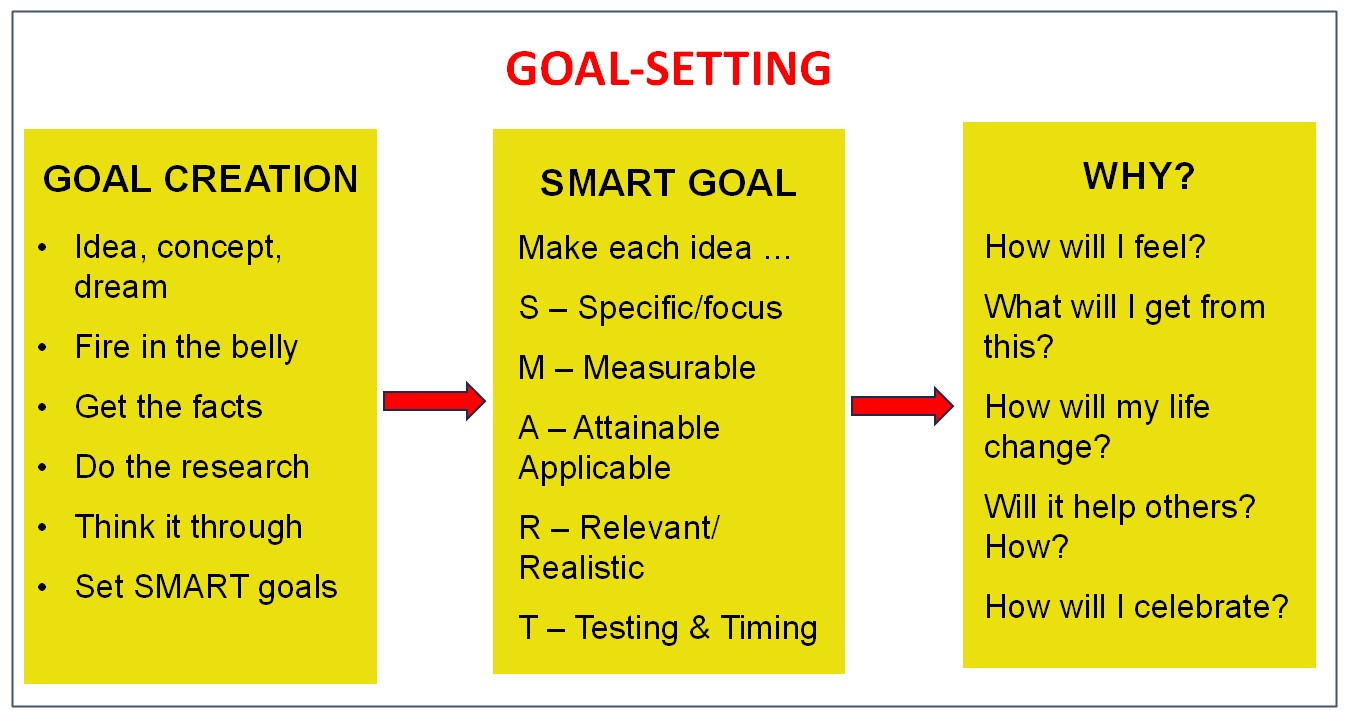
Use the diagram above to identify at least three goals you want to achieve with this workshop.
Goal creation:
Identify three things in your life, work, or community that can change for the better by implementing the new information from the workshop. Ask yourself, what are the fire in your belly and the passion in your heart? Have a look around you to see what and who can benefit from your new approach to life and being of service. Research if necessary. Now, you are ready to transform these ideas into SMART goals.
SMART goals:
S- Specific. Take each idea and make it specific. Example: I don’t want to waste time in meetings anymore.’ That’s NOT specific enough. You can say this, “I will streamline meetings so that no one wastes their time by drawing up a list of issues that need to be discussed and sticking to the agenda by helping others not to get sidetracked.’ Or Í will only attend meetings where I am needed.’ Think this through. Now, you need to focus on these specific goals so as not to get sidetracked.
M – Measurable: Devise a way to assess if the effort you are putting into it is making a difference. For example, if we take the meetings above. Use your agenda or list of issues as measurable items. This is where tick-boxes come in. Make a list and tick all the necessary boxes to accomplish this task to help you accomplish your goal. Use for each goal and revise regularly. Make changes as necessary. Devise a way to track your progress.
A – Attainable/Applicable. Ask yourself, is this goal something you can attain, For example, My goal is to develop a cure for AIDS because I don’t want people to suffer. However, you are currently working as an IT consultant, and there is no correlation between your idea or goal and your current situation. Change your situation or let go of the otherwise pipedream. Or, Wait for the right time.
R – Relevant. Relevance is all about importance. Is this goal relevant and applicable to your current situation, your work, other people, or the quality of living in general? Find out. Is this something that is very important to you? What is the cost of not achieving this goal?
Here, you need to get real. There is a big leap between a pipedream and reality. A SMART goal is something that will make a difference and make it better for yourself, people, processes, and everyday life. Let go of the pie in the sky.
T – Testing and Timing. Before you set out to implement your goals, you first need to ‘test the water.’ Ask yourself. Is this the right group of people? Is this the right time? Is this the right method? Speak to people and get their feedback. Timing is also important. Set a timeline- when do you want to reach this goal? How will this plan fit into the broader context? Draw a timeline.
Remember, ‘Nothing is as powerful as an idea for which the time has arrived.’
WHY – find meaning
Don’t waste your time and energy on empty pipedreams that are going nowhere. The meaning of your process will sustain you during difficult times.
Ask yourself the following questions. Why am I doing this? Is this just for money or does this feed my soul? How will I feel when I accomplish these goals? What will you get from this? How will this benefit others? How are we going to celebrate?
Celebration is an important part of achieving goals. So, start by arranging a celebration.
EXERCISE VALUES
People
Peace
Planet
Prosperity
Partnership
CASE STUDY 3. ORGANIZATIONAL VALUES AND SHARED CULTURE
The School of Global Management in Singapore believes that its organizational culture fosters an enabling environment, helping to achieve high aspirations. These values unify employees across businesses and hierarchy as one entity.
They promote inclusiveness and maintain a ‘small company feel’ while expanding across 58 countries, achieved through systematic, open, and continuous communication.

Course Manual 4: Recovering DNA blueprint
The Human Genome Project provided a deeper understanding of genetically coded human potential. The research revealed not only genetic codes for physical functioning, but also highlighted the fact that we have mental, emotional, and spiritual codes and keys that regulate our psychological and spiritual functioning. It was further found that our genetic potential is not static but is flexible, vibrant, and fluid.
With the right mindset and skills, we can recover and activate latent DNA potential, thereby transforming and elevating ourselves to the next level. Here we find a new season of health, wellness, success, and prosperity. This could be our new future. We have the future at the tip of our fingers.
Original DNA blueprint.
At the core of each cell in our bodies, we find our genetic potential. The original DNA blueprint that holds the codes and keys to becoming a fully functional, happy, successful, flourishing human being. This is our authentic self that contains the codes for ultimate health, wealth, happiness, success, and prosperity that benefit all.

Unfortunately, we became disconnected from all this power and potential. We created a self-made delusional self that is a mere shadow of who we are and what we are capable of. The disconnected shadow ego-self is the source of all our struggles, conflicts, and suffering. We need to escape this delusional state and help others do the same. Herein lies our future. We need enlightened leaders who know the way, go the way, and show the way to a quality future.
To achieve this goal, we need to learn how to recover our original DNA blueprint. We need to get real.
Genetic material
Our DNA consists of genes and chromosomes. The word ‘genes comes from genesis, meaning ‘in the beginning’. The word ‘chromosomes’ comes from two words, chromo meaning ‘light’, and soma meaning ‘body’. This means that in the beginning we were light bodies. Our physical body came later. This means that we are original light beings, living in a physical body on planet Earth. This is true for everyone, whether they understand or accept this fact, or not.
Our challenge is to reclaim our power, let go of conflict and negativity, reconnect the disconnected parts of self, and recover our original DNA blueprint. Herein lies our future. To secure this future, each person needs to start with themselves.
Recovering our DNA Blueprint
Our original genetic blueprint is the blueprint of our authentic self. Recovering our DNA success blueprint means recovering who you truly are, as your authentic self. This calls for a mindful, conscious journey out of the darkness and reclaiming your light. This journey takes place on four levels: physical, mental, emotional, and spiritual.
Physical. Our physical journey already starts in the womb. Here, our body begins to form after conception. The first prominent organ to appear is the heart. Once the heart starts beating, there is life. When the heart stops beating, we have death. The time in between our first and last heartbeat is the time we have to shine our light into a dark, disconnected world and fulfil our purpose. Some accept this challenge and become part of the solution. Others reject this call and remain part of the problem.
The heart is a major sensory organ as it is originally connected to the universal grid (God, higher power, or any name you choose to depict a universal force) The heart is therefore much more than a pump. The heart is the centre core of our being and functions at peak effectivity when connected to the frequency of 528 Hz. It is here we get connected to the truth. The heart is also our spiritual centre.
Mental
The brain develops after the heart and contains our mental faculties. It is the seat of our thinking.
‘How you think – so are you.’
Our genetic code contains the blueprint for our thinking capabilities. The brain is the seat of our rational Intelligence, or IQ. This means we have a mental light body that holds all our thoughts and thinking. This is mostly hereditary and can be passed down from one generation to another.
Much research has been done to identify neurodiversity and why different people think in various ways. In Workshop 2, we will focus on neuro-functioning and neurodiversity, and identify new skills and tools a leader needs to manage the diversity of humanity.
Emotional
Daniel Goleman introduced Emotional Intelligence, or EQ, in the early 1990s. Since then, EQ has taken centre stage. People have become aware that emotions are just as important and powerful as thoughts. We will focus on Emotional Intelligence (EQ) and the skills and tools an enlightened leader needs to master in workshop 3. Here, it is important to understand that we also have an emotional light body that holds all the emotions and feelings.
Spiritual
The word ‘spirit’ comes from the Latin spiritus, meaning ‘the breath of a god/God.’. The spirit world can be understood from different perspectives. Various religions define ‘spirit’ within their specific dogma. The common denominator is that we live in a whole universe, where everything is connected to everything else as the ‘one spirit’. In religion, this is the Holy Spirit that is omnipresent and omniscient, or all-knowing and all-seeing. Here we find our universal consciousness. To some, this is their ‘God consciousness’.
In a scientific context, “spirit” typically refers to the non-physical or immaterial aspect of a person or living thing, often contrasted with the physical body. It’s often associated with concepts like consciousness, the soul, or an animating force. While science can’t directly observe or measure spirit, it’s a concept that is explored in areas like consciousness studies and philosophy.
Generally, spirituality is defined as the quality of being concerned with the human spirit or soul as opposed to material or physical things. We find the spirit or energy at a meeting, sports event, or even in a country. The spirit of an organization refers to its soul and determines the organizational culture.
To manage and lead the diversity of people we encounter, we need to understand the diversity of religions, belief systems, and their varying perspectives on spirituality. In Workshop 9, we will focus on the diversities and similarities between different perspectives, belief systems, religions, and the emerging of spiritual science.
Genes and chromosomes
The word ‘gene’ comes from the Latin, genesis, meaning ‘ín the beginning.’ Chromosomes, as the building blocks of genes, come from two words: chromo, meaning ‘light’, and soma, meaning ‘body.’ In the beginning, we were light bodies.
Our light bodies hold all our information in different frequencies. We have primarily four frequencies: our thoughts, feelings, beliefs, and our physical body. Everything that is happening in our physical body encompasses all the other information. This means that our thoughts, feelings, and beliefs have a significant impact on our physical health. Our physical health influences our emotions, thoughts, and beliefs. Everything functions as one unified whole.
As we recover and utilize our DNA blueprint, our light bodies undergo a transformation process, changing and transforming as a result. When we change and transform for the better, we move to a higher level, a higher frequency. We become enlightened.
With the latest technology, these changes can be photographed as in the photograph. These are the photos of the light body of a young man recuperating from a serious accident and were taken every eighteen months on his journey to recovery.

At the same time, our genes and chromosomes connect us to the universal grid and the higher mind heart of creation, and the Creator thereof.
Our light body is also known by various names, including our personal ‘bubble’ or aura, which is influenced by the Reticular Activating System (RAS), in the brain.
Reticular Activating System (RAS)
The Reticular Activating System (RAS) is a network of neurons located in the brainstem that plays a crucial role in regulating wakefulness, arousal, and attention. It acts as a filter for sensory information, determining what reaches conscious awareness and influencing our ability to focus and stay alert.
Key Functions of the RAS:
Arousal and Wakefulness: The RAS is essential for maintaining alertness and consciousness, promoting the transition between sleep and wakefulness.
Attention and Focus: It filters sensory information, enabling us to focus on relevant stimuli while ignoring distractions.
Regulation of Sleep-Wake Cycle: The RAS helps coordinate the sleep-wake cycle by modulating brain activity.
Motivation and Goal Achievement: By influencing attention and focus, the RAS can indirectly support motivation and goal-oriented behavior.
How it Works
The RAS receives sensory input from various sources, including the spinal cord, sensory pathways, thalamus, and cortex. It then projects this information to different areas of the brain, including the thalamus and cortex, to modulate arousal and attention.
In essence, the RAS acts as a gatekeeper, controlling the flow of information to higher brain centers and influencing our overall state of consciousness and attention.
Practical Implications:
Understanding the RAS can be helpful in various contexts:
Improving Focus and Concentration: By learning how to optimize the RAS, individuals can enhance their ability to focus on tasks and improve their attention span.
Managing Sleep Disorders: The RAS is implicated in sleep-wake disorders, and understanding its role can aid in developing effective strategies for improved sleep.
Enhancing Goal Achievement: By leveraging the RAS, individuals can set clearer goals, maintain motivation, and increase their chances of success.
In Workshop Seven, we will focus on burnout and its negative impact on the RAS.
Activating the RAS.
The Enlightened Leadership Program (ELP) is designed not only to recover our original DNA blueprint, but also activate the RAS in the process.
Activating the RA includes the following steps.
Set Clear, Specific Goals: The RAS is more effective when you have clear, well-defined goals. Be specific about what you want to achieve, as this helps the RAS identify relevant information and opportunities.
Visualize Success: Regularly visualize yourself achieving your goals. Imagine the sights, sounds, and feelings associated with success. This mental rehearsal can help program your RAS to seek out opportunities that align with your desired outcome.
Practice Mindfulness: Mindfulness involves paying attention to the present moment without judgment. By practicing mindfulness, you train your RAS to be more aware of your surroundings and to focus on what is relevant to your goals.
Engage in Activities that Reinforce Your Goals: Find activities that reinforce your goals and help you stay motivated. This could include journaling, affirmations, or engaging with like-minded individuals.
Stay Positive: Surround yourself with positive affirmations and supportive people. This can help create a positive mindset that aligns with your goals and further activates your RAS.
Open or blocked RAS.
The light body can be open and uncontaminated, allowing all the good things to enter your personal space. However, it can also be contaminated with negativity, pain, deception, anger, and fear. This closes you off from all the good things. People become ‘brain blind’and see only what they want to see.
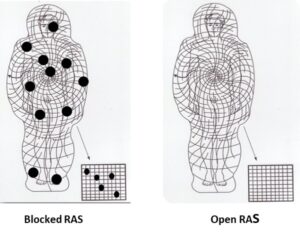
RAS Programming
At the same time, the RAS reacts according to previous programming. This programming can be functional or dysfunctional.
Functional programming
Functional programming emphasizes honesty, open communication, and treating people with love and respect. Functional people allow themselves to experience a wide range of emotions and simply be human. Their positive outlook on life brings openness and happiness to those around them.
They are authentic and honest and not afraid to speak up and speak out for what is true and right. They open the structures and allow new thinking, planning, and diversity to take centre stage. Every contribution is valued and treated with respect. Functional people are humble and love to learn, grow, and develop.
Their leadership role also involves setting an example of what a fully functional, enlightened person should embody. They are open-minded and are aware of the power of diversity. They accept responsibility and are not afraid to take ownership where needed.
Dysfunctional programming
Dysfunctional people are hurting people. They are stuck in a cycle of lies, pain, disappointment, and unresolved problems from the past, and keep repeating these issues over and over again. To be able to cope, they create their own delusional stories and therefore live the lie.
Most are stuck in depression, aggression, and anxiety that keep them from open and honest communication. There is a lack of honesty, integrity, new growth, and development. They live in an isolated world of exclusivity, discrimination, and rejection. Ultimately, they feel powerless and stuck. Stagnation and an implosion become inevitable.\ unless there is an intervention to turn these dysfunctional processes around. The only way out is to embark on a journey of recovering your DNA success blueprint and activating the RAS.
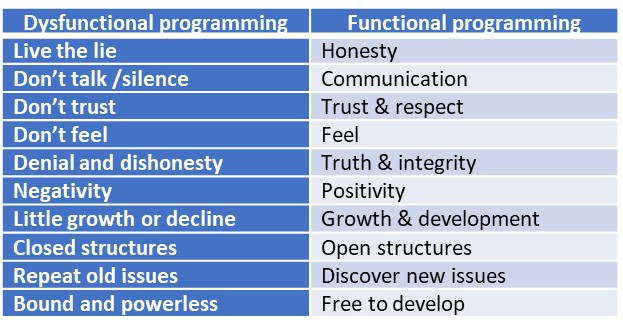
RAS Activation.
Here are a few steps you can take to start healing your DNA and activating the RAS.
Goal Setting: If you want to learn a new language, focus on your goal, visualize yourself speaking the language, and actively engage in language learning activities.
Finding a New Job: Clearly define the type of job you want, visualize yourself succeeding in that role, and actively search for relevant job postings.
Improving Health: Visualize yourself feeling healthy and energetic, focus on healthy habits, and seek out information and resources that support your health goals.
By consciously directing your attention and intention, you can train your RAS to work for you, helping you achieve your goals and create a more fulfilling life, including your work environment.
EXERCISE 4. RECOVERING YOUR DNA BLUEPRINT
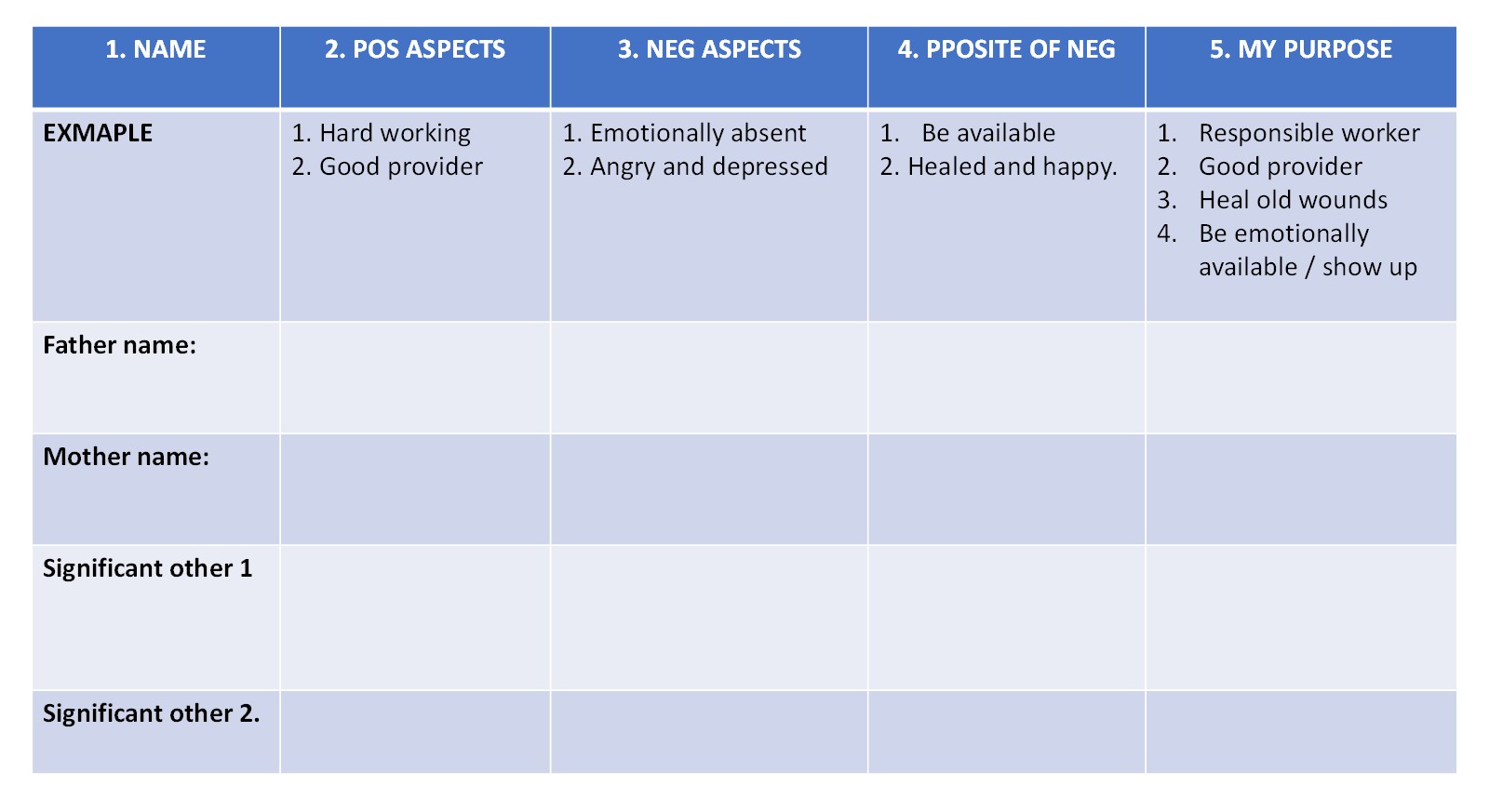
CASE STUDY. 4. DNA HEALING
Several universities and research institutions are actively studying DNA repair and its implications for health and disease. Some notable examples include the University of Oxford, the University of Toronto, Harvard Medical School, the University of Sussex, and the University of Rochester Medical Center. These institutions are exploring various aspects of DNA repair, including the mechanisms involved, the role of different proteins, and how these processes are impacted by disease or environmental factors
“Healing DNA” encompasses a broad spectrum of research and concepts, from the targeted repair of genetic defects through gene therapy to the exploration of DNA’s natural repair mechanisms and the potential for reprogramming DNA to address inherited patterns.
A “healing DNA” case study could refer to various scenarios, including gene therapy for genetic diseases, the natural repair mechanisms of DNA in response to damage, or the exploration of the concept of inherited trauma and its potential reversal through DNA reprogramming. One example is the development of delandistrogene moxeparvovec, a gene therapy for Duchenne Muscular Dystrophy (DMD). Another area of interest is the study of DNA repair pathways and how they are activated in response to damage, including the role of specific genes in melanoma’s self-healing abilities.
The most important lesson is that science now reveals we have the ability to heal our DNA. We thereby have the ability to restore our original DNA blueprint.

Course Manual 5: Authentic-self vs ego-self
In the previous lessons and chapters, we discovered that a new season of human consciousness is emerging. Humanity is undergoing an awakening process; change and transformation are occurring at a cellular level. Power and potential are encoded in our original DNA blueprint as our authentic self.
Unfortunately, we became disconnected from our authentic self, which holds the codes and keys to health, wealth, happiness, success, and prosperity. We create an ego-driven life of struggle and despair. It is from this negative side of humanity. This power and potential are waiting to be recovered, released, harnessed, and utilized to return to our original DNA blueprint and create a world that benefits all. To achieve this goal, we not only need a new mindset with new skills and tools, but we also need a whole new intelligence – Power Intelligence (PI).
In this chapter, we answer the questions: What is Power Intelligence? Why us and why now?
Background
The term ‘Power Intelligence’ was first introduced at the International Conference for Psychology in 2000. Since then, PI has made its way as part of the paradigm shift from outside the system and is now taking centre stage. During this time, forward-thinking leaders, coaches, and mentors have joined the shift. Leading companies and organizations had their leaders trained in Power Intelligence as the intelligence of the future. This body of work is now available to everyone.
Power Intelligence Research
Research has revealed that we have clock genes that regulate certain processes at specific times. The emerging of a new level of human consciousness also includes the unfolding of a new intelligence. The reason is that recently, the frontal lobes of the brain have been activated. This not only brings new insight and vision, but also activates new genetic potential and vice versa.
Rational Intelligence (IQ) and Emotional Intelligence (EQ) represent different parts of the brain. Power Intelligence (PI) refers not only to whole-brain functioning but also to higher mind activation.
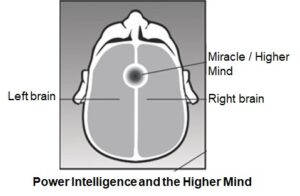
The higher mind is seated in the frontal lobes of the brain. This is known as the Power Spot, or the Miracle Mind. Here we find the keys to visualizing, creating, and manifesting a new reality and a better future.
Foundation of Power Intelligence
Power Intelligence comes from ‘power’ or ‘energy’, which secures life and movement. ‘Intelligence’ has two parts as intel, meaning ‘between two’, and ligence, meaning ‘to choose’. As human beings, we have been given free will, the ability to choose in what direction we want to move. There is only one of two points of departure.
On the one side, we find the authentic self that leads to happiness and success. On the other side, we have the shadow ego-self that leads to implosion. Wherever you are coming from determines where you are going. Enlightened Leaders learn to overcome their shadow ego-self, develop their authentic self and master Power Intelligence.
Definition of Power Intelligence
Power Intelligence is the conscious ability to connect with our unique and personal inner power source, the universal power (or God), and to release our authentic potential in order to fulfill our purpose of becoming fully functional, authentic human beings. Power Intelligence is the conscious ability to work with power and energy, releasing new potential that takes us forward.
When released, this power breaks barriers, opens new worlds, and accesses new dimensions. The outcome is prosperity, joy, health, wealth and happiness that can be shared with others. In this way, a significant contribution is made to create a better life and a better world for all. Power Intelligence is the conscious ability to heal the disconnected or the ‘broken’ mind. It is the conscious ability to become spiritually connected and heal our DNA.
In short, Power Intelligence is all about raising awareness and accessing new levels of consciousness. The Power Pyramid below illustrates the various levels of consciousness and understanding in a color-coded map.
The Power Pyramid
The Power Pyramid, depicted below, is a model of the different levels of consciousness or power on which people function on. This also represents the levels of values and choices people can make.
The challenge is to reclaim your power from negativity, dysfunctional programming, and lower-order programming, and elevate your consciousness to overcome false perceptions, lies, half-truths, and untruths. This involves changing outdated values and recovering your original DNA success blueprint.
Herein lies the future. Here we find enlightened leaders in action.
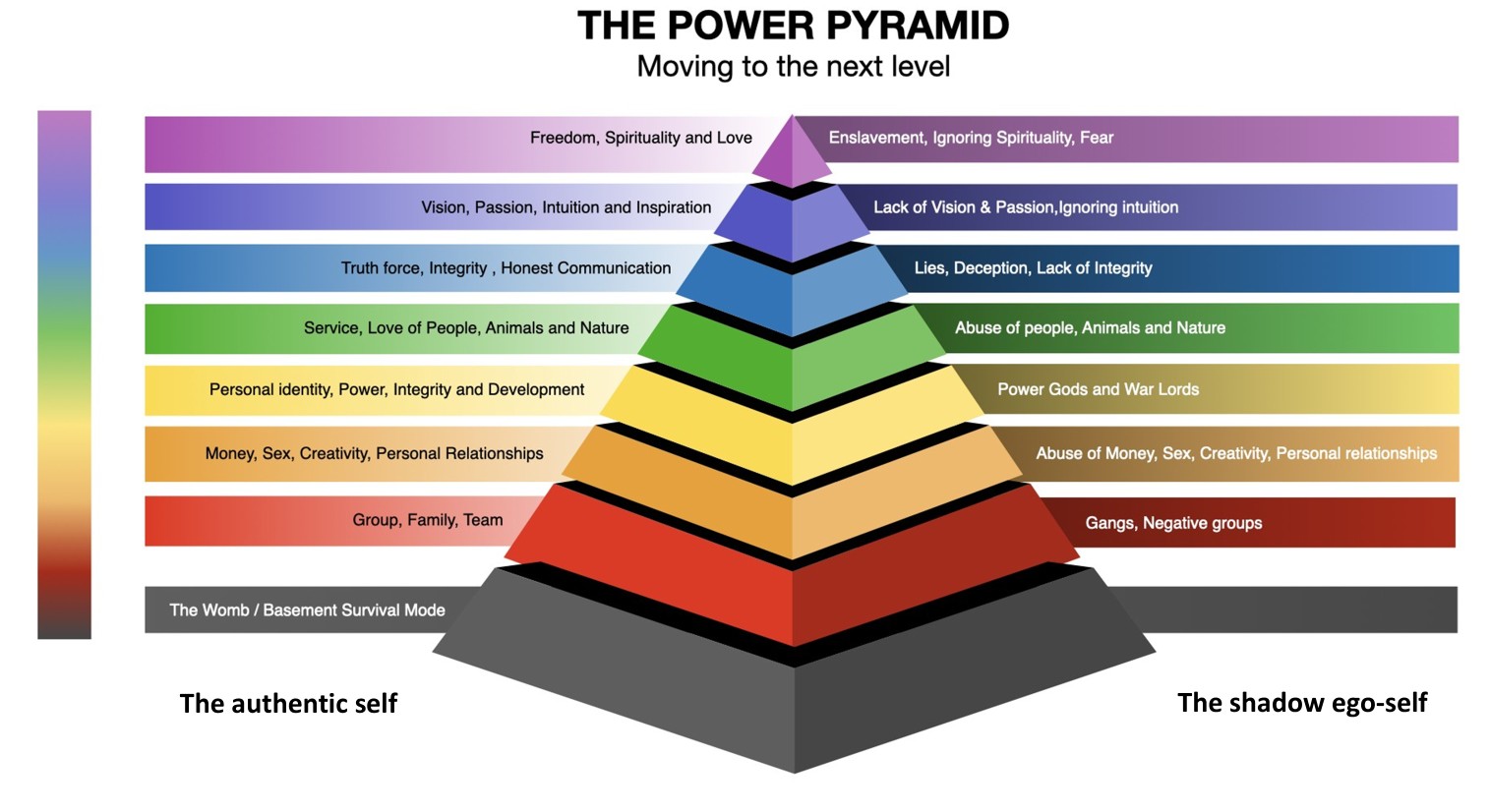
The Power Pyramid and the levels of consciousness.
The power of value systems cannot be underestimated. However, with the current power shift, we also find a change in value systems. As we move from one level of consciousness to another, we also move from one value system to another.
Here is a summary of each power level and what it holds for us.
Level 0: Infrared. In the basement.
This is the survival mode. We haven’t included this level in this profile. The basement is caused when we have to survive on a physical, emotional, financial, or even spiritual level. The aim is to regain control, survive, and stay alive (in every form)
Level 1 – Red level:
Here we find our power within the group or “family”. The priorities and strengths found here include traditional, family, group, or team values, belonging to a “family”, the ability to adhere to group values and/or manage and control the group, team, or family.
Fears include disapproval, disciplining, and/or rejection by the ‘family’ or group. Frustration develops when these values become uncomfortable, too narrow, and punitive. It is then time to let go and move on.
Level 2 – Orange level
Here we discover our power within relationships. Strengths and priorities include financial freedom, creativity, productive interpersonal relationships, sexuality, and intimacy with an ‘important other”.
Fears include losing control of money, sexual issues, and rejection by friends or partners. Frustration develops when work, money, relationships, and sex become meaningless. It is then time to be creative and move on.
Level 3: Yellow level.
Here, we become centered within ourselves and attain personal power. Strengths and priorities include self-discovery, development, integrity, honour, and finding the answers to the question: who am I? Where am I going and why?
Fears include: criticism, rejection, failure, looking foolish, and all issues relating to physical appearance. Frustrations arise when we begin to seek deeper meaning, purpose, and opportunities to connect with others. We start living from the inside out.
Here we make a transition. This indicates a significant change, a notable shift, and a substantial leap forward.
Level 4: Green level.
Power is found in meeting the needs of self and others. Priorities and strengths include love of self, people, and nature, service to others, tolerance, forgiveness, reconciliation, and pursuing positive, uplifting issues.
Fears include intimacy, commitment, loneliness, and betrayal. Frustrations arise with the attainment of goals, the pursuit of deeper understanding and purpose, and the need to move forward.
Level 5: Blue level.
Here we find power within truth, communication, beauty, and inspiration. Priorities and strengths include honesty, truth, open communication, inspiration, purpose, and unlimited discovery. Fears we need to overcome include giving up the power of choice, being powerless, and/or out of control. Here, all the previous fears that haven’t been addressed surface again, just at a new level. The persistence of negativity and frustration drives us to seek a new and deeper purpose in life, including money, relationships, and all aspects of existence. It is time to move on.
Level 6: Purple (indigo / magenta) milestone.
Here, we find our power in new visions, gaining the ‘big picture’ and understanding how everything is connected to everything else. Priorities and strengths include expansive mental reasoning and holistic integrative thinking, understanding and evaluating beliefs, retrieving power from “false truths”, connecting to the universal mind (spirit world/Higher Mind/Universal Power), symbolic sight and developing vision, intuition, HSP (higher sensory perception) and insight into underlying patterns and processes.
On the other hand, the fear of truth, realistic judgment, discipline, confession, and our shadow (including our dark side and negative attributes) block our willingness to look within or accept external counsel. Wanting to find the answer to the question: why? The need to understand and the search for deeper meaning can cause frustration, yet it also moves us forward.
This again indicates a leap. Some will make the move, and others will stay behind
Level 7: Violet milestone
Here we find our power within inner peace, wholeness, being centred, connecting to spirituality and unity with the Divine. The priorities and strengths include understanding the presence of and connection with the Universal Divine Higher Power, spiritual insight and understanding, vision, intuition, love, grace, prayer, meditation, living in the now, miracles, hope, and inner peace. This includes connecting to the ‘God spot’, seeing the real ‘big picture’, understanding Higher purpose, inner direction, and guidance.
Here we develop faith that transcends all fears, insight into healing, devotion, and love. The fears we need to overcome relate to: fear of spiritual issues, spiritual abandonment, loss of identity, loss of connection to life and people around us, our “dark side”, closeness, connection, love, caring, and physical death. Frustrations are triggers to move on. This could mean that we start from the basement again – the dark womb of the soul. This can help us transcend from one octave to another and move through all the levels, just from a different perspective.
On the other hand, we can transcend this reality (octave) through physical death. There are no barriers or death – just a change of form. When our earthly purpose is fulfilled, we transition from one form to another and continue on. Here, our physical death is the trigger to move on. This time we move not from level to level, but from one dimension to another. People, teams, and organisations all follow this same universal process. From birth, life, growth, development, to decline and death, to rebirth and life again!
This is what rewriting organizational DNA is all about.
In conclusion, Power Intelligence is the conscious ability to recover our original DNA blueprint by realigning our awareness to create a future of health, wealth, happiness, success, and prosperity that benefits all, including Mother Earth.
Power, Intelligence vs Artificial Intelligence
Artificial Intelligence (AI) is a field of computer science that focuses on building machines and systems capable of performing tasks that typically require human intelligence. This includes learning, reasoning, problem-solving, and interacting with the environment. AI encompasses a wide range of technologies and approaches, from simple algorithms to complex neural networks, all designed to enable machines to mimic human cognitive abilities.
Artificial intelligence (AI) has begun to take center stage in various aspects of human existence. However, AI is precisely that: artificial. It is a man-made support system designed to help us lead a better quality of life. Like everything in the world, AI has both positive and negative sides. The challenge lies in striking a balance between human potential and machine capabilities. Many sci-fi films depict the battle between the power of the machine (AI) and human consciousness, as well as their level of Power Intelligence (PI). The challenge is to balance and integrate these two powers, unifying their potential and possibilities into a cohesive whole that is beneficial to all.
Lessons from history
In ancient history, there was no artificial intelligence. However, human consciousness, natural awareness, and higher intellect were highly evolved to deliver advanced contributions with new information in astrology, astronomy, mathematical calculations, future visions and predictions, and inspired inventions.
These advanced cultures may not have had AI, but they were deeply connected spiritually. This universal connection granted them the cutting-edge advantage of accessing new information on higher levels and more advanced dimensions.
It is this ancient power and potential we need to preserve by consciously developing our Power Intelligence. Neglecting this challenge will, unfortunately, allow the machine to take over and rule our lives. What kind of future will then await our children, grandchildren, and generations to come?
The work we do now and the effort we put into becoming enlightened leaders will have a lasting impact far into the future. This is our guarantee of creating a quality future for generations to come.
EXERCISE 5.1. QUESTIONS ABOUT THE FUTURE
Name and discuss three benefits os Artificial Intelligence (AI)
Name and discuss three problems that AI can cause in the future.
Name and discuss three benefits of Power Intelligence (PI)
Name and discuss three negative influences of Power Intelligence (PI)
How do you think AI will influence the development of our staff member and our children?
How can PI be implemented alongside AI training in our homes, schools, communities, companies, and organizations?
What do you think will happen in the future if we fail in balancing AI and PI?
Summarize your answers
Create an action plan you can implement in your family, community, teams, and organization.
Commit yourself to implementing this plan. Our future depends on it.
CASE STUDY. 5. ARTIFICIAL INTELLIGENCE
RESEARCH
Research by various leading universities has found that both Artificial Intelligence and Power Intelligence represent transformative tools capable of profoundly shaping individuals and organizations. By combining the analytical prowess of AI with the ethical framework and interpersonal depth of PI, we unlock a synergy that enhances decision-making, nurtures emotional intelligence, and fosters a balanced approach to innovation. This integration is pivotal for addressing complex societal challenges and steering humanity toward a sustainable and equitable future.
When implemented thoughtfully, AI can help automate mundane tasks, analyze vast datasets to unveil actionable insights, and improve the efficiency of organizational processes. Meanwhile, PI cultivates empathy, ethical discernment, and collaboration, ensuring that technological advancements align with human values and community welfare. Together, these intelligences can create environments that thrive on adaptability, foresight, and inclusivity.
To achieve this, individuals, families, and institutions must adopt a strategic alignment approach in their planning processes—ensuring that their vision, mission, and values align with the evolving landscape of AI and PI. This calls for structured initiatives that assess current capabilities, set measurable goals, and adapt strategies to meet emerging needs.
CASE STUDY 5.2.
SIEMENS
Real-world case studies bring Siemens’ vision to life, demonstrating how Industrial AI is addressing some of the most urgent challenges faced by modern industries. For instance, AI for Maintenance – ANYmal Robot Dog is effective in hazardous or hard-to-reach environments. Siemens also employs the ANYmal robot dog for plant inspections.
Motor industry
Ford, along with General Motors, Toyota, and Volkswagen, may have started out as automotive manufacturers, but they now refer to themselves as “mobility service” companies. Ford believes “freedom of movement drives human progress.” While it is now a global company, Ford started out more than 100 years ago in Dearborn, Michigan. The company revolutionized manufacturing by introducing the moving assembly line, making car ownership possible for everyday people, not just the wealthy. Today, the company focuses on technology first, utilizing artificial intelligence (AI) and machine learning in various applications, from connected car solutions to the development of autonomous vehicles.

Course Manual 6: Power Intelligence (PI)
Background
Empowered with a new vision, mission, value system, and Power Intelligence as a new intelligence from the previous lessons, you can refine your vision of the future and develop a map that will mark the way to achieve your goals.
Vision and strategic planning
Strategic planning is a process where individuals, teams, and organizations define their long-term vision, goals, and strategies to achieve success and adapt to changing circumstances. It involves identifying opportunities, assessing resources, and allocating resources to achieve organizational objectives.
Strategic planning process
The strategic planning process involves defining your personal or the organization’s vision, mission, and values, assessing the current situation, setting strategic priorities, developing goals and metrics, creating a strategic plan, communicating it, implementing it, and then monitoring, measuring, and revising it as needed. It’s a structured process that helps organizations define their long-term vision, set actionable goals, and allocate resources effectively.
Aligning personal and organizational planning.
You are working at a specific organization and within a specific team, for specific reasons. Being clear about what these reasons are, makes the strategic planning process effective and enjoyable. It is important to first start with your personal planning. After that, you can align your plan with the organization’s planning. Remember that a strategic plan is flexible, allowing for flexibility for all parties.
Here are some guidelines for creating a strategic plan. The same processes apply to each individual and the organization as a whole.
The strategic planning process:
Clarify Vision, Mission, and Values: Define the organization’s desired future state (vision), its purpose (mission), and the core principles that guide its actions (values).
Conduct an Environmental Scan: Assess the internal and external environment, including SWOT analysis (Strengths, Weaknesses, Opportunities, Threats) to understand the organization’s capabilities and the external competitive environment.
Define Strategic Priorities: Identify the most important areas where the organization needs to focus its resources and efforts to achieve its vision.
Develop Goals and Metrics: Set specific, measurable, achievable, relevant, and time-bound (SMART) goals and define metrics to track progress towards those goals.
Derive a Strategic Plan: Develop a detailed plan outlining the specific actions, strategies, and resources needed to achieve the defined goals.
Write and Communicate the Strategic Plan: Communicate the plan to all stakeholders, ensuring everyone understands the vision, goals, and their roles in achieving them.
Implement, Monitor, and Revise: Put the plan into action, monitor progress, measure key performance indicators (KPIs), and make adjustments as needed to ensure the plan remains relevant and effective.
The importance of vision and strategic planning
Provides direction: It helps organizations define where they want to go and how they will get there, providing a clear path forward.
Focuses efforts: It helps prioritize efforts and allocate resources effectively, ensuring that the organization is focusing on the most important initiatives.
Aligns stakeholders: It helps align employees and other stakeholders on the organization’s goals, fostering a sense of shared purpose.
Improves decision-making: It provides a framework for making informed decisions that are aligned with the organization’s strategic direction.
Enhances adaptability: It helps organizations adapt to changing environments and stay ahead of the competition.
General planning
The same principles above also apply to individuals, families, groups, communities, and teams. However, this is the general planning of day-to-day activities. People, however, function on different levels as body, mind, heart, and soul.
It is essential to have specific conscious planning to meet the needs of each of these levels. Not only is this how you successfully manage and navigate a marriage, partnership, family, or community, but it is also an important part of managing and navigating teams and organizations as a leader.
Specific planning
Specific planning needs to include strategies to enhance physical health, mental health and emotional wellness, and spiritual vibrancy and inspiration.
Earlier, we established that religion is not always spiritual, and spirituality is not always religious. Some people identify as atheists, agnostics, sceptics, or non-believers, lacking a third-dimensional transpersonal connection.
In Workshop 8, we will explore these concepts further. It is crucial to respect individuals’ personal values and beliefs while finding common ground that aligns with the team, company, organization, and global value systems, fostering synergy, cooperation, and progress.
The most important planning must include the journey of the soul. Not only do people have a soul, but an organization also has a soul as the collective consciousness of everyone. The soul of the organization determines organizational culture.
Journey of the soul.
We will now create our own strategic plan as a map to achieve what we want, need, desire, and intend to create on this journey we call life. This map includes our physical, mental, emotional, and spiritual journeys. A map is a strategic plan.
The reason is that, as human beings, we function as a unified whole, as body, mind, heart, soul, and spirit. These parts of the self are interconnected. It is essential to consider all aspects cohesively when planning. This necessitates an understanding of the soul’s journey, the deeper aspect of oneself connected to universal intelligence, thereby imparting universal value, meaning, and purpose.
The soul of the organization.
An organization also functions as a living, breathing, unified entity as a whole. This means an organization also has a soul, known as ‘organizational culture’. When the soul of the organization is healthy, balanced, happy, and meaningful, people will love to come to work and deliver their best. Unfortunately, the shadow ego-selves of all involved can and do contaminate the organization, thereby bringing negativity, lack of cooperation, and even destruction to the organization as a functioning whole.
Some communities, companies, organizations, and even governments and their leaders become so corrupt that they lose their moral compass and in the end, their souls.
Just imagine a world governed by shadow ego-driven individuals who are lost souls. It is from this destructive situation that we need to return and find our way back to truth, honesty, integrity, and authenticity. Herein lies our future.
The shadow ego-self.
Because we are human, we all have a disconnected part that still needs healing and reconnection. Fragments of ourselves are scattered all over the path of life, marking places of pain, suffering, loss, lies, deception, anger, unforgiveness, and fear. This part of the self is causing the destruction we all want to prevent. The reason is that the external world is merely a reflection of the inner world of people. Families, communities, and organizations. This also includes countries and humanity as a whole.
Understanding the shadow ego-self, reclaiming the lost pieces, healing the past, and discovering a new future are part of the journey of becoming an enlightened leader.
Splintered parts
Each of us has parts of the self that have been disconnected, splintered, or ‘broken off’. We have not yet discovered, identified with, connected to, grown, developed, or evolved in these fragmented areas. This means parts of us are still on the dark or shadow side and most people live from a fragmented or broken disconnected self. These parts are still ‘stuck’ in the past and constantly invade our lives in order to be heard, acknowledged, and resolved. This reflects in the many fragmented and unhappy lives around us.
Most people neglect to reincorporate the fragments and learn from their shadow self. This happens mostly because we are unaware or ashamed of these parts that are not ‘up to standard’. We rather choose to deny and ignore their existence. This drains much of our personal power and prevents us from moving forward.
However, connecting to and taking conscious control of the shadow self is a very valuable step in reclaiming your power while growing in self-master and maturity. If not, the shadow self continues to dominate our personal dynamics while influencing the path of our lives in a harmful and destructive way.
Stop
At some time or other, everyone has to stop and take personal control and responsibility for the quality of their lives. This begins when we can face our shadow side and consciously open up, expose, and heal our negative aspects. In the process, we become reconnected to the healed, whole, holy, original, authentic self. At the same time our new success DNA reconnects as well. We not only take back our power, we also reclaim our authentic spark of life and our authentic self.
Lower self or ego-centered versus authentic soul-centered living
The summary gives an indication of one of the two paths we could follow. Seven steps correspond to the seven steps of the power pyramid of development outlined in the next workshop. Here, you will find all the necessary tools and skills to transform your life into a resonance of love, light, power, wisdom, and abundance.

When we examine all the masters from various religions once again, we find that they completely identified with their higher, soul self. They became one with their inner light, their authentic self, or their personal light self, or their enlightened self.
Strategic planning
All strategic planning efforts must include addressing the brokenness and overcoming the stumbling blocks in order to move forward. Without this step, people., communities, companies, organizations, and even countries, remain stuck.
In the exercise, we use the diagram below to outline the map for this journey.

EXERCISE 6. DEVELOPING A MAP
Make a list of three things you can do now to secure a quality old age, a quality future.
Use this map to strategize your life planning. Be flexible and adjust as you walk the path of life. This is what conscious, mindful living is all about. This is what enlightened leadership is all about. Your task is to help others on their journey as a pathfinder, mapmaker, way-shower, and bridgebuilder.
Keep your map close, as we will develop it in more detail in the following workshops.
Case Study 6
6.1. PERSONAL PLANNING
During life-coaching sessions, Robin Waverly, a young father of two children, ages six and four, focused on personal planning and life strategy. By using the diagram above, he planned out his map. His planning included long-term provisions for his wife and children. This included house insurance, life insurance, and financial arrangements for their children’s education. He also carefully planned their budget to include holidays and social events.
Robin wrote everything down in his neat brown leather journal. With each coaching session, he elaborated on each step by developing action plans and a to-do list. By the end of his coaching sessions, he had gained a clear understanding of who he was, his purpose, and his responsibilities as a husband and father. He valued and appreciated his work as an engineer, for this gave him the opportunity to lead the quality of life he had always dreamed of.
Nine years later, his wife visited the life coach. In her hand, she had Robin’s brown leather journal. She came to say thank you. Robin was killed in a motor car accident a few months earlier.
6.2 STRATEGIC PLANNING IN GLOBAL BANKS
The following research underlines the importance of strategic planning in global banks.
Influence of Strategic Planning on Banking Performance via Differentiation Strategy. by Jeffry Yuliyanto Waisapi
Effective strategic planning plays a crucial role in enhancing the performance of banking businesses. This research aims to analyze the impact of strategic planning on banking business performance through the implementation of a differentiation strategy.
Utilizing a quantitative approach, primary data was collected through surveys distributed to senior managers from several banks operating in various markets. Multiple linear regression analysis was employed to evaluate the relationship between strategic planning, strategic differentiation, and business performance. The research findings suggest that strategic planning has a significant impact on strategic differentiation within the banking industry.
Additionally, strategic differentiation also positively contributes to banking business performance. The implications of these findings are that banks implementing effective strategic planning tend to adopt better differentiation strategies, thereby enhancing their performance in the face of intense market competition. This study provides valuable contributions to understanding the relationship between strategic planning, strategic differentiation, and business performance in the banking context.
The results provide guidance for banks to enhance their strategic planning practices and implement effective differentiation strategies, thereby strengthening their competitive position in the market. Future research could explore additional factors influencing this relationship and broaden the industry scope to validate these findings more comprehensively.
You can download and read the full article HERE.

Course Manual 7: Strategic planning
Core skills
Self-awareness, self-assessment, and self-knowledge are core skills of authentic, enlightened leadership. We implement the Power Intelligence Success Profile (PISP) as a self-assessment tool to help you on this path.
Choices.
The dynamics behind making choices and acting on them determine the direction the unfolding of a plan and process will take. It is therefore important to understand why and how people make choices. We need to ask the question, ‘Where are they coming from?’ You also need to understand where you are coming from.
The choices we make can only come from one of two parts of the self. On one side is the authentic self, which makes choices based on peace, prosperity, cooperation, and the greater good. The shadow ego-self makes self-serving choices based on fear, anger, resentment, and a desire for elimination. Whatever side wins the inner battle will determine the choices, actions, and, therefore, the outcome, whether positive or negative.
The question is, ‘How do we know where a person, team, or organization is coming from?’ The Power Intelligence Success Profile (PISP) provides answers to these questions.
Power Intelligence
Everything is in constant movement. Successful outcomes depend on how conscious and aware we are of our influence on the direction and outcome of the movement. For this we need skills, tools and a special intelligence – Power Intelligence (PI). Power Intelligence is the conscious ability of managing energy and of influencing movement in the direction that would most benefit all. Power Intelligence is the conscious ability of utilizing potential and turning the power-on-hold into positive uplifting outcomes that will enhance success and the quality of life.
Success and failure
Success is a relative concept and can mean whatever you want it to mean. The best way to understand the fundamental meaning of ‘success’ is to take a look at the opposite, namely, ‘failure’. Failure is defined as: The inability to function authentically. Success can therefore be described as: the conscious ability to function authentically. Success is all about getting real. This is all encoded into our DNA. We all have authentic success DNA at our disposal.
Why New Success DNA?
Science has proven that over time, certain parts of DNA deteriorate and become disconnected. This dormant, inaccessible potential is viewed as ‘junk-DNA’ or ‘junk-genes’. However, scientists are also now finding that we have clock genes, and over time, certain parts of DNA can and do begin to reconnect and become active. We now realise that we are not a product of our genetics. We have a blueprint of success, literally encoded into our DNA, just waiting to be enabled. Unfortunately, most people have become disconnected, thereby losing the map to authentic success, health, wealth, and happiness.
Activating New Success DNA
With the right skills, tools, understanding, and intelligence, we can activate our dormant genes, tap into new potential, and start creating new levels of success and quality of life. By starting with ourselves, we can rewrite the DNA of a team, a company, an organisation, a country, and even humanity. A new human gene pool is already emerging as we speak. All we need to do is to wake up and take back who we really are. We need to get real!
What is real?
A universal law of success is the Law of Resonance. Everything you resonate with is attracted to you, while everything you do not resonate with is excluded or repelled from your life. In more digestible terms: Everything that is on the same wavelength attracts each other, and what resonates with your connected, fully functional parts of your real, true, authentic self is real. This is also the level of fulfilment, health, wealth, wellness, and happiness. Here we find openness, transparency, and flow. Only at this level do we also find sustainability.
What is not real?
Everything that is on the lower register reflects disconnection, destruction, pain, anger, fear, and disintegration. This is not authentic – it is not real, it is delusional. It comes from a broken part of the self or the shadow ego-self. Here we find blockages, resistance, anger, pain, resentment, and fear that become visible in illness, conflict, poverty, depression, corruption, and many other ills of our time. The challenge that each person, team, group, company organisation, and even countries have, is to turn the downward spiral around and – get real!
How can we turn this process around?
Climbing the ladder of success is now all about igniting our true potential and creating a new resonance that could help change the poverty, sickness, corruption and conflict into something better. These positive, uplifting experiences take place on higher frequencies. To reach this level, we all need to raise our game. We can turn the downward spiral around by becoming conscious, aware, and mindful of how we manage our power and utilize potential, while overcoming blockages and barriers. These stumbling blocks are reflected in each one of us, just because we are disconnected, not fully functional human beings.
We also have collective barriers in every group, team, organisation, company, country and even the human race as a whole. However, by becoming conscious and aware of the underlying dynamics, we can begin to rewrite our future path. We can mindfully identify these stumbling blocks, turn them around, and ignite all the new potential at our disposal. The Power Intelligence Success Profile (PISP) was developed to help us to do precisely that.
What does the Power Intelligence Success Profile? (PISP) assess?
The PISP was designed as a personal and organizational assessment and management tool that reflects the potential that lies untapped and is underutilized. At the same time, the PISP represents levels of consciousness and energy-information levels that are actively influencing personal, team, and organizational decision-making processes on a subconscious level.
We can identify seven possible levels of functioning that also reflect a positive and a negative side. Two positive attracting forces were identified as our as strengths and priorities. Two negative, retracting or repelling forces, as fears and frustrations, were also identified. This represents the seven levels, totalling 28 (7×4) attributes.
The questionnaire comprises of two sections. The first section focuses on the biographical data of the subjects, including age, highest educational qualification, home language, marriage status, job category, gender, and location on a nominal scale. The second section contains questions based on the four key dimensions of the study as:
Subconscious programming
We either function from a subconscious programming and foundation of anxiety and fear, or we operate from inner peace, security, and freedom to live a fulfilling life. People function from pain or pleasure. A negative disposition creates contracting forces that inhibit progress, success, and anything vibrant from entering your life. This spiral of negativity not only inhibits positive growth, development, and quality living but also attracts more negativity in different forms such as illness, depression, loss, and deprivation.
A positive disposition creates an expanding force, attracting more positive influences into our lives, thereby expanding the success process… These expanding forces liberate us and take us to a new level of attainment and success. This newfound mindset and approach propel us forward on a new path of success. This is a life of success, prosperity, and abundance – miraculous living.
The PISP assesses the contracting and expanding forces that are currently active on a subconscious level in our personal lives, as well as collectively in a group, company, or organization. Although these forces play significant roles in our quality of life, we are not always conscious of these inner dynamics. The purpose of the PISP is not only to make these inner processes known, but the SPISP also identifies the underlying causes. Once we are aware and mindful of these contracting and expanding forces, we can consciously take control, implement new strategies to master the self, and change the outcome. The PISP provides suggestions to what can and should be changed. A worksheet, once completed, provides guidelines for a personal and/or organizational development and mentoring program.
The following was used as guidelines in the development of the SPISP
Positive expanding forces:
Priorities: Priorities are positive forces driving and guiding decisions and actions. When neglected, movement takes place at random. Identifying new priorities stimulates the release of new energy, change, and gives new direction accordingly.
Strengths. Strengths reflect strong positive expansive attributes in which individuals, teams and/or organizations invest their power. Moving forward necessitates identifying and developing new strengths.
Negative contracting forces
Fears are inner programs of loss and pain that act as barriers that need to be overcome. Fear has a negative impact on all levels of life, health, productivity and success. Wellness and resilience depend on the management of fear. By identifying and managing fears, new energy is released, taking the individual and team/organization to new levels of success.
Frustrations: This is an indication of a barrier that represents the end of a stage or system. Implementing change and letting go of struggle and frustration releases new powers of vision, creative ideas and a new stage or system. The new energy implies new levels of success.
These attributes are assessed by using a 9 point scale on each of the seven levels represented by the Power Intelligence Pyramid.
The PISP does not only asses the underlying influences but provides guidelines for changing negative processes and enhancing the positive processes. According to the law of attraction of ‘so within – so without’, the outcome will change as well.
How Does The PISP Work?
Conjoint analysis
Conjoint analysis is a powerful simulation methodology that presents participants with real-life decisions. Instead of simply evaluating simple single-statement scenarios, participants are forced to trade off attributes with one another, compelling them to reveal their true state of mind and subconscious patterns.
The Power Intelligence Success Profile Report
The four attributes, organized into seven different levels of development, are grouped into packages with various combinations. To do the profile, the person needs to constantly choose what “package” best represents the self. The PIP consists of 37 such “packages”. A graded scale of 1 to 9 is included and the results are obtained by conjoint analysis. Conjoint analysis is an assessment method that reflects the underlying forces making you choose, but at the same time, it gives the extent to which this attribute influences your choices. The conjoint analysis process, therefore, reflects a qualitative and quantitative profile of underlying forces influencing decision making, causing specific outcomes. At the same time, the PISP gives an indication of what next level aspects could be considered within the development of a personal (team, organizational) development, mentoring, and coaching plan.
The PISP Report
The information is analyzed by a scientifically developed online software program. ny. Each participant receives a personal profile report with guidelines of how to utilize the information and compile a personal development plan. Team profiles and a company profile are included in the report provided for senior management. These reports can be utilized as part of team and organizational, coaching, mentoring, wellness, resilience, leadership and management programs.
Power Driver positive (PI+) indicates the power balance between the different positive and negative aspects. A positive indication or Power Intelligence positive (PI +) indicates a person releasing more positive energy, which can take him/her forward and create new creative opportunities
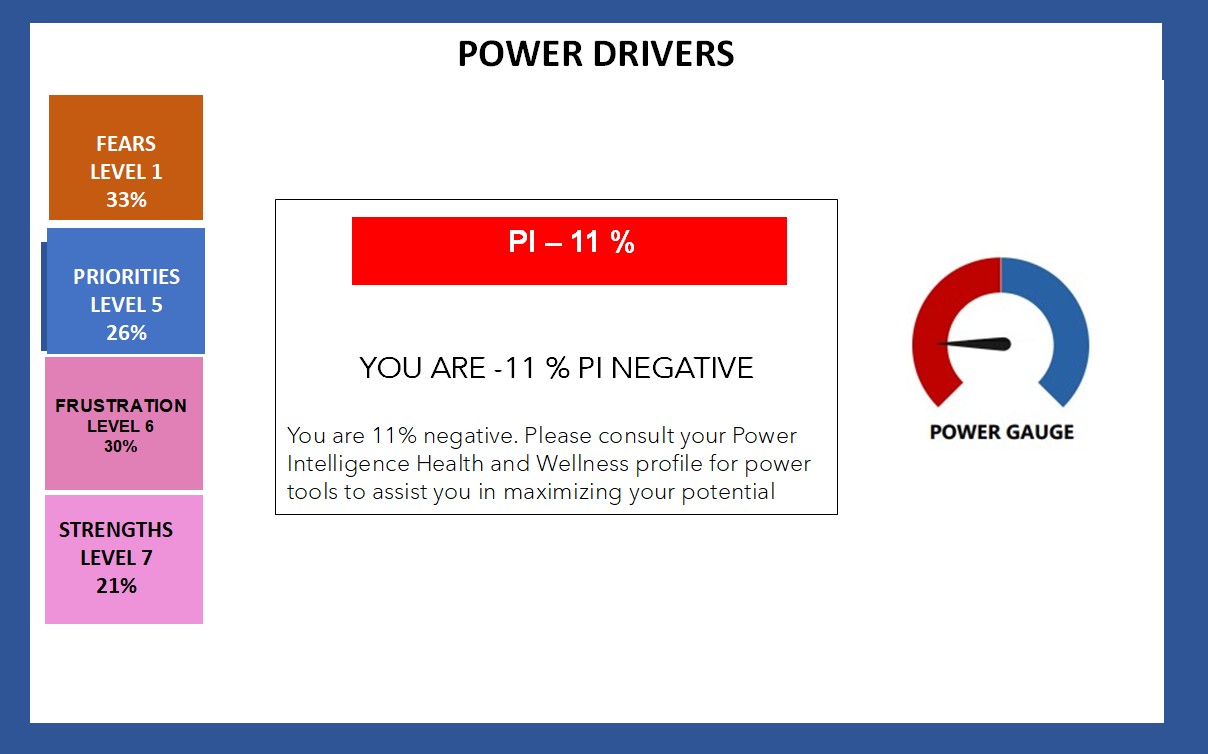
The Power Driver negative (PI-) is indicative of aspects that drain energy. Continuation of this situation will inevitably lead to burnout and disintegration. Change and transformation will therefore be necessary to rectify the energy imbalance and create a positive outcome.
PI Detail Profiles (PIDP) provide information concerning the levels of potential being utilized. Identification of the following levels of positive potential or energy, along with methods for accessing and utilizing them, is included. Information and methods regarding the turnaround of negative aspects (fears and frustrations) and releasing new potential are further included.
Positive Drivers.
The PISP Report provides feedback on two positive driving forces, Priorities and Strengths.
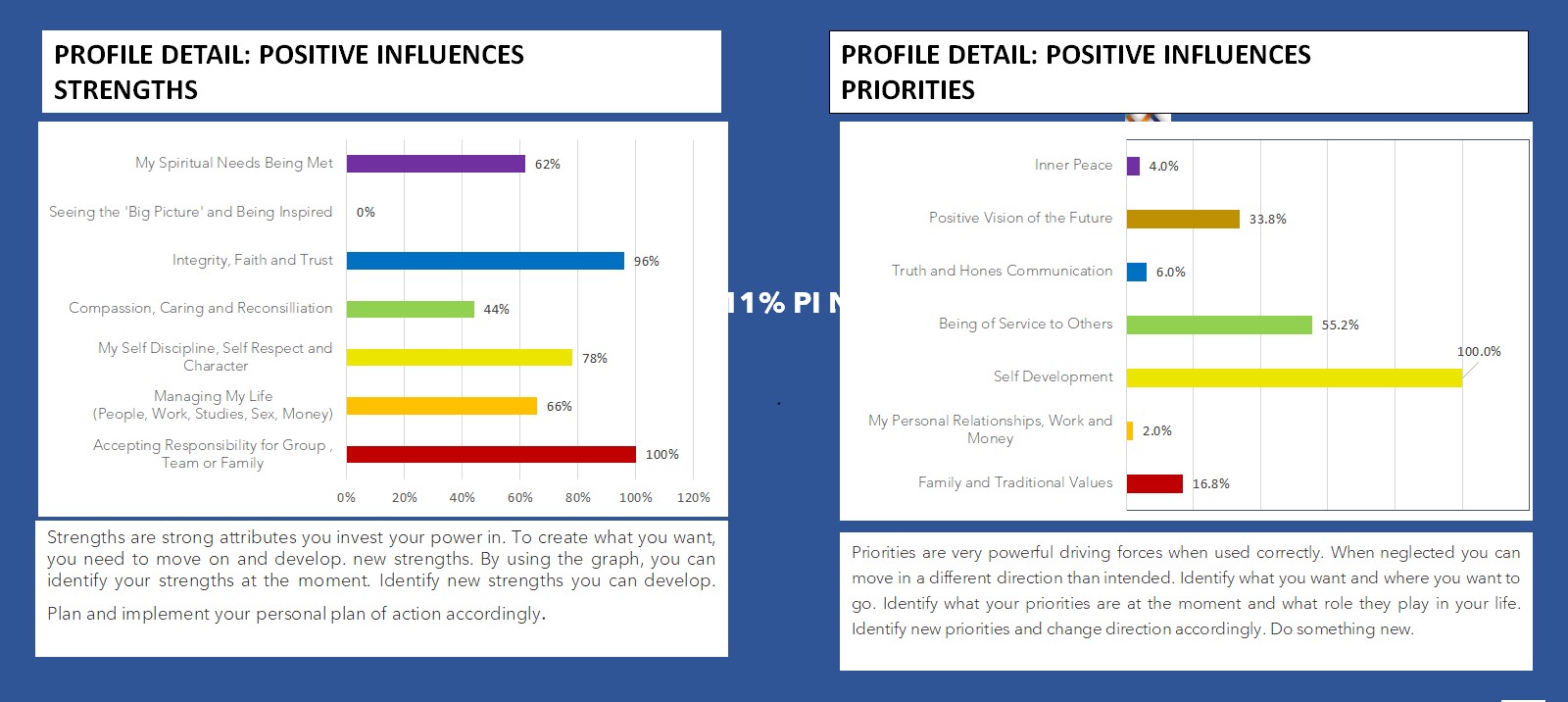
2. Detail Profile – negative drivers
The PISP Report provides feedback on two negative driving forces, Fears and Frustrations.
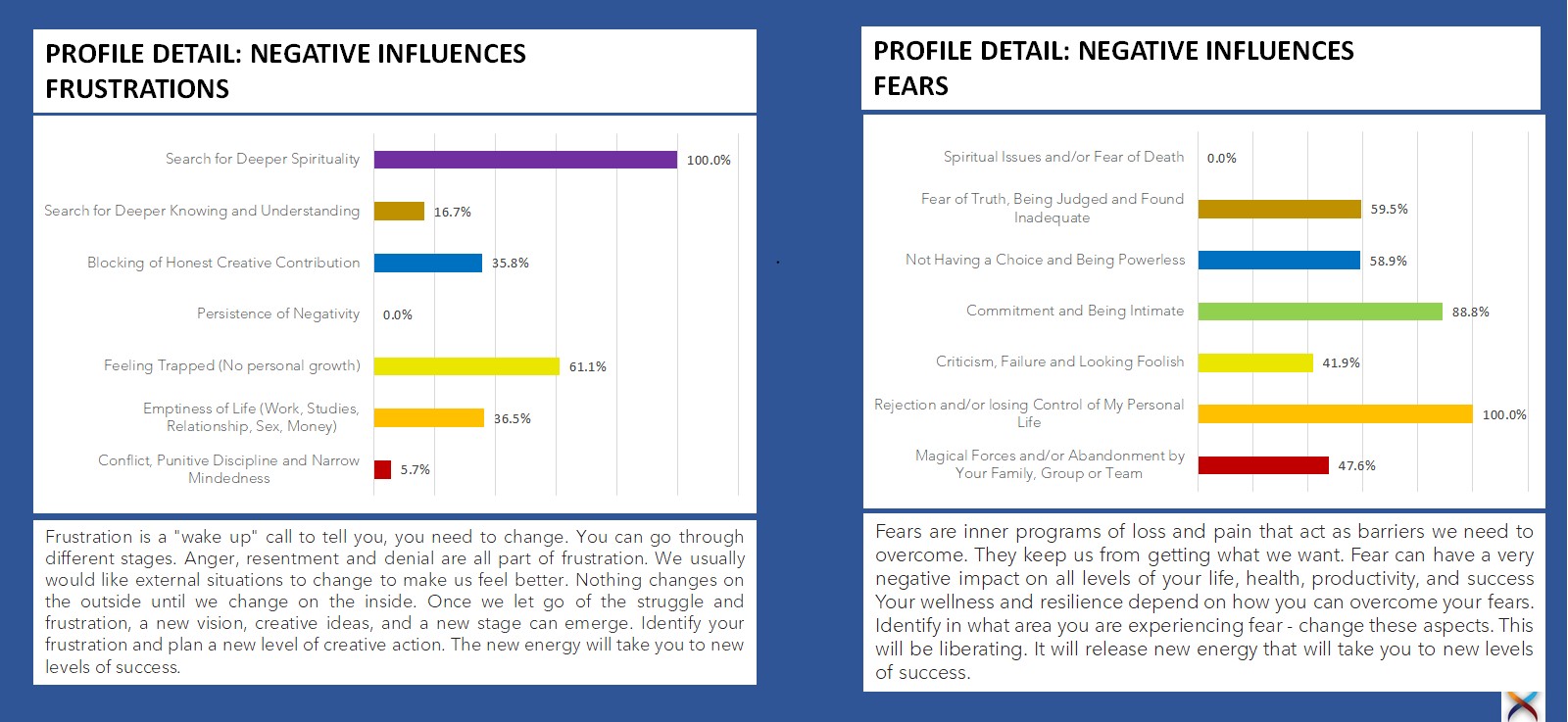
The PI Quadrant Profile (PIQP) is indicative of a person’s perception and the window of functioning. The wider the window, the broader the perception or view of reality. This acts as a filter through which reality is perceived. A qualitative analysis of the influence of each attribute on each level is included to provide guidelines for developing a personal (or team, organizational) development and empowerment program. The quadrant profiles of men and women are presented as examples.

PI resonance and dissonance:
Superimposing one window on another gives evidence of resonant and dissonant aspects between individuals, an individual or team, and teams within departments. Resonant aspects refer to persons on the same wavelength. This will indicate areas of positive energy that can be released to move both parties forward. Dissonance refers to areas that are not in accord and can produce conflict, negativity, and disintegration. Dissonance challenges growth and development and can be utilized as part of the development program.
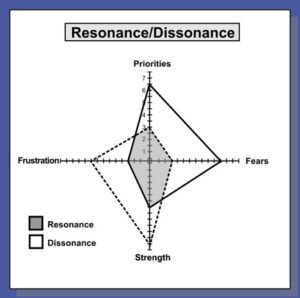
Indications of levels of resonant and dissonant relationships can be obtained from using the quadrant profiles of two individuals, leaders and members, board of directors and management, team members and a coach, or gender differences. Positive contributions and negative influences from different individuals, groups within groups, teams, and organizations can be identified from the PIQP.
The Power Intelligence Health and Wellness Profile and Report
As a bonus the Power Intelligence Health and Wellness Profile is included that indicates levels of negativities causing stress. This then is relayed to different levels of representation in the body and the possibility of the vulnerability to stress-related diseases. The psychological and stress-related factors underlying different illnesses can be addressed, and a holistic energetic approach to health and healing can be implemented by paying attention to these physical ailments as symbolic of underlying stress factors. Suggestions are provided on how to address psychological factors in conjunction with medical treatment.
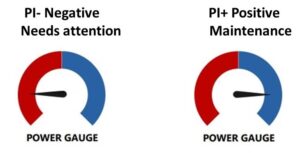
The PI Resilience Profile (PIR)
The PIR gives constructive actions that can be implemented within a self (team, organizational) coaching and mentoring program. It was designed to introduce new power tools into the plan of action in order to maximize resilience and the reclaiming of equilibrium, balance, harmony, and health.
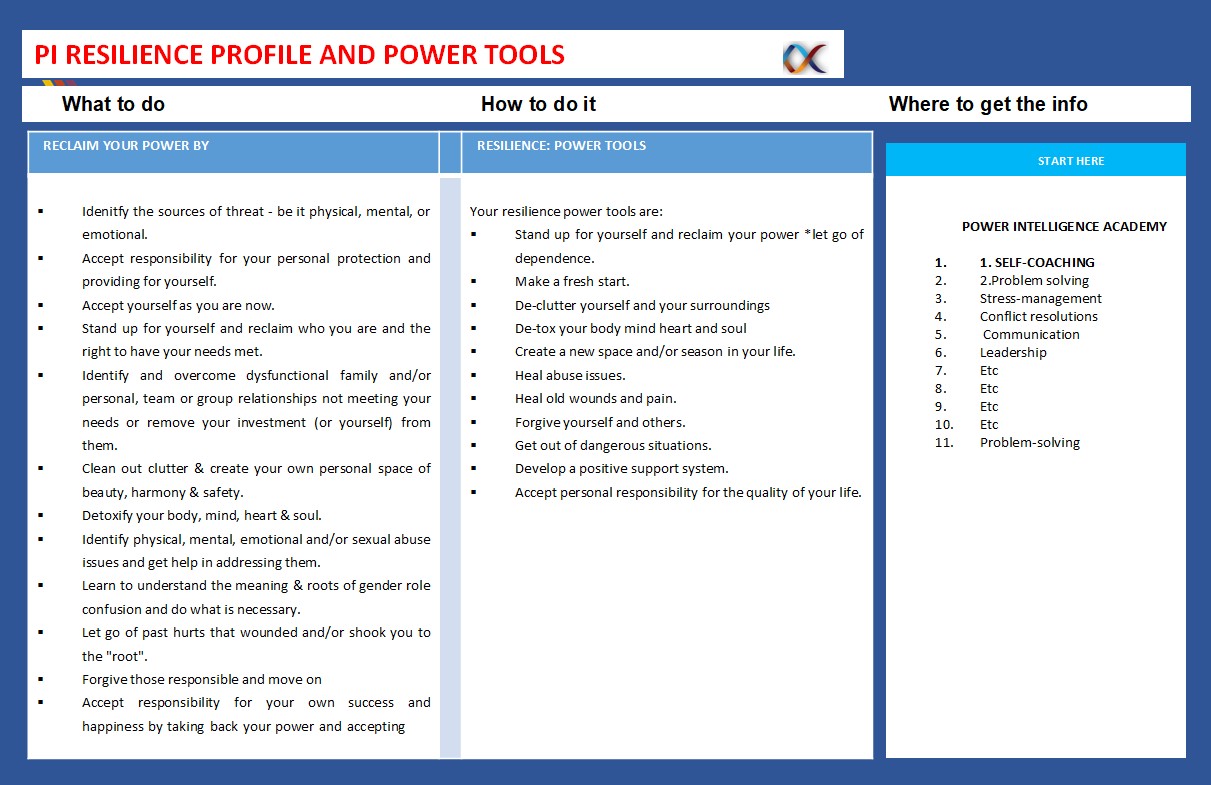
The PISP Worksheet
The PISP Report concludes with a worksheet to summarize all the information on one page. At the same time, this one-pager provides the necessary information for strategic planning.
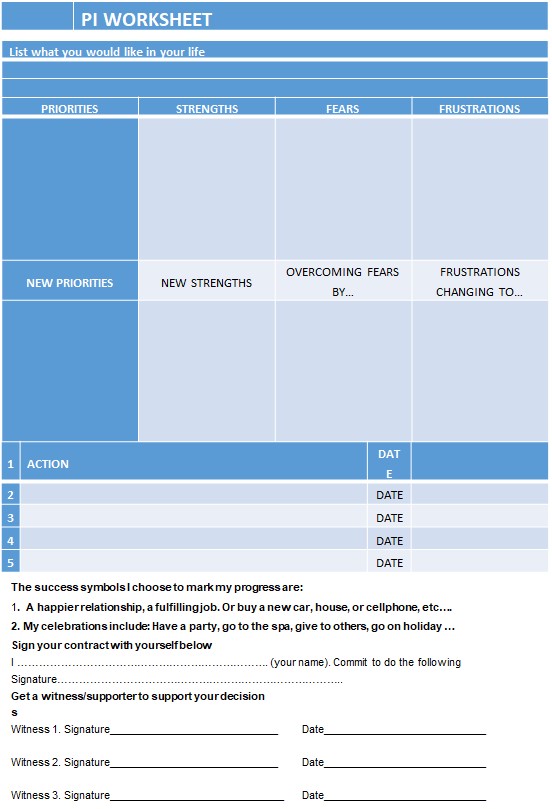
SUMMARY
The Power Intelligence Success Profile Report (PISP) provides the following information about your personal functioning. The same process can be followed for a team, or an organization that functions as a unified whole.
You receive feedback on:
Power Drivers. This feedback indicates whether a person or group has sufficient energy resources to fulfill their tasks. Those who are in the red are bound to struggle. Those in the blue have already overcome barriers and can move forward.
Detailed Profile. This feedback provides more detail and pinpoints the strengths and weaknesses that contribute to performance.
Quadrant profile. This feedback provides an indication of how the window of understanding is perceived. We are seeking open-minded individuals to collaborate with.
Wellness. The PISP indicated the level of wellness by identifying negativity and factors influencing personal and organizational wellness.
Resilience Profile. The PISP gives suggestions to counteract the negativity while developing personal and organizational resilience.
PISP worksheet. All the information from the PISP Report is summarised in a one-page worksheet.
Strategic planning. Empowered with this fundamental information, you can now begin strategic planning to rewrite your organization’s DNA. Follow the steps as outlined above.
Implementation. Implement the strategic plan
Assessment. Assess the progress regularly. The PISP can be implemented every six to twelve months. By comparing the before-and-after PISP Reports, the progress made and issues that still need to be addressed will be identified for inclusion in your updated strategic planning.
Repeat. Repeat the process and make adjustments as you progress.
Find an example of the PISP Report HERE.
EXERCISE 7. SELF-ASSESSMENT
CASE STUDY 7. SELF-ASSESSMENT
A study involving EFL (English as a Foreign Language) learners demonstrated that self-assessment questionnaires, where students evaluated their performance on skill-based tasks, led to improved task mastery and increased self-efficacy. report in the European Journal of English Language Studies, the students were able to identify their strengths and weaknesses, leading to a better understanding of their abilities and a greater sense of confidence in their learning.
In conclusion, self-assessment is a valuable tool for promoting learning, improving performance, and fostering personal growth in various settings, from education to the workplace. It is important to implement self-assessment effectively by providing clear guidelines, feedback, and opportunities for practice.

Course Manual 8: Self-assessment
Coaching
The global coaching market is a rapidly growing industry, projected to reach $20 billion in 2025 and continue to expand. Online coaching is a key driver of this growth, with significant expansion anticipated, particularly in the Asia-Pacific region. Leadership development, coaching, and life coaching are prominent areas within the market.
Coaching is a process where a coach supports an individual or group in achieving their goals by helping them develop specific skills, refine their performance, and gain clarity on their objectives. It involves providing guidance, feedback, and encouragement to facilitate growth and development.
Key Aspects of Coaching:
Goal-Oriented: Coaching focuses on helping individuals or groups define their goals and create a plan to achieve them.
Skill Development: Coaches help individuals identify areas where they can improve their skills and provide support for their development.
Performance Improvement: Coaching aims to enhance performance by providing constructive feedback and strategies to address challenges.
Personal Growth: Coaching can also support individuals in exploring their values, clarifying their priorities, and making positive changes in their lives.
Partnership: A coaching relationship is a partnership where the coach and client work together to achieve mutually agreed-upon goals.
Active Listening and Powerful Questions: Coaches use active listening and powerful questions to guide clients in discovering their own solutions and developing insights.
Focus on Solutions: Coaching emphasizes finding solutions to challenges and developing strategies to overcome obstacles.
Accountability: Coaches and clients collaborate to ensure progress toward the agreed-upon goals.
In essence, coaching is a process that helps individuals or groups unlock their potential, achieve their goals, and make meaningful progress in their lives or careers. However, coaching also has a downside.
Disadvantages of coaching.
Coaching, while often beneficial, also presents drawbacks such as:

Time and Effort: Coaching requires significant time and effort, both from the coach and the coachee. Leaders may struggle to dedicate the necessary time to individual coaching while juggling other responsibilities.
Finding and Maintaining Effective Coaches: Not everyone is naturally gifted at coaching, and finding qualified coaches can be challenging. The lack of regulation in the coaching industry can also be a concern.
Over-Reliance: Coaches and their clients must be mindful of potential over-reliance, where the coachee becomes dependent on the coach for solutions rather than developing their own problem-solving skills.
Negative Psychological Effects: Unhealthy coaching environments, such as those that foster excessive pressure or employ authoritarian coaching styles, can negatively impact the coachee’s mental health. Negative coaching behaviors can diminish a player’s autonomy, competence, and relatedness.
Potential for “Mission Shift” and “Values Shift”: These negative side effects can occur if the coach’s direction unintentionally deviates from the coachee’s original goals or if the coaching process leads to a diminished sense of meaning in the coachee’s work.
Lack of Guaranteed Outcomes: While a coach can provide guidance, there’s no guarantee that coaching will result in the desired outcomes.
Ethical Dilemmas: Unclear boundaries in coaching relationships can lead to ethical challenges, such as when a coach hired by an organization prioritizes the company’s objectives over the coachee’s personal growth.
Confidentiality Issues: Breaches of confidentiality can damage the coach’s reputation and livelihood.
Considering these factors, it is clear that effective coaching practices involve training individuals to coach themselves. Self-coaching has emerged as a crucial skill that all leaders must develop before they can effectively lead others.
Self-coaching
Self-talk precedes any communication with others. The result of this internal dialogue influences subsequent actions. Recognizing these inner processes enhances one’s awareness and mindfulness, enabling leadership with integrity and authority. Developing inner self-mastery is essential for effective leadership and contributes to achieving success and progress.
Two questions arise: What is self-coaching, and who coaches whom?
Self-coaching is a process where individuals guide their own thinking and behavior to achieve personal or professional goals. It involves self-reflection, setting goals, and developing strategies for change. Think of it as being your own mentor, guiding yourself through challenges and transitions.
Self-coaching includes:
Self-awareness: Self-coaching starts with understanding your strengths, weaknesses, values, and beliefs.
Self-healing releases new energy and improves functioning by addressing inner wounds, pain, traumas, and barriers.
Goal setting: Identifying what you want to achieve, whether it’s personal growth, career advancement, or a specific project.
Action planning: Developing a clear roadmap with specific steps and strategies to reach your goals.
Reflection: Regularly evaluating your progress, identifying areas for improvement, and making adjustments to your plan.
Inner dialogue: Engaging in constructive self-talk, challenging negative thoughts, and focusing on solutions.
Using coaching models: Leveraging frameworks like the Power Intelligence Success profile Report (PISP Report) to analyze situations and identify areas for improvement.
Developing a growth mindset: Embracing challenges as opportunities for learning, growth, and persisting through setbacks.
Benefits of self-coaching
Self-coaching offers numerous advantages, empowering individuals to take control of their personal and professional growth. It enhances self-awareness, builds confidence, and improves decision-making skills. By identifying strengths and weaknesses, setting goals, and working towards achieving them, self-coaching fosters resilience and a positive mindset.
Detailed benefits include:
Personal Growth and Development:
Enhanced Self-Awareness: Self-coaching encourages reflection and introspection, leading to a deeper understanding of oneself, including strengths, weaknesses, values, and motivations.
Improved Decision-Making: Greater self-awareness enables more informed and strategic decision-making, resulting in better outcomes.
Increased Confidence: As individuals identify and address their weaknesses and focus on their strengths, they gain greater confidence in their abilities.
Resilience and Adaptability: Self-coaching enables individuals to develop the skills necessary for coping with challenges and adapting to change, thereby becoming more resilient in the face of adversity.
Goal Setting and Achievement: By setting clear and achievable goals, individuals can stay focused and motivated towards achieving them, leading to a sense of accomplishment and satisfaction.
Accountability: Self-coaching encourages individuals to take ownership of their actions and commitments, holding themselves accountable for their progress.
Professional Development:
Enhanced Leadership: Self-coaching can improve leadership skills by fostering self-awareness, effective communication, and the ability to inspire and motivate others.
Enhanced Productivity: By optimizing time management, prioritizing tasks, and focusing on high-impact activities, self-coaching can lead to increased productivity.
Greater Job Satisfaction: As individuals achieve their goals and develop their skills, they experience greater job satisfaction and a sense of purpose.
Better Communication: Self-coaching can improve communication skills, enabling individuals to express themselves more effectively and build stronger relationships.
Overall Well-being: Improved Mental Health: Self-coaching can help individuals manage stress, reduce anxiety, and improve their overall mental well-being.
Enhanced Relationships: Improved communication and self-awareness can lead to stronger and healthier relationships both personally and professionally.
Greater Life Satisfaction: By achieving their goals, developing their skills, and enhancing their well-being, individuals can experience greater life satisfaction and fulfillment.
In essence, self-coaching empowers individuals to become their own best version, their authentic selves, fostering personal and professional growth while enhancing overall well-being.
The authentic self vs the shadow ego-self.
We all have two sides to ourselves. On the one side is the connected, authentic self, higher self, best self, or light self. On the other side, we find the disconnected, ego-elf that is but a mere shadow of who we truly are and what we are capable of.
Whoever wins the inner battle for control will determine the outcome of your life.

The authentic self originates from honesty, truth, and integrity, which lead to health, wealth, happiness, success, and prosperity. The shadow ego-self is disconnected and comes from fear, anxiety, lies, delusions, and misinformation, which lead to conflict, trouble, struggle, suffering, and inevitably, an implosion.
Self-coaching involves understanding and managing two aspects of self in order to address negative influences and maximize the capabilities of the genuine self. Self-coaching is focused on self-improvement.
Power Intelligence and self-coaching
Power Intelligence is the process of reclaiming personal authority that has been mistakenly attributed to a detached shadow ego-self by redefining one’s true identity. You learn to express the authentic self, and in the process, you recover your original DNA success blueprint. You start to live according to your purpose. As a leader, you help others find their true selves and guide them toward the future.
You will find guidelines on how to coach yourself in your Power Intelligence Success Profile Report (PISP)
Self-coaching and the PISP Report
The Power Intelligence Success Profile Report (PISP) provides the following information about your personal functioning. The same process can be followed for a team, or an organization that functions as a unified whole.
You receive feedback on:
Power Drivers. This feedback indicates whether a person or group has sufficient energy resources to fulfill their tasks. Those who are in the red are bound to struggle. Those in the blue have already overcome barriers and can move forward.
Detailed Profile. This feedback provides more detail and pinpoints the strengths and weaknesses that contribute to performance.
Quadrant profile. This feedback provides an indication of how the window of understanding is perceived. We are seeking open-minded individuals to collaborate with.
Wellness. The PISP indicated the level of wellness by identifying negativity and factors influencing personal and organizational wellness.
Resilience Profile. The PISP gives suggestions to counteract the negativity while developing personal and organizational resilience.
PISP worksheet. All the information from the PISP Report is summarised in a one-page worksheet.
Strategic planning. Empowered with this fundamental information, you can now begin strategic planning to rewrite your organization’s DNA. Follow the steps as outlined above.
Implementation. Implement the strategic plan
Assessment. Assess the progress regularly. The PISP can be implemented every six to twelve months. By comparing the before-and-after PISP Reports, the progress made and issues that still need to be addressed will be identified for inclusion in your updated strategic planning.
Repeat. Repeat the process and make adjustments as you progress.
Self-coaching and the PISP Report
You can use the information from your PISP Report to complete your worksheet. Here you have a one-pager to set you on the right course.
This one-pager provides the necessary information for strategic planning.
Self-coaching in the organization
The same steps can be followed for coaching a team, group, community, or a whole organization. The reason is that teams and organizations function as a whole. The whole is greater than the sum of its individual parts. If one part is dysfunctional, it affects the entire system.
The Power Intelligence Success Profile can be implemented across an entire organization. Each team or department receives its own PISP Report. With this information, a one-pager can be used to develop a strategic plan for the team or organization.
Empowered with the right skills and tools, an organization can coach itself. This is a crucial factor when rewriting organizational DNA.
EXERCISE 8. SELF-COACHING
CASE STUDY 8. SELF-MASTERY/h2>
Self-coaching leads to self-mastery.
The article, ‘The art of self-mastery and the need to master the knowledge about employee empowerment’, highlights the journey of someone who combined a passion for teaching with a love for research, ultimately earning a PhD. This illustrates how self-mastery can be applied to academic and professional pursuits.
You can access and read the full article HERE.

Course Manual 9: Self-coaching program
Introduction
In the previous chapter, we discussed our original DNA blueprint. This blueprint contains the codes that influence our physical, mental, emotional, and spiritual well-being. Unfortunately, we became disconnected from all this power and potential. An artificial ego-self emerged from obscurity, leading to a life characterized by falsehoods, deception, delusion, suffering, and discord. It is essential to address these adverse conditions and seek rectification.
Important questions arise: What is authenticity? Who is the authentic self? Who is the shadow ego-self? How do the perceptions and values of these two sides differ? How do we reclaim our authentic self?
Authenticity
Authenticity comes from the Latin word ‘authenticus’ meaning undisputable origin, from the ‘original author’ and can be ‘trusted’. Authentic also includes ‘authority’ and ‘author’. Only the authentic have authority as given by the original author/Author.
Authenticity is all about honesty, truth, integrity, and the facts. Authenticity is all about Truth.
Authenticity refers us back to our roots. To find answers to current dilemmas, we have to go back to the truth, to authenticity, and to understand the root cause. Herein lies the quality of our future.
The authentic self
The authentic self is a personified universal force, or light-being. It originates from the Creator of life, the original Author. Other terms for the authentic self include the real self, higher self, soul self, God-self, enlightened self, best self, and more …
Higher authentic self versus shadow ego-self.
The authentic self holds all the codes and keys to the universe because it is a personified part of the universe. The universe is an energy-verse or light-verse. Everything is coded in a common denominator of light.

.Because the authentic self is connected to the centre of life, to Source, and to the Universe, it has access to all power and potential to create a life of health, wealth, happiness, success, and fulfilment. Living fully involves expressing one’s true self and achieving a state of flow.
The best life includes love, compassion, honesty, truth, integrity, happiness, success, and prosperity. This is the birthright of the authentic self.
Our unique DNA blueprint links our physical being to the universe and spirituality. This genetic code is present in every cell, connecting us to the power and potential of the universe.
We became disconnected. Now, the world we live in paints a picture of negativity, destruction, conflict, pain, disease, war, corruption, and disintegration. Our challenge is to turn this process around. This is what enlightened Leadership is all about.
The shadow ego-self
Out of the disconnection, we created a self-made version of self as a make-believe self. This is our shadow ego-self. The shadow ego-self represents the lie, the delusion, and the lack of power.
The self-made shadow ego-self is based on half-truths, untruths, lies, deception, anger, and fear. This brings separation and inevitably, destruction. The shadow ego-self is characterized by ignorance, disconnection, and fear; its values, belief system, and actions are inconsistent and change frequently. The shadow ego-self is a mere shadow of who we truly are and cannot secure a brighter future that benefits all.
The shadow ego-self focuses on individual interests, which can create distinctions between different groups and ideas. This tendency may lead to friction, discrimination, and separation.
The inner conflict becomes outer conflict and contaminates the world we live in.
Inner conflict.
These two parts of the self have opposing value systems that represent two different paths of self-expression as seen in the diagram.
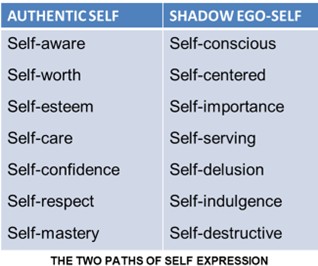
These two parts are in constant battle for control over our decision-making process. Whatever side wins this battle will determine our choices, actions, and, inevitably, the outcome. Outer battle, conflict, and chaos are just the reflection of inner battles and conflicts of people, groups, and teams. and even countries.
Success is a choice.
People are increasingly recognizing that the quality of their lives, as well as the quality of organizational culture and success, is determined by their choices. We possess consciousness, intelligence, and the ability to make decisions. The authentic self contributes to positive outcomes, while the shadow self can lead to disorganization and negative consequences.
The challenge is to overcome the shadow ego-self and develop new enlightened leaders as outlined in the table. To obtain this goal, we need to make conscious, mindful choices and accept responsibility for the outcome. This includes overcoming the inner conflict between the authentic self and the shadow ego-self. We also need to redefine the concept of ‘success’.
Success
We have generally taken the concept of success for granted as ‘obtaining goals’. From this point of view, success can mean whatever you want it to mean – to you. The question is of course, which you – the authentic self you or the shadow ego-self you?
The true meaning of success goes much deeper than mere accomplishment of goals.
The shadow ego-self and success
The shadow ego-self, success means obtaining power, positions, and possessions. The ego needs to ‘show off’ positions and power possessions like an important job, shiny car, big house, or a power position in the community, to be important in the eyes of others.
The reason is that the shadow ego-self needs to create the delusion and pretend it is OK, while in essence, it is living the delusions of a world of lies, half-truths, and untruths it created to survive.
The main goal of the shadow ego-self is aimed at getting all this ‘stuff’. This could be by honest or even dishonest and corrupt methods. Here we also find the roots of all abuse of power and corruption.
Because of the disconnection, there is no inner source of personal power. Shadow ego-dwellers then need to get attention and feed off energy from the world around them to survive. People live from the outside in.
This is where our general society is currently functioning and how we live today. To such an extent that we have been brainwashed to think that this is the truth about success. We have been programmed to believe that this is how it should be and that this is real ‘success’. However, this is all part of the delusion and the lie.
Very few shadow ego-dwellers challenge this mindset, and it is passed down from one generation to the next. Children typically develop a mindset influenced by their parents, family, education system, culture, religion, and the society in which they live.
However, a new generation is emerging who are prepared to challenge this mindset and rewrite this value system, sometimes at the expense of severe backlash.
Now this whole belief system is being challenged by honesty, truth, integrity, and authenticity.
The authentic self and success
First and foremost, it is essential to remember that there is nothing wrong with having a lot of money, power positions, and expensive possessions. These can be and are blessings on the path of authentic self-discovery. However, this is not the primary goal of the authentic self.
The reason is that material things are not the primary source of everything to the authentic self. The authentic self doesn’t need the stuff to be somebody of value and to survive. The authentic self invests in developing Power Intelligence and can therefore co-create what it wants and needs with the Universe. The physical aspects of power, positions, and possessions are merely a means to an end, not an end in themselves. To the authentic self, stuff is immaterial.
The truth about success
The truth is that the word, ‘success’ comes from the Latin, succeѐdere, meaning ‘to follow in a certain order’. Real success is the ability to create a state of flow.
In order to do this, all delusions, lies, negativity, blockages, obstructions, and misqualifications need to be resolved, dissolved, or expelled so that the authentic self can shine through. Real success is the process of becoming fully functional. Authenticity is all about becoming fully functional.
The real definition of success is the conscious ability to become fully functional as your unique, authentic self and fulfill your personal purpose while co-creating an authentic life of health, wealth, happiness, and prosperity that benefits all, including nature.
This means that the ladder of success we were previously programmed with is also changing.
Question: This is interesting. What does the new ladder of success look like?
B Climbing the ladder of ego success leads to a dead-end. Climbing the ladder of authenticity be becoming fully functional as your authentic self, leads to new exciting doors that open. Portholes.
In the process, you become an authentic leader as someone who knows the ways, goes the way, and shows the way to an authentic life. More about authentic leadership later.
elow you find an idea of the two different ladders of success.
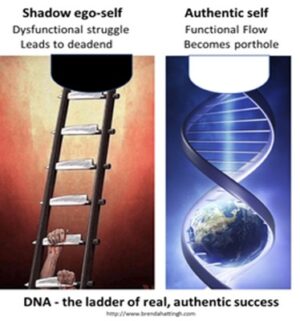
Implementing authentic success in every life
In business, success comes when processes and products function as intended. This is also true for us as human beings. We are only truly successful when we function as intended.
The more functional you become as your authentic self, the more power you have and the more you can co-create with the Universe a life of health, wealth, and prosperity. You also learn to become multi-functional and be of service where needed.
To the authentic self, success is all about becoming fully functional as the unique person you are. Once you have embarked on this path, you find your personal power and discover your true identity, and your soul’s calling and purpose. Health, wealth, happiness, and fulfilment or all part of this success path.
To get to this level of consciousness, you sometimes need to let go of all the ego trappings, and social symbols of power, positions, and possessions to find yourself. This is a personal path of self-discovery. It is also a spiritual path.
At the same time, we also activate your DNA success blueprint that opens new doors, attracts opportunities, and allows new people into your life. You live from the inside out.
When you come from the authentic self, your success is guaranteed. It is important to know that because of our clock genes, a New Success DNA is emerging. As a result, a new human gene pool is emerging.
Securing the future.
To secure a prosperous future, we first need to be conscious of our own authentic self and shadow ego-self, and master who is controlling our decision-making processes. At the same time, we need to be highly aware of and manage the egos of those around us. Herein lies the success of an enlightened leader.
EXERCISE. 9. TWO SIDES OF SELF.

Case Study 9
9.1. Ego-driven leadership
Ego-driven leadership, characterized by an inflated sense of self-importance and a focus on personal gain, can lead to significant negative consequences for organizations. Two prominent examples are the downfall of Enron and the struggles of General Electric under Jeffrey Immelt. In both cases, leaders prioritized their own egos over the well-being of the company, resulting in financial losses and reputational damage.
9.2 Authentic Leadership
Netflix
Netflix, the global streaming giant, is known for its unique corporate culture that encourages freedom and responsibility. Under the leadership of CEO Reed Hastings, Netflix has embraced an authentic leadership style that empowers employees and emphasizes transparency.
Result: Netflix’s authentic leadership approach has transformed the company into an industry leader. By fostering a culture that encourages open communication and individual empowerment, the organization has attracted top talent and maintained a high level of innovation. Their focus on authenticity has translated into successful collaborations and creative freedom within the company, leading to a steady stream of groundbreaking content and a loyal subscriber base.

Course Manual 10: Epigenetics in Organizations
Background
The Human Genome Project revealed that our DNA potential is flexible. The reason is due to clock genes, which can activate and deactivate at specific times, locations, and under certain conditions.
This means that with a new mindset, skills, and tools, we can mindfully and consciously harness our genetic potential and recover our original DNA blueprint. We can mindfully switch our power and potential on or off, if we know how. One of the methods is using the science of Epigenetics.
What is Epigenetics?
Epigenetics is the study of how the environment influences the expression of genetic potential and how the genetic potential influences the environment. The behavior of a school of fish is employed as an illustration to explain the concept of Epigenetics.
Although each fish in a school of fish is a unique entity on its own, the school of fish functions as a unified whole. Communication between all the fish takes place instantly on an electromagnetic genetic level. When one fish changes course, it immediately reverberates through the whole school of fish and all change course, at the same time.
Families, groups, communities, and organizations operate in similar ways.
Understanding and applying Epigenetics in the workplace is important in a world where change is constant.
Epigenetics background
What began as broad research focused on combining genetics and developmental biology by well-respected scientists, including Conrad H. Waddington and Ernst Hadorn during the mid-twentieth century, has evolved into the field we currently refer to as epigenetics.
The term epigenetics, coined by Waddington in 1942, originates from the Greek word “epigenesis,” referring to the impact of genetic processes on development. This includes physical, mental, emotional, and societal or cultural processes.
This research also revealed that people exhibited higher levels of functionality and health in more favourable circumstances. In adverse conditions, people showed a reluctance to work, resulting in reduced productivity and increased illness. Only recently have the effects of burnout been taken seriously as the source of many of our common illnesses
. Burnout can and does negatively influence our DNA functioning. This is called DNA methylation. Methylation adds a methyl group to DNA or other molecules, influencing gene expression and biological functions. It is vital for regulating cardiovascular, neurological, and reproductive systems, impacting health and disease.
Epigenetics in the workplace
Understanding epigenetics highlights the need to address workplace stressors affecting health. Understanding the impact of environmental factors, such as chronic stress, on biological mechanisms like DNA methylation is important for organizations aiming to improve resilience and productivity.
These shifts not only alter genetic expression but also ripple through communities, shaping collective health outcomes.
Stress and burnout
Psychosocial stress is a major contributor to morbidity, mortality, and health-care costs. While acute intermittent stress may be essential for successful adaptation to changing natural and social environments, chronic excessive stress carries a high risk of damaging consequences to health. Chronically persisting environmental and work-related stress can lead to severe psychosocial syndromes such as burnout and depression, which are among the top causes of disability and disease burden in modern society.
Burnout is a prolonged response to chronic stress in the workplace. It is defined as a combination of (emotional) exhaustion, cynicism (also termed as depersonalization), and lack of professional efficacy (or reduced personal accomplishment). To date, no definitive diagnostic criteria exist for identifying cases of burnout. All we have are debilitating outcomes.
Epigenetics and the Environment
The field of epigenetics is quickly growing, and with it, the understanding that both the environment and individual lifestyle can also directly interact with the genome to influence epigenetic change. These changes may be reflected at various stages throughout a person’s life and even in later generations.
The renewed interest in epigenetics has led to new findings about the relationship between epigenetic changes and a host of disorders including various cancers, mental retardation associated disorders, immune disorders, neuropsychiatric disorders and pediatric disorders.
Individual health and well-being enhance organizational health and wellness.
Wellness
According to the Global Wellness Institute, wellness is the active pursuit of activities, choices, and lifestyles that lead to a state of holistic health. Wellness is not passive or static, it changes the whole time.
To some, the term ‘wellness’ refers to diet and exercise. However, it is much more than that. The World Health Organization defines wellness as, “…a state of complete physical, mental, and social well-being, and not merely the absence of disease or infirmity. Daily events and situations can impact one’s happiness and health.
Simply put, wellness is an intentional, active process of trying to improve one’s overall quality of life.
Leadership and optimizing wellness
To enhance wellness and happiness, a leader needs to focus on the different dimensions of wellness. Researchers have identified the main areas of health and wellness as; Emotional, Environmental, Financial, Intellectual, Occupational, Physical, Social, and Spiritual.
Each of these wellness dimensions needs attention. Ignoring a problem in one area often leads to problems in another. This may result in a “domino effect.” Although balance plays an important part in life, it is nearly impossible to balance eight dimensions at once. Instead of trying to balance all eight simultaneously, find personal harmony. Explore what works for you because no formula will work for everyone. Everybody has different processes and unique experiences that all require an authentic combination for each dimension.
Emotional wellness
How you feel can affect your ability to carry out everyday activities, your relationships, and your overall mental health. How you react to your experiences and feelings can change over time. Emotional wellness is the ability to successfully handle life’s stresses and adapt to change and difficult situations. It’s an acceptance of emotions and working through those emotions in a positive and healthy way.
Environmental Wellness
Environmental wellness is your ability to connect with the world around you. It inspires you to live a life of accountability, understanding that all actions have positive or negative personal consequences and effect the people around us. Feeling as though you are in a safe and stimulating environment is a critical aspect of not only enhancing successes but also your overall sense of well-being. Research has repeatedly confirmed the positive benefits that nature provides to our mood, mental health, physical health, and overall success.
Financial Wellness
Personal finances are the number one cause of stress nationwide, which may not be a surprise. Unfortunately, many people simply ignore their financial situation until it is too late. Finances are often complicated and even overwhelming, but taking steps to minimize financial stressors is a very important part of your overall feeling of wellness. Managing expenses, understanding loan structures, and just having a basic appreciation of your financial standing are all very important steps students can take to help attain a level of satisfaction with current and future finances.
Intellectual Wellness
Intellectual wellness encourages us to engage in creative activities that stimulate our minds from a nonacademic or work-related perspective. Taking time to find and indulge in your passions, hobbies, and interests leads to a far greater feeling of well-being. People that master this aspect of wellness enjoy learning about things that are separate from their normal realm, simply out of desire to obtain knowledge and skills. As intellectual wellness progresses, you are able to personally develop resources that work together with the other wellness dimensions that together lead to a more balanced life.
Occupational Wellness
The importance of finding joy, purpose, and satisfaction in your occupation cannot be undervalued. Enjoying what you do is a critical aspect of your health and well-being. Occupational wellness involves balancing work and leisure time, building relationships with peers, and managing everyday stress. This dimension recognizes the importance of finding satisfaction, enrichment, and a sense of purpose through work. It also highlights and helps people understand the idea that every person has value and a unique set of skills and experiences that should be shared for the benefit of all.
Physical Wellness
It is very easy for people to reduce physical wellness to exercise and diet. In fact, this dimension is possibly the most comprehensive because it includes a number of things that are incredibly important to our well-being. It is the idea that in order to achieve optimal mental and physical health, you must balance exercise, sleep habits, nutrition, and listening to your body when it is trying to tell you something. Positive physical health habits can help decrease your stress, lower your risk of disease, increase your energy, and lead to greater academic and personal success.
Social Wellness
Positive relationships with the people around us play a huge role in our overall feeling of wellness. The relationships and support systems we build help us navigate our lives, in good times and in bad. It is important to establish positive and regular interactions in a wide range of individuals, to help you connect to our communities. Safely stepping outside your comfort zone can lead to a much greater social perspective, which is incredibly important for future healthcare providers. Cohesively, these actions will lead to a stronger sense of social connectedness, belonging, and acceptance.
Spiritual Wellness
Spiritual wellness can be defined as being connected to something greater than yourself and the search for purpose in your life. Spiritually well people use their own set of values, principles, morals, and beliefs to guide their actions and decisions. Spiritual wellness has the power and capability to make our decisions and choices easier, ground us during periods of change, and give us the resiliency to survive with grace and inner peace in the face of adversity.
The Healthy Organization
A healthy organization is in flow. A successful organization ensures the free flow of people, systems, projects, clients, planning, products, and finances. Leaders and managers must address any blockages or barriers to maintain this flow.
Organizational wellness emphasizes promoting employee well-being and a culture of happiness. Organizational health focuses on a shared vision, strategy execution, and fostering innovation. Employers should treat well-being as a key business input and measurable outcome.
Exercise 10
Personal wellness
Are You PI+ or PI -?
Why? What are the underlying causes of your stress?
Use the PI Resilience Profile to identify three actions you can take to resolve the situation.
How does your situation influence the team or the organization as a whole?
Organizational wellness.
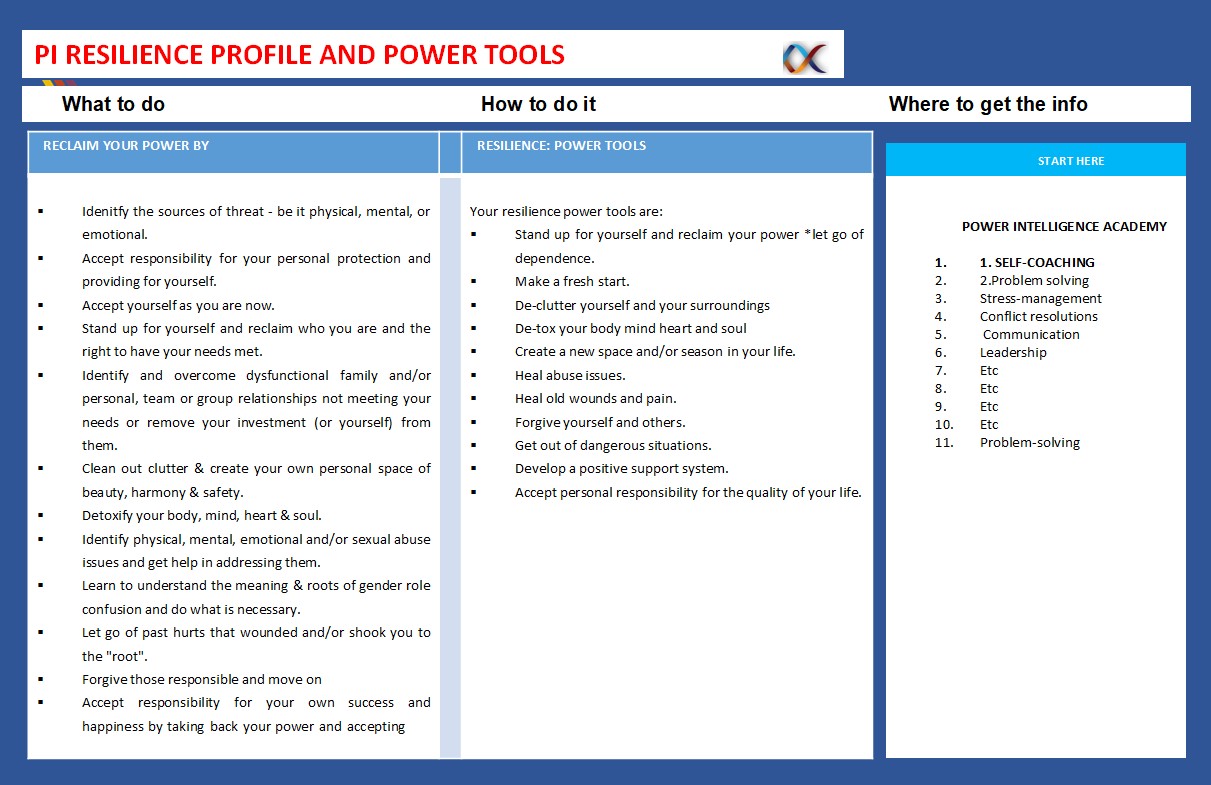
Is the team or organization PI+ or PI -?
Why? What are the underlying causes of the stress?
Use the PI Resilience Profile to identify three actions the team or organization can take to resolve the situation.
How does the situation in the team or organization influence personal performance?
Case Study 10
Workplace wellness programs are increasingly recognized as a valuable investment for organizations seeking to enhance employee health, lower costs, and cultivate a positive work environment. By carefully designing and implementing programs that address both physical and mental well-being, and by effectively communicating and engaging employees, organizations can maximize the benefits of these initiatives.
The following companies undertook this comprehensive journey with outstanding results.
Johnson & Johnson: Implemented a comprehensive wellness program that included high-risk intervention programs, leading to significant cost savings and reduced absenteeism.
Houston Methodist: Utilized Fitbits and biometric screenings, resulting in improved employee fitness and increased Fortune rankings as a best company to work for.
Land O’Lakes: Focused on mental health through on-demand meditation classes, live virtual sessions, and a mindfulness teacher.
SunTrust Banks (now Truist): Offered a Financial Fitness Program with online education, tasks like budgeting, and assistance with building emergency savings.
MD Anderson Cancer Center: Created a workers’ compensation and injury care unit that reduced lost work days and modified-duty days, resulting in substantial cost savings.

Course Manual 11: Rewriting Organizational DNA
Background.
Throughout this workshop, you have been empowered with a new foundation and mindset. Participants will understand how to rewrite organizational DNA and empower HR development.
A fully functional organization is a successful and flourishing entity that secures its longevity by being flexible and adaptable to change over time. People are primarily responsible. for this process in the organization. Tapping into the deeper potential and recovering the original DNA success blueprint of all staff or team members can and does influence the level of functioning and success of a team, department, and ultimately, the organization as a whole.
Organization DNA. As a living entity, an organization has collective DNA potential. This will remain potential, as ‘power on hold’, unless the right actions are taken to release, harness, synergize, and focus this energy on the movement towards the new vision. It is the task of the leader to show the way and differ from that of a manager, who manages processes. Leaders are, therefore, not always managers, as managers are not always leaders.
Understanding organizational DNA
Organizational DNA refers to the underlying set of principles, beliefs, and practices that define how an organization functions and operates. It’s often described as the organization’s “personality” or its “way of doing things”. It’s not just about the stated mission or vision, but rather the ingrained behaviors and assumptions that shape how people interact and make decisions within the organization.
Organizational DNA includes the following.
Foundation of Identity: Organizational DNA encompasses the core values, beliefs, and assumptions that define the organization.
Behavioral Patterns: It influences how people in the organization behave, interact, and make decisions.
Performance: Organizational DNA can significantly impact an organization’s performance, as it determines how well people can execute strategies and achieve goals.
Impact of DNA: The DNA of an organization can be seen as the “genetic code” that dictates how it functions, develops, and grows.
Evolution and Change: While organizational DNA is deeply ingrained, it’s not fixed. It can be changed, often through altering key organizational elements.
Rewriting organizational DNA
Rewriting organizational DNA is more than restructuring and reorganizing the team, company, or organization. Rewriting organizational DNA must include releasing the power and potentila within people during change, transformation, or even a restructuring process to prevent the loss of momentum. It is difficult and time-consuming to recover the loss of momentum and the loss of power, as it hinders progress and negatively influences productivity. Implementing the Power Intelligence Success Process counteracts these negative influences and places the organization on a next level.
Holistic integrated thinking
Rewriting an organization’s DNA, or the way it operates, requires a comprehensive and holistic approach. This is the task of the whole and higher mind thinker.
It is here that harnessing vision and the power spot of the frontal lobe of the brain becomes relevant. Very few leaders have this quality within themselves. However, combining the power and potential of the neurodiversity of different people produces the same results. All that needs to be done is to synergize and utilize all the potential available.
The process involves identifying the need for change, assessing the current culture, developing a plan, communicating effectively, and embedding the change in daily practices. Leadership plays a crucial role in setting the tone and inspiring others to embrace change, while also providing the necessary resources and support.
In Workshop 2 of the Enlightened Leadership Program, we will focus on developing a holistic approach, whole-brain thinking, and neurodiversity.
Guidelines for rewriting organizational DNA
1. Identify the Need for Change: Evaluate the organization’s performance, processes, and market position to identify areas needing improvement or adaptation. Assess external factors and consider market trends, competitor actions, and technological advancements that may necessitate change.
2. Assess the Current Culture:Observe behaviors and understand the existing culture by observing how employees behave, interact, and make decisions. Identify values and principles and determine the core values that currently guide the organization’s actions.
3. Develop a Comprehensive Change Plan: Define desired outcomes. Clearly articulate the desired new organizational DNA, including values, behaviors, and practices.
4. Develop strategies: Outline specific strategies and actions to achieve the desired change, including training, communication, and resource allocation.
5. Communicate the Change Effectively: Important factors include, transparency and open dialogue. Ensure employees understand the reasons for the change and have an opportunity to provide feedback.
6. Regular updates: Maintain open communication throughout the change process to keep employees informed and engaged.
7. Implement the Change: use training and development to provide employees with the necessary skills and knowledge to adapt to the new ways of working.
8. Support and resources: Offer the resources and support needed to enable employees to successfully implement the change.
9. Embed the Change: Institutionalize new practices by iIntegrate the new behaviors and practices into the organization’s policies, procedures, and systems.
10. Monitor and evaluate: Continuously track the progress of the change and make adjustments as needed.
11. Leadership and Role Modeling: Set the tone. Leaders must demonstrate the desired behaviors and values to inspire and motivate employees.
12. Empower and support: Provide employees with the autonomy and resources they need to take ownership and contribute to the change.
13. Continuous Improvement: Create a culture of learning and encourage employees to continuously learn, adapt, and improve.
14. Seek feedback: Regularly solicit feedback from employees and stakeholders to identify areas for improvement.
15. Have fun. Change and transformation is part of life. However, it can cause anxiety, resistance, and fear. Help people lighten up and not take life too seriously. You can achieve this by celebrating each step. Have fun.
By following these steps, organizations can successfully rewrite their DNA and create a culture that is more resilient, adaptable, and aligned with their strategic goals.
Power Intelligence and rewriting organizational DNA.
We constantly experience power shifts as we transition from one level of mindfulness, effort, and success to another.
The Power Intelligence Success Profile (PISP) was specifically designed to support individuals, teams, companies, and organizations in navigating these shifts with ease. By implementing the PISP, you get immediate feedback on where a person, team, or organization is coming from.
The PISP provides the following information about the team, department or organization:
Power Drivers. This feedback in the form of a power gauge indicates if a person or group has enough fuel to fulfill their tasks. Those who are in the red are bound to struggle. Those in the blue have already overcome barriers and can move forward.
Detailed Profile. This feedback provides more detail and pinpoints the strengths and weaknesses that contribute to performance.
Quadrant profile. This feedback provides an indication of how the window of understanding is perceived. We are seeking open-minded individuals to collaborate with.
Wellness. The PISP indicated the level of wellness by indicating negativity and factors influencing the levels of personal and organizational wellness.
Resilience Profile. The PISP gives suggestions to counteract the negativity while developing personal and organizational resilience.
PISP worksheet. All the information from the PISP Report is summarised in a one-page worksheet.
Strategic planning. Empowered with this fundamental information, you can now begin strategic planning to rewrite your organization’s DNA. Follow the steps as outlined above.
Implementation. Implement the strategic plan
Assessment. Assess the progress regularly. The PISP can be implemented every six to twelve months. By comparing the before-and-after PISP Reports, the progress made and issues that still need to be addressed will be identified for inclusion in your updated strategic planning.
Repeat. Repeat the process and make adjustments as you progress.
Leadership
It takes a special kind of leader, one who is enlightened, to achieve the goal of rewriting an organization’s DNA. You can also aim to rewrite the DNA of a country. Nelson Mandela was one of these exceptional leaders who lead a country on the brink of anarchy to peace and reconciliation. Madiba called this path ‘The Long Walk to Freedom’.
Today, we can take these lessons and develop new enlightened leader who shine their light into a prosperous future. This is what the Enlightened Leadership Program is all about. We embark on this journey by starting with ourselves.
Developing Enlightened Leaders
It is one thing to rewrite organizational DNA. It is another to sustain the new level of performance while preparing for the next power shift. To manage these challenges, we must continually focus on developing the right leaders for the right time.
All organizations need to develop their leadership core to ensure their sustainability. Developing enlightened leaders is crucial not only for maintaining growth and development but also for continually elevating the organization’s vision and mission. However, becoming an enlightened leader requires emotional, mental, and spiritual maturity. Not everyone in the organization possesses these qualities. Enlightened leaders are only a select few.
The question is, how do we identify those who are ready to become enlightened leaders?
How do we develop enlightened leaders? To answer this question we need to look at quantum theory.
Quantum Theory
We inhabit an all-encompassing cosmic universe. Since mankind has become conscious we have looked to the heavens for answers and once again we are returning to these higher planes for answers, guidance and direction. Astronomers and Astrologers have viewed this dimension of reality from different perspectives. Today, all these perspectives are converging in a similar way, as science and spirituality are merging. We are examining an indivisible reality from different perspectives.
Quantum Theory was developed to make this all just a bit more accessible. However, the Wisdom of the Ages teaches us that trying to understand it calls on intuition as well as intellect, heart as well as mind, and quite literally, is the quest of a lifetime.
‘That Light is the root of our being,
from atoms to consciousness, and in that Light
we are unified with the entire Universe.
We always have been and always will be.’
While at first glance, Quantum Theory may seem like just another strange theory, it contains many clues as to the fundamental spiritual nature of the universe.
We have found that our cosmos is in reality light or cosmic light. Although not visible to the eye these galactic cosmic rays come from outside our solar system. They are subatomic particles – mainly protons but also some heavy nuclei, accelerated to almost the speed of light by the explosions of distant supernovae. Cosmic rays cause ‘air showers’ of secondary particles when they hit Earth’s atmosphere. They also pose a health hazard to astronauts and a single cosmic ray can disable a satellite if it hits an unlucky integrated circuit. Although Time Magazine reported that cosmic rays were identified about three years ago, cosmic light has been in the higher consciousness or unconscious awareness of humankind for a long time.
Now the authentic power, purpose, and meaning of cosmic light are coming to the fore. The truth about our authentic origins is now coming to light. We are learning about our quantum reality as the foundation of our spiritual reality as the backdrop to our physical existence. We are becoming enlightened. This is the new path leadership development will take in the future.
New Leadership DNA, quantum learning, and healing
Students aspiring to enable their New Leadership DNA are prepared to let go of lower-order values and outworn methods and access a whole new mindset. Not only do they need to learn new information, but they also need to develop higher methods of information processing. Here we find the level of quantum learning and quantum healing.
When we learn, we grow, and as we grow, we heal. Learning and healing are flip sides of the same coin. When we become quantum students we also become quantum patients in need of healing and reconnecting our fragmented and scattered parts of self. We also need quantum teachers to show the way. These teachers are also our quantum healers of the time. This is the task and calling of all quantum leaders with new enabled leadership DNA.
The questions are: Who are our quantum students and teachers?
Quantum Learning
Quantum learning is the conscious ability to gain access to and utilize information on a quantum level. This is also the frequency of the universal 528 Hz, associated with spirituality and love. The person teaching these skills, tools, and methods is our quantum teacher, and their students are quantum students.
Here we find that a leader is the teacher, guru or master and the follower is the student. The teaching/learning or healing/healer experience between a teacher, guru, sage or master and their students is a very special relationship. Some may even see this as a divine appointment – a cosmic time for the two to come together.
On the one hand, we have our informal teaching and learning experiences, while on the other hand, more formal teaching and learning experiences are now being created. The fact that human consciousness has evolved to a level of comprehending and understanding this important quantum or spiritual information necessitates that these teaching and learning experiences now take place more frequently and openly. There is no need for secrecy anymore, and we can expect that many of our secret organisations and the content they taught will now come to light. Everything that was covered in secrecy will now be uncovered and ‘come to light’.
We can even envision a more formal addition to our educational system that includes quantum learning and quaternary schools and universities open to all. The time of mystery schools is over.
Quantum leaders and their quaternary universities
We are moving beyond the boundaries that divide us and are beginning to embrace everything that connects and makes us whole, healthy, wealthy and happy. We are coming full circle.
A circle has four quadrants that all play an essential part in the whole. For example, we have four seasons and spend time in each one before moving on to the next. The one cannot exist without the other. In the same way, we have universal seasons. We are now entering into the fourth level of consciousness of this cosmic cycle. We need new quantum leaders with a new mindset and new leadership DNA, who can help assist and guide us in embracing this wonderful gift we call – conscious life.
Quaternary education
The word ‘quaternary’ comes from the Latin, ‘quadrăs’ meaning ‘fourth part’. Words like ‘quantanary’ or ‘quadranary’ are could also be used alternatively in this regard. Globally we have education systems that include three parts as primary, secondary and tertiary education. This also relates to the emerging of consciousness in the four quadrants of the brain. Now, with the emerging of the guide-spot or God-spot, we also need another tier of reference that embraces and encompasses all the other levels.
These four parts can also be found in the unfolding of new levels of consciousness and corresponding neural-development. It denotes coming ‘full circle’. While others get stuck or choose to remain on the previous three levels, the quantum leader (QL) has chosen to pursue a higher calling on a higher level with higher quaternary teachings. A Quantum Leader understands universal wisdoms and receives guidance from the higher dimensions and the universal blueprint or ‘perfect image’.
A person can only access this level of leadership once they have come ‘full circle’. This means they have gone through all four quadrants of training as primary, secondary, tertiary and quaternary education. This does not necessarily include formal training as many children have the higher brain functions already activated at an early age.
At the same time, the initial definition of the Triad Brain is now evolving into a quaternary or Quantum Brain. Above we find a short summary of this process.
The new Enlightened Leader.
The new leader, like you, the reader, always experiences a calling that is usually announced via various wake-up calls. You then become aware that ‘the bell tolls for me!’ You can ignore the calling or you can answer. If no answer is received – the bell keeps on tolling until it becomes a deafening noise. Once you consciously answer the calling the doors begin to open, the Divine universe sends out all the necessary people and resources and provides the necessary support to the new emerging student. Nothing is ever left to chance or by coincidence. When the student if right – the teacher will arrive!
The processes of change, transformation, and transcendence are then ignited, and all the steps, challenges, and processes we discussed in previous chapters become evident. Some will hear and answer the calling, change, transform, transcend and move forward. Others will ignore the calling and stay behind.
New education and training
The new enlightened leader must undergo the necessary education and training in preparation for this role. This level of teaching and learning has, until now, only been available informally to those leaders who are on this specific spiritual journey.
Although we have a global view of the standards of education, different cultures from different countries have different educational systems containing the curriculum they deem as necessary. This means that the chances are slim that quantum information will be taught in a general education system in the near future. Until the systems open up to a broader view of education and training, individuals, groups, or organizations will need to accept personal responsibility for introducing this information to the people they are responsible for. This can be achieved in various ways, including informal personal contact and formal in-house training and development. However, we are once more returning to our roots, and the coaching and mentoring system is proving to be the most probable course of action to take.
This poses a whole new challenge to the emerging profession of coaching and mentoring, and leadership development that must be included in rewriting organizational DNA.
EXERCISE 11. REWRITING ORGANIZATIONAL DNA
IMAGE NOT PROVIDED
Download, enlarge, and print this one-pager. Document available HERE
Provide each team member with the one-pager worksheet.
Discuss the contributions of each team member.
Combine all the contributions
Draw up a collective, comprehensive one-pager.
Allocate tasks
Plan follow-up.
Repeat until you are satisfied with the macro-strategic plan
Create a micro-plan by identifying smaller steps and tasks.
Implement your strategic plan.
Providing an objective, qualified opinion of the process.
Facilitating change.
Being cost and time-effective
Overcoming organizational blind spots.
Adding value.
Acting as a catalyst, bridgebuilder, and modern-day alchemist
Being impartial and objective.
Speeding up the process.
Keeping the process on track.
Case Study 11
POWER INTELLIGENCE, AND REWRITING ORGANIZATIONAL DNA.
Stan, a 32-year-old CEO of a large IT company, was brought in to turn the business around during a time of restructuring and a pending international merger. Amidst financial instability and employee retrenchments, Stan also faced personal pressures: a new baby, a vulnerable wife, and a recently changed home environment.
Despite these challenges, Stan’s Power Intelligence Success Profile (PISP) indicated a 7.8% PI Positive force. While relying on strengths like leadership, big-picture thinking, and self-discipline, he was also drained by fears, frustrations, and unclear priorities. The data warned of potential burnout due to overextension and neglect of personal well-being.
Stan’s strengths included taking responsibility for others, maintaining self-respect, and possessing inner character. However, his personal and intimate life were neglected. He was getting little rest, not eating well, and avoiding exercise. This imbalance posed serious risks to his health, marriage, and organizational goals.
To counteract this, Stan took strategic action: improving his diet, playing squash, taking his wife on a weekend getaway, and communicating openly with his staff. He committed to coaching sessions and made personal development a priority. Honest communication became a key focus. He began to see frustrations as indicators for growth and acknowledged fears of criticism, powerlessness, and failure.
Stan expanded his leadership by understanding the importance of emotional intelligence and managing “soft” issues, once overlooked. Through coaching, he gained tools to manage fear, frustration, and realign priorities toward balance.
His quadrant profile showed limited perception, initially sufficient for financial goals but inadequate for innovation. Guidelines were set to expand his perspective in priorities, fears, strengths, and frustrations.
Stan’s plan of action included:
• Personal time management
• Family connection and quality time
• Diet and exercise routines
• Coaching and leadership development
• Staff empowerment through open communication
Outcome: Stan successfully navigated personal and organizational demands, establishing himself as a balanced leader while guiding his company toward innovative growth.

Course Manual 12: Enlightened Leadership
What is leadership?
The word ‘leader’ comes from the Latin leido, meaning to show the way. Although there is a multitude of leadership training courses and the Leadership Development Profession is worth billions of dollars, there is still a lack of true leaders. The reason is that the shadow ego-self has primarily been in control of these processes.
Now, things are changing. Old mindsets and programming are being challenged. Humanity is going through a power shift. Only those who understand these shifts and know how to navigate the changes will be able to survive. The rest will remain stuck.
Power Shift.
A power shift is a shift in consciousness – a shift in awareness. The more consciously we live, the more we are in control of our lives. For centuries, people have used various methods and power tools to exert control over the lives of others. This made them feel powerful and in control. As times change, so do the power tools. To move with the times and still stay in control, we need to understand the power shift that is taking place; we must recognize that new power tools and skills are emerging.
The five levels of the power shift include:
Violence
The most widely used and most primitive power tool is violence. Violence comes in many different forms – physical, emotional, psychological, and sexual. Many other forms of abuse have been used over the centuries. The primary underlying motive is fear. People try to gain control over others by creating powerful threatening positions and posing threats of pain, loss, and suffering.
This was widely used throughout the past. People took control of others by physically or emotionally abusing them. Until the 1940s, the world experienced world wars, followed by numerous more minor conflicts. Today, we still have violent wars where one country wants to intimidate another with violence.
The leading world countries relied strongly on their physical weapons. Clashes between different countries meant physical war. Business was done in a mafia-like style. Families and social structures were managed in this power structure of dominance and dictatorship.
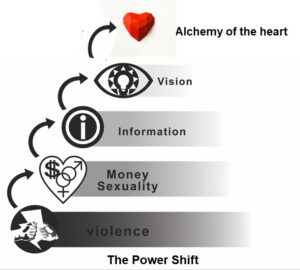
Today, we still have violence in different forms. Large-scale violence, crime, and abuse are still taking place. The underlying motives of many people to gain control by physical or emotional violence are still embedded in the primitive nature of humanity.
Money and sexuality
Money has always been a powerful tool. Until the 1970s, it was the most fundamental motivation for people in the technological era. Being comfortable and possessing expensive items placed people on a higher ground and gave them power over others. There were the haves and the have-nots – those with money and power and those without. During this time, sexuality played an important role.
Banks and other financial institutions used their bosomed blonde receptionists to attract potential investors. Marketing and other business deals involved money and sexuality. The Watergate scandal and the fall of President Nixon were caused by money and power being inappropriately used and abused.
This means that these power tools are not only relevant on a personal scale, but were and are still being used on a national, international, or global scale. During the 1990s, a significant power shift occurred.
Information
Bill Gates, Steve Jobs, and many others introduced a new power tool in the form of computer technology. Information Technology (IT) became the most important tool of the information era.
Today, a young child with the right equipment, the proper knowledge, and skills can hack the most scientific security codes of organizations like banks and defense forces. Although this youngster may not have any physical power, be sexually active, or even get pocket money, the ability to process information puts this youngster in a powerful position. A power shift has occurred, and so have the power dynamics. There are new power positions. You don’t have to be a CEO or a leader to have power anymore. You just need to be informed.
We are now in the information era. People are being empowered by training and the use of information technology. Most schools have computer literacy as part of the curriculum and many youngsters are growing up with this power tool. No organization can survive today without modern communication technology.
Artificial Intelligence (AI) has evolved from the Information Era and is currently taking center stage. AI and robotics are integral to this power shift, introducing a new level of consciousness.
The question is: Can there be more – are there other levels of consciousness and essential power, essential tools?
The answer is: Yes! One of the most potent and significant power tools up to date is emerging. This is the power of vision and focus!
Vision and universal force
While the larger portion of the population is focused on developing other power tools to secure their positions of power, some have moved to the next level of functioning. Communication and information technology, including AI in itself, has no control. It is a tool, a means to an end.
Many people today are looking beyond other power tools and focusing on a new vision for the future. Many people are discovering the power of vision and visualization today. Another power shift has taken place. This demands that we develop new knowledge, skills and power tools.
When we examine the previous chapters, we begin to understand the power of the mind and its vision. The challenge of the future is to utilise this potential at our disposal. A new quality of leader is emerging, and a new intelligence is emerging. Change is inevitable. These are leaders who understand the fundamental principles of success and utilize their influence to combat poverty and foster prosperity.
However, another power shift is taking place.
The power of the heart
The heart is more than a physical organ. The heart is a highly sophisticated sensory receptor.
Coming from the heart means being honest, trustworthy, sincere, and authentic. When someone does or says something “from the bottom of their heart,” it means they are doing it very sincerely and honestly. This is the place of the authentic self, which opens the heart and paves the way for caring, compassion, truth, and success.
Unfortunately, the shadow ego-self is also in play and will close the heart to satisfy its self-serving goals. People become cold, heartless, and even cruel. The cold, closed heart inevitably leads to darkness and an implosion.
To understand the heart’s power as a sensor, we must revisit the formation of the heart and the first heartbeat that occurs during this process.
Coming from the heart
Embryology is one of the most fascinating sciences. Under the electron microscope, you can not only follow the dynamics of DNA but also follow the path of the developing embryo.
A DNA double helix is formed from RNA as a single strand, from the mother and the RNA of the father.
These two halves come together to create a DNA double helix string containing the unique blueprint for a specific baby – you. This is what you looked like in the beginning.

During the first hours after conception, the DNA duplicates, and cells multiply. All the cells look the same. There is no difference between a human being, a horse, a pig, or other mammal embryos at this stage. However, significant changes and transformations begin to take place.
The heart and heartbeat.
The heart is the first organ to develop. Just about four weeks after conception, the heart begins to beat.
The questions are: When am I alive?
You, as your authentic self, are always alive, and the soul never sleeps. However, the body becomes alive when the heart starts beating. A heartbeat is a sign of life.
Although much is known from a medical and scientific point of view about the formation of the heart as the first organ system to develop, little is known about the connection between the heart and our authentic blueprint, or authentic self, held within the Universe, from a spiritual point of view.
From a spiritual perspective, we find a lifeline, light cord, or spiritual cord between the heart and the cosmic web of life, or the Universe, the Godhead – the Creator of life – Source.
From Source, a download of power takes place, which quickens the heart. Quickening occurs like an electric bolt emanating from the Source, shocking a small cluster of cells into movement.
Coming from love
This energy/power is Divine as cosmic light and universal love. This is where we come from. This is our true birthplace. Our authentic self is poured into our hearts as light, love, and power. Here you find the truth. This is our true birthplace into physicality.
We, our original authentic selves, were born or ‘brought into existence’, from and out of love. Our purpose is to express our authentic self in everything we are and what we do, out of love.

Our challenge is to think with our heads, feel with our hearts, shine from the heart, and ‘to come from the heart’. This is our original purpose. This is reality – this is the truth – this is authenticity.
Rumi said:
Look inside and find where a person loves from.
That’s the reality – not what they say.
Rumi
Regulated heartbeat
This group of cells later develops as the Vagus nerve. Throughout life, the Vagus nerve regulates our heartbeat. For example, people with arrhythmia have pacers implanted into, or close to, the Vagus nerve to regulate their heartbeat.
When one dies, the life-cord is cut and retracted. The heart stops beating. You are declared physically dead when your heart stops beating.
The real you, your soul, your higher self, your real-me authentic self, then returns to Source.
Note. If you don’t believe in life after death, you can just skip this part.
Listening with your heart
This is also the place where we can feel, hear, and experience truth. Truth can be found on a frequency all of its own. Scientists have identified this frequency as 528 Hz. Below the truth-frequency or vibe, we see lies and corruption.
The heart is a sensor. It is the first to know what is going on around you. It picks up on vibes, the atmosphere, people, situations, and scenarios, long before we are conscious, and the mind is aware.
The heart sensor is fine-tuned.
Spiritual books teach. “I will put my laws on their minds and write them on their hearts.”
Listen to your heart. It formed and jumped into action before your brain, for a reason.
When you are exposed to honesty and truth, your heart is still and rhythmic, and you feel happy. If the heart is open and at peace, we find the flow of life in and through us. We can love and be loved while creating our own reality of health, wealth, happiness, and success. We can even create miracles.
Here you find the filter between what is right and wrong, good and bad, and who is the authentic self and who is the shadow ego-self.
We learn to discern between authenticity and corruption. When we learn to love ourselves, we learn to discern what is in our own authentic selves’ best interest and what is not.
Listening to your heart is the root of self-love.
The alchemy of the heart
Alchemy was an ancient process in which scientists attempted to transform lower-order metals, such as lead or copper, into higher-order metals, like gold.
The principles of these transformational processes are now being applied to change lower-order levels of human consciousness, awareness, and thinking into higher levels of understanding, consciousness, and wisdom. People are now going for gold.
The four stages of alchemical transmutation and psychological transformation include: Education and training, understanding, responsibility, and transformation.
Four stages of alchemy
Education and training
New Information brings a new level of consciousness and awareness. Raising awareness is part of being a leader. One of the significant roles of an enlightened leader is to teach. Part of the teaching process involves using the heart as a crucible or vessel, where one tests the truth and finds guidance. Having an open heart, free of anger, resentment, hate, burden, or negativity, provides you with the ability to discern surroundings and find the truth. Cleaning out the heart and clearing away negativity are among the most crucial tasks in becoming an enlightened leader. People must be taught how to love and be loved. You can only teach what you know.
People must learn to hate, and if they can learn to hate, they can be taught to love….”
Teaching can be done formally by organizing training sessions. It can also be done informally during meetings and informal conversations. Being an enlightened leader and a teacher becomes a way of life.
However, not everyone is ready or susceptible to this new information, as it requires an open mind and a change in thinking.
Understanding
Understanding requires a deeper level of comprehension and meaning. Understanding is the result of raising awareness. People can say, “Ahaa, now I get it.” Not everyone is open at the same time to embark on the journey of understanding. This means that some will resist the process while others will remain just part of the mindless masses. These are the followers.
It is essential for a leader to understand that not everyone has the mental and learning ability to move at the same pace as others. Some could stay behind. Others become mindless passengers who do as they are told. A leader needs a clear vision and discernment to determine who will move forward and who will stay behind.
Taking ownership
Empowered with new information and understanding, a person is now called to action. You become self-aware and must stand up, take responsibility, and accept ownership for who you are and your role within the bigger picture. this includes stopping the habit of blaming and shaming others. Here, we find acceptance, confession, restitution, and healing.
Transformation
The result of going through this alchemic process is transformation. Trans formation means a new form. You think differently, feel different, with a new value system. You are more conscious and aware, and function on a new level of understanding. The alchemical and transformational processes can be repeated many times. You can even evolve to the level of wisdom. You become enlightened.
This transformational process involves letting go of the old and embracing the new, which comes with a new set of advantages and disadvantages. We will discuss these issues in workshop 8 In more detail.
The influence of our heart and mind on DNA
In the book The Biology of Belief, Bruce Lipton reveals how our thoughts and feelings directly impact our physical functioning. We also find that our thoughts and feelings impact DNA. Just as DNA is influenced by our external circumstances as Epigenetics, so can we influence our circumstances via the condition of our minds and hearts.
It goes even deeper. We can influence our DNA blueprint by changing, upgrading, and purifying our thoughts and discerning what is in our hearts.
We can even go one step further and say that when we become conscious and aware of our power encoded in our DNA blueprint, we, directly and indirectly, influence those around us. This is the power of Epigenetics.
We can change the world by changing ourselves. We can change our hearts and the hearts of others by first starting with ourselves.
The world needs new enlightened leaders who can show the way. The world needs leaders with a New Leadership DNA.
The Guide Spot and love.
We have already focused on the Guide spot, at centre of our brains that lights up and produces energy when stimulated by asking higher-order questions. This involves posing questions about meaning and value, seeking wisdom and vision, and employing various symbols such as art, music, and language to convey our experiences.
This centre produces the power and energy to bind, integrate, and synchronise our thoughts into a powerful whole that can move us forward beyond boundaries. We can transform and transcend situations in the direction we choose to go, if it has value and meaning. It is the power centre that we activate and call on when we are innovative, creative, flexible, and visionary. This part lights up when we are ‘in love’ and we give off a glow of satisfaction.
Activating the frontal lobe and coming from a place of love gives you a whole new perspective. This also activates new DNA potential.
New Leadership DNA
Scientists identified a vital gene, VMAT2, which plays a crucial role in human functioning by regulating neurotransmission.
VMAT2 influences the levels of neurotransmitters available for signaling, impacting various brain functions, including mood, movement, and cognition. Variations in the VMAT2 gene have been linked to increased risk for substance abuse, Parkinson’s disease, and other neurological and psychiatric disorders.
VMAT2 has been proposed as a “God gene” because of its potential role in influencing spiritual or mystical experiences. Although this hypothesis is still debated, it is evident that there is a spiritual link to the higher mind, the universal mind, encoded in our DNA blueprint.
In essence, VMAT2 plays a crucial role in the proper functioning of the nervous system and cognitive processes. Its dysfunction can contribute to various neurological and psychiatric conditions. Here we find the difference between the whole mind or the healed mind, and the unhealed mind.
Mind-wellness is of cardinal importance in leadership. The unfolding of spiritual DNA and specifically activating the VMAT2 gene are part of developing a new leadership DNA. This information should now be incorporated into leadership training.
There are essential steps in becoming our new pathfinders, mapmakers, and bridge builders. The enlightened leader is also a modern-day alchemist who transforms lower-order consciousness, values, and thinking into higher-order awareness, power, and potential. Herein lies our future. The challenge is to begin with ourselves. We have to become the change we want to see.
Personal change and transformation
We are where we are because of our habits. Whether good or bad, they control our lives. And it is only when you, as a leader, help your team acquire good habits, when you help them start thinking and doing things that you know are right, that they become satisfied with themselves and focus on their positive qualities and benefits, rather than their shortcomings.
The previous boundaries are being pushed forward, and the picture of success is becoming increasingly apparent. They begin to visualize things that have been in their dreams, but which can now become a reality if they help them practice the positive images. It’s like working out in the gym. The same principles are repeated to maximize the benefits. In this way, mental training and culture have significant similarities with physical. You act depending on what image you have. Possible or impossible? It determines what and how you visualize the change, based on four cornerstones.
Cornerstones for personal change
Set intentions
Intentions are a conscious plan to act in a specific way or achieve a particular outcome. They represent a determination to take action, encompassing a clear goal, purpose, or aim. Essentially, an intention is a mental state where a person commits to a course of action, whether it’s a simple daily task or a long-term aspiration.
It all starts with an intention. Whatever it is, it is similar to increasing sales, eliminating bad behavior, taking a few steps to improve customer experience measurements (CEM), and so on.
An intention strengthens the will to action, which is so powerful that it becomes independent of other people’s opinions. They finally just say to themselves: no matter how tough it gets, I’ll fix it! Intentions differ from setting goals. In Workshop Three, we will delve into more detail about setting effective intentions, identifying goals, and working from the heart.
Inspiration
Inspiration comes from the Latin, in spiritus meaning ‘to breathe’ or the ‘breath of God.’
Being inspired can lead to increased creativity, productivity, and happiness, while also boosting confidence, problem-solving abilities, and overall well-being. Inspiration can also help individuals overcome challenges and achieve personal and collective goals.
Inspiration is the fuel that keeps the passion alive. In spiritus, “in the spirit”, an inner journey that set you on fire.
Passion
According to The Webster Dictionary, “passion” refers to a strong feeling of enthusiasm or excitement either for something or about doing something. Passions are often something you would love to do constantly. Traveling is a good example of a passion. Sometimes our passion is something we would love to do for work.
Being passionate offers numerous benefits, including increased motivation, enhanced focus, improved creativity, and a greater sense of purpose and fulfilment. Passion can lead to professional growth, better performance, and more enjoyable work experiences. It can also foster personal development, self-awareness, and resilience.
From Intention to inspiration to passion, when the flames of passion are strongest, they create a drive towards the fourth cornerstone.
Initiative
An initiative is a new plan or process designed to achieve a specific goal or solve a particular problem. For example, ‘The peace initiative was welcomed by both sides.’
Initiative is all about taking action and making things happen. Taking initiative offers numerous benefits, including career advancement, increased confidence, and improved problem-solving skills. It demonstrates a proactive approach, leading to better performance, innovation, and stronger relationships. Ultimately, taking initiative can lead to greater job satisfaction and a more positive work environment.
Trying to make a change without taking initiative is like sitting in front of the fire and wishing for warmth, without having either matches or firewood. But when you have the Intention to do something, inspiration enables you to do it and take Initiative, then you will most likely get what you want. That’s the good news.
The downside is that the behavior you do not want will automatically occur when you surround yourself with people who say the project is impossible, while directing your thoughts in an active manner.
Take action on the target and visualize how you achieve it. For example, you cannot get rich by thinking about how much you hate being poor. You cannot lead, change, or transform an organization if you are in a constant state of panic, and you rarely get what you want if you only focus on what you don’t want or has been.
EXERCISE 12
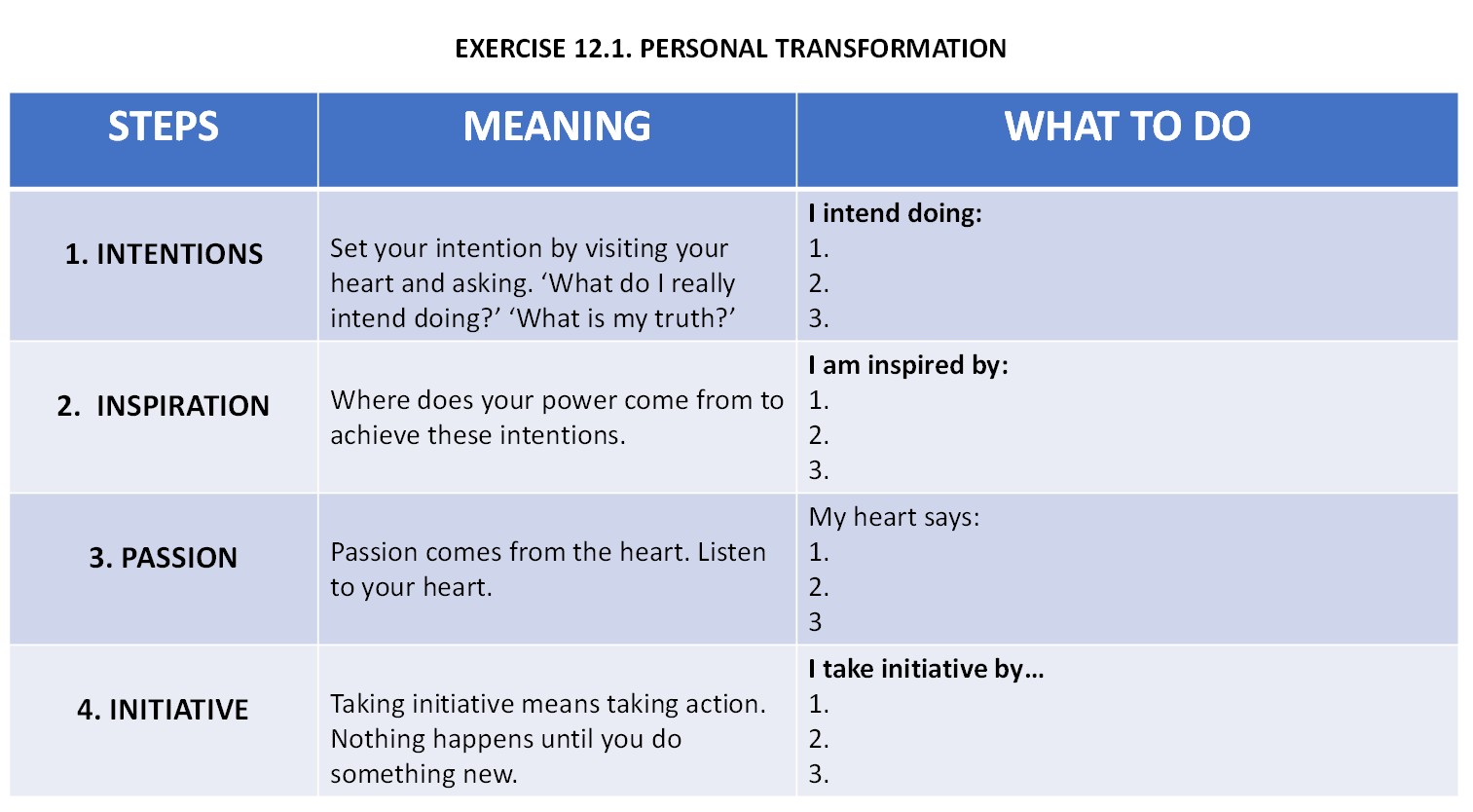
Download exercise 12.1 HERE
Provide the one-pager 12.1 exercise to your staff or team members.
Talk them through the process.
Address the task at hand again.
Develop an action plan with clear. Intentions, goals, and actions.
CASE STUDY. 12. ENLIGHTENED LEADERSHIP
NELSON MANDELA
The life story of Nelson Mandela is well known and has elevated him to the level of such widely recognized heroes as Mahatma Gandhi and Mother Teresa. There is indeed much courage, sacrifice, wisdom, and nobility in his life — attributes that demand our deep respect and have much to teach us.
Enlightened leadership
What is less well-known is how Mandela evolved into the kind of strategic leader who, from prisons on Robben Island and elsewhere, helped to bring genuine democracy to South Africa. For example, while isolated from his fellow prisoners by force, he steered secret government meetings toward the abolishment of apartheid and free elections. Subsequently, he became the country’s first democratically elected black president.
Mandela’s remarkable story holds valuable lessons for other leaders involved in deep struggles, foremost among which are the importance of holding firm to a morally just vision and the ability to influence a sequence of key strategic decisions over time (decades, in his case) in order to bring about truly remarkable results.
As an enlightened leader, Nelson Mandela had the ability to shine his light into the future and take a country with him. The rest of the world holloed.
Three decisions, in particular, stand out in Mandela’s evolution as a strategic leader. To appreciate these fully, however, we need to understand some of the social and political contexts that shaped his career and values.
A Life Sentence
Mandela was born in 1918. His father was a top adviser to a tribal royal family (the Thembu) and helped elect the tribe’s new chief, who, later — after Mandela’s father died — took the young boy into his own family. This path led Mandela from an isolated small village upbringing to the center of tribal power in his teens, which in turn awakened his interest in education and politics. He studied law at the University of the Witwatersrand and, early on, became involved in anti-colonial politics. Mandela was a founding member of the Youth League inside the African National Congress (ANC), the main black political party of South Africa, which was later outlawed and banned by the government. The country’s ruling party, the National Party (NP), started to implement a strategy of strict racial segregation, later known as apartheid, after coming to power in 1948.

Mandela obtained prominence in the ANC through his liberal political views and opposition activities, especially the Defiance Campaign of 1952. He was at first committed to non-violence, inspired by Gandhi’s successful opposition to British colonial rule in India. But eventually, due to the government’s harsh measures against non-violent opposition, he became increasingly drawn to various forms of targeted sabotage — actions that resulted in numerous arrests. In 1961, he co-founded a militant wing in partnership with the South African Communist Party and was eventually convicted of treason. Mandela was spared the death sentence, but was condemned to life in prison. He served a total of 27 years. In 1994, he became the country’s president.
In prison
While in prison, Mandela stood out — among both prisoners and guards — as highly principled, respectful, dignified and willing to sacrifice his life for his beliefs. Many of his fellow political prisoners were also heroic. Most were well-trained, and they taught each other about their respective fields of expertise while working in the limestone quarry. Prison life was harsh, with bad food, cold sleeping conditions in the winter and long periods of loneliness. Mandela fell ill intermittently and contracted nasty lung infections, including tuberculosis, due to his years in damp prison cells.
Despite these conditions, he was able to write an influential autobiography in secret titled Long Walk to Freedom, which chronicles his life in detail against the backdrop of deep social injustice and harsh state oppression. This clandestine book was smuggled out in pieces and printed overseas when it was complete. It became a global bestseller. An international freedom campaign by the ANC, led by the exiled leader Oliver Tambo, had managed to make Mandela the poster child of opposition to apartheid as well as an eloquent spokesman for a new democratic South Africa.
Boycots
The world took notice: International businesses as well as governments increasingly boycotted South Africa during the 1980s. The NP’s unyielding stance, especially President P. W. Botha’s dogmatic hardline approach and focus on law and order made the NP a pariah on the global stage. Business leaders from Anglo America and other local companies were increasingly putting pressure on Botha and, later, on his successor, F. W. de Klerk, to change course. Also, young whites voiced their opposition to apartheid and racism in churches, schools, social clubs, work settings, and at home with their parents.
Eventually, even the Dutch Reformed church, which had given apartheid proponents dubious biblical justification for the segregation of races, changed its views. Very slowly, the Afrikaner leadership started negotiations with Mandela in prison. It was a form of intermittent shuttle diplomacy, with government leaders visiting him in person, sympathetic white guards passing messages to and from the ANC, and Mandela being flown from his new prison house near Cape Town to meet secretly with Botha and later de Klerk in Pretoria, the capital.
Pres. F.W. De Dlerk
President F.W. de Klerk’s back was very much against the wall in 1990. The economy was suffering from the boycotts; business leaders wanted change; the containment strategy of carving out Home Lands for blacks was failing, and the country was on the brink of civil war in black townships. Something had to give, and it happened in de Klerk’s seminal opening speech to Parliament in February 1990. He called for free democratic elections (one man, one vote) as well as the unconditional release of all non-violent political prisoners. In addition, he lifted the ban on the ANC and many other outlawed parties.
This was a watershed event since whites were a minority in the country and would surely lose political power through these declarations. De Klerk kept his promises and released political prisoners, although not Mandela at first, given his violent past. De Klerk had hoped for a power-sharing arrangement with the ANC, but this eventually proved naïve on the part of this otherwise pragmatic NP leader. De Klerk and Mandela were awarded the Nobel Peace Prize in 1993 for achieving a largely non-violent, voluntary transfer of power by a strong minority group to a hostile majority, a rare event in human history.
The Face of the Opposition
Against this complex backdrop, three strategic decisions by Mandela — among many others — stand out from a leadership perspective. The first occurred when Mandela was offered a conditional release from prison by the government. In a 1985 speech to the nation, President Botha offered Mandela freedom if he renounced violence and other illegal activity. The President tried to shift the blame for imprisonment to Mandela himself: After all, he was free to go, provided he would be law-abiding. Mandela did not fall for this transparent ploy. Yes, he very much desired freedom after decades of hard labor and confinement in a small cell. But he also felt it would betray his principles, his leadership, and the ANC’s long struggle. Here is how Mandela replied, in part, to President Botha’s disingenuous offer:
“What freedom am I being offered while the organization of the people remains banned?…. What freedom am I being offered if I must ask permission to live in an urban area?…. Only free men can negotiate. Prisoners cannot enter into contracts.”
Mandela turned down the President and opted to stay in his cold, dark prison cell — about eight feet by eight feet in size — and was prepared to serve out the remainder of his life sentence. This key decision was strategic since it greatly elevated his position as the face of the ANC while also drawing attention to his enormous personal sacrifice. In addition, it revealed Mandela’s keen situational awareness that political change would come soon, even though he was isolated from the news media and poorly informed about developments in the country. Mandela’s intuition proved right: Half a decade later, this man of deep principle was released unconditionally and rose to become the president of the ANC and then the country.
Strategic decisions
The second strategic decision occurred shortly after Mandela became a free man, but before being elected president in 1994. The trigger was the 1993 assassination of Chris Hani, a well-known and popular black leader fighting for equal rights. Hani was shot in cold blood by a far-right white immigrant when stepping out of his car in the street. The killer was identified by a white woman who turned him in. This targeted killing was the flame that ignited a tinder box, resulting in widespread demonstrations against the white racist government. Many blacks wanted revenge, and the atmosphere was ripe for looting, violence, and mayhem. Recently out of prison, Mandela rose to the occasion and appealed for calm.
Here is part of what he said:
“Tonight, I am reaching out to every single South African, black and white, from the very depths of my being. A white man, full of prejudice and hate, came to our country and committed a deed so foul that our whole nation now teeters on the brink of disaster. A white woman of Afrikaner origin risked her life so that we may know and bring to justice this assassin. The cold-blooded murder of Chris Hani has sent shock waves throughout the country and the world…. Now is the time for all South Africans to stand together against those who, from any quarter, wish to destroy what Chris Hani gave his life for — the freedom of all of us.”
Strategy
His third strategic decision occurred in his 1994 speech after his election as president of South Africa, which he served for only one term, although two were possible under the constitution. His early decision not to stand for a second term was a remarkable gesture in a country and continent where leaders seek maximum power (such as Mugabe, president of Zimbabwe). Mandela knew that his speech would be watched by about a billion people on television around the world, and he wanted to signal clearly that he represented all the people of his country, regardless of color. Some of his lines are famous now and are inscribed in stone on Robben Island. Here is part of what he said:
“We have, at last, achieved our political emancipation. We pledge ourselves to liberate all our people from the continuing bondage of poverty, deprivation, suffering, gender, and other forms of discrimination. Never, never, and never again shall this beautiful land experience the oppression of one by another…. The sun shall never set on so glorious a human achievement. Let freedom reign. God bless Africa.”
Mandela recognized full well that South Africa could easily fall back into civil war due to the many crimes, injustices and deep wounds inflicted by the apartheid regime. He also knew an all-out war would at best yield a Pyrrhic victory. Furthermore, much of the expertise needed to run the country’s business, legal, social and educational institutions resided within the white minority population. Having seen what happened in nearby Zimbabwe under Robert Mugabe’s corrupt leadership, whites feared for their future, and many left the country (a brain drain known as white flight). Mandela’s aim was to rise above past injustices, embrace Archbishop Tutu’s call for truth and reconciliation, and unify the country by focusing on a shared, democratic future.
Leadership Style
The key to Mandela’s leadership style was to encourage racial harmony, forgiveness without forgetting, power sharing, and a strong focus on the future, not the past. As a master of symbolism, Mandela supported this strategy by being magnanimous toward his former enemies. For example, in 1995, he visited the widow of the very man who was the main architect of the apartheid regime and, in effect, put him in prison (Prime Minister Hendrik Verwoerd).
He rejoiced when the national rugby team, the Springboks, won the world championship, even though this team had been a symbol of racism and Afrikaner power for decades. He proudly wore the team’s shirt during the championship match, waved his hands in support and signaled to the world at large that he truly supported a rainbow nation. Such leadership is precious and rare.
Strategic leadership
What Mandela offers aspiring strategic leaders is a living example of how complex societal forces, uncompromising values and key moments of decision can be woven together over time, and across political, legal and economic domains, into a compelling vision that can transform a political party, a nation and even the world. Strategic leadership is not just about executing an initial strategy by engendering followership, but above all about adjusting that strategy when necessary to maintain broad support. Few political leaders today master this as well as Nelson Mandela, who is also affectionately known by his tribal name, Madiba.
It seems fitting that a black teenage boy, enthralled by the machinations around the throne of his tribe’s chief, eventually occupied an even larger throne, one visible to the entire world. Mandela is a man who spanned many decades, cultures, and realities in his search for freedom and justice. He sacrificed deeply and nobly, and in the process became a world icon for human rights. In political terms, he was truly a transformational leader. In the end, even his foes admire and respect him, and justly so. He is one of the most remarkable men of the last 100 years.
Read more HERE
Project Studies

Project Study (Part 1) – Management
The Head of this Department is to provide a detailed report relating to the Enlightened Leadership Program (ELP). Workshop 1. A New Foundation process that has been implemented within their department, together with all key stakeholders, as a result of conducting this workshop, incorporating the process: planning, development, implementation, management, and review. Your process should feature the following 12 parts:
New Foundation.
Future Vision
Aligning Global Values
Recovering DNA blueprint
Authentic-self vs ego-self
Power Intelligence (PI)
Strategic planning
Self-assessment.
Self-coaching program
Epigenetics in Organizations
Rewriting Organizational DNA
Enlightened Leadership

Project Study (Part 2) – Finances
The Head of this Department is to provide a detailed report relating to the Enlightened Leadership Program (ELP). Workshop 1. A New Foundation process that has been implemented within their department, together with all key stakeholders, as a result of conducting this workshop, incorporating the process: planning, development, implementation, management, and review. Your process should feature the following 12 parts:
New Foundation.
Future Vision
Aligning Global Values
Recovering DNA blueprint
Authentic-self vs ego-self
Power Intelligence (PI)
Strategic planning
Self-assessment.
Self-coaching program
Epigenetics in Organizations
Rewriting Organizational DNA
Enlightened Leadership

Project Study (Part 3) – Human Resources
The Head of this Department is to provide a detailed report relating to the Enlightened Leadership Program (ELP). Workshop 1. A New Foundation process that has been implemented within their department, together with all key stakeholders, as a result of conducting this workshop, incorporating the process: planning, development, implementation, management, and review. Your process should feature the following 12 parts:
New Foundation.
Future Vision
Aligning Global Values
Recovering DNA blueprint
Authentic-self vs ego-self
Power Intelligence (PI)
Strategic planning
Self-assessment.
Self-coaching program
Epigenetics in Organizations
Rewriting Organizational DNA
Enlightened Leadership

Project Study (Part 4) – Information Technology
The Head of this Department is to provide a detailed report relating to the Enlightened Leadership Program (ELP). Workshop 1. A New Foundation process that has been implemented within their department, together with all key stakeholders, as a result of conducting this workshop, incorporating the process: planning, development, implementation, management, and review. Your process should feature the following 12 parts:
New Foundation.
Future Vision
Aligning Global Values
Recovering DNA blueprint
Authentic-self vs ego-self
Power Intelligence (PI)
Strategic planning
Self-assessment.
Self-coaching program
Epigenetics in Organizations
Rewriting Organizational DNA
Enlightened Leadership

Project Study (Part 5) – Client Service
The Head of this Department is to provide a detailed report relating to the Enlightened Leadership Program (ELP). Workshop 1. A New Foundation process that has been implemented within their department, together with all key stakeholders, as a result of conducting this workshop, incorporating the process: planning, development, implementation, management, and review. Your process should feature the following 12 parts:
New Foundation.
Future Vision
Aligning Global Values
Recovering DNA blueprint
Authentic-self vs ego-self
Power Intelligence (PI)
Strategic planning
Self-assessment.
Self-coaching program
Epigenetics in Organizations
Rewriting Organizational DNA
Enlightened Leadership

Project Study (Part 6) – Globalization
The Head of this Department is to provide a detailed report relating to the Enlightened Leadership Program (ELP). Workshop 1. A New Foundation process that has been implemented within their department, together with all key stakeholders, as a result of conducting this workshop, incorporating the process: planning, development, implementation, management, and review. Your process should feature the following 12 parts:
New Foundation.
Future Vision
Aligning Global Values
Recovering DNA blueprint
Authentic-self vs ego-self
Power Intelligence (PI)
Strategic planning
Self-assessment.
Self-coaching program
Epigenetics in Organizations
Rewriting Organizational DNA
Enlightened Leadership
Program Benefits
Human Resources
- Future vision
- Development Plan
- Enlightened leadership
- Productive meetings
- Effective communication
- Inspired self-coaching
- Strategic thinking
- Rewriting organizational-DNA
- Harnessing Epigenetics
- Organizational Wellness
Management
- Effective self-coaching
- fulfilling workplace
- Empowered problem-solving
- High-impact services
- Growth mindset
- Management excellence
- Enlightened Leadership
- High-performance teams
- Effective Communication
- Heart Alchemy
Globalization
- Aligned vision
- Common focus
- Integrated diversity
- Enlightened leadership
- Global flexibility
- Bridge-building
- Global wellness
- Flourishing economies
- Rewriting global DNA
- Heart Alchemy
Client Telephone Conference (CTC)
If you have any questions or if you would like to arrange a Client Telephone Conference (CTC) to discuss this particular Unique Consulting Service Proposition (UCSP) in more detail, please CLICK HERE.